


Bacardi loses appeal in long-running Havana Club trademark dispute
A US appeals court has rejected Bacardi’s challenge to the Patent and Trademark Office’s (PTO) renewal of Cuba’s Havana Club trademark.
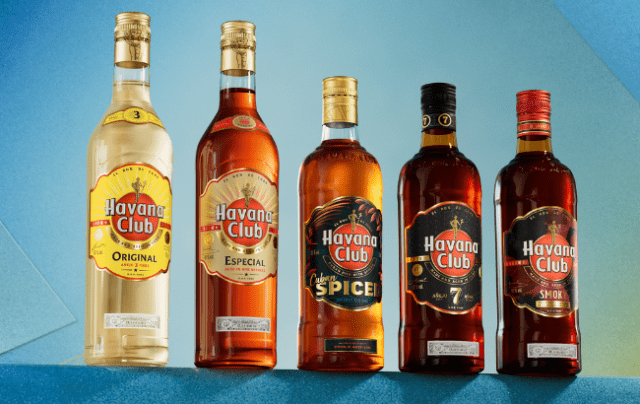
The ruling is the latest in a decades-long legal battle between Bacardi and the Cuban state-owned company, Cubaexport.
Bacardi sued the PTO and its director over its decision to recognise Cubaexport’s 2016 renewal of the Havana Club trademark in the US, claiming it should have expired in 2006.
This followed a dispute over the payment and acceptance of a relevant license fee owed by Cubaexport to the US Treasury’s Office of Foreign Assets Control (OFAC) in 2005.
In 2016, the body issued a special license retroactively authorising the 2005 payment, which in turn led the PTO to approve Cubaexport’s renewal filing.
Official documentation published by the United States Court of Appeals for the Fourth Circuit on Tuesday 16 July 2026 concluded: “The OFAC license cleared the fog, removing the legal obstacle that had prevented the 2005 transfer from counting as payment. What looked incomplete in 2006 was, by 2016, timely and effective. The Director recognised as much, and so did the district court. The judgment is affirmed.”
Bacardi’s response
The Bermuda-headquartered Bacardi issued the following statement in response to the ruling: “Bacardi is disappointed that the court granted the Cuban government a 10-year grace period for renewing a trademark that was stolen in the first place. We believe the decision is contrary to law and USPTO regulations and practice.
“But this decision is just one narrow part of the larger dispute over the true ownership of the Havana Club mark. And this dispute is likely to be resolved soon. Cuba’s next renewal application is due in just 11 days on June 27 2026. But Congress, by enacting The No Stolen Trademarks Honored in America Act, has now forbidden the PTO from granting Cuba’s renewal application for the stolen trademark. Bacardi is eager to see justice served in this long-running saga.”
The 2023 congressional act that Bacardi refers to was signed into law by president Joe Biden on 1 December 2024. It is expected to have a significant impact on the next stage of this long-running legal dispute.
Cuba’s foreign minister Bruno Rodríguez Parrilla posted on X saying: “The so-called ‘Stolen Trademarks Act’ signed by Biden modifies the law into an aggressive measure against Cuba, precisely with the purpose of opening up the door, in violation of international law, to the theft of Cuban trademarks that are legally registered in that country.”
The British-based organisation Cuba Solidarity Campaign has described the bill as “a new unilateral coercive measure aimed at reinforcing the blockade against the Cuban economy.”
The long and winding tale of Havana Club
The complicated legal status of the Havana Club brand can be traced back to the aftermath of the 1959 Cuban Revolution.
The ruling Communist Party subsequently nationalised private companies across the island nation without compensation, including sugar and alcoholic beverage producer José Arechabala S.A.
The Arechabala family left Cuba as a result, eventually selling the commercial rights, recipe and trademark for Havana Club to Bacardi in 1994.
However, Cubaexport had already registered the Havana Club trademark in the US in 1976, with the PTO declaring it to be in force for a period of 10 years. It was subsequently renewed in 1986 and 1996, before the contentious 2006 renewal.
In 1993, Cubaexport entered into an agreement with Pernod Ricard to distribute Havana Club internationally. This excluded the lucrative US market due to the country’s longstanding embargo on Cuban goods.
Bacardi continues to market Puerto Rican-made rum using the Havana Club name in the US, despite the ongoing battle over the brand’s ownership.
The Cuban-made Havana Club is one of the most valuable rum brands in the world, boasting sales of 3.1 million nine-litre cases in 2025.
Related news
Trois Rivières reimagines aged rum range