

Drink Dry: zero-ABV ‘spirits’ to boom in Middle East
Alcohol-free marketplace Drink Dry sees spirits alternatives as an “exponential” growth opportunity in the Middle East after reporting a triple-digit sales boost.
Based in Dubai, Drink Dry is a retailer, importer and distributor of alcohol-free products across the region’s on- and off-trade. The company covers around 700 distribution points.
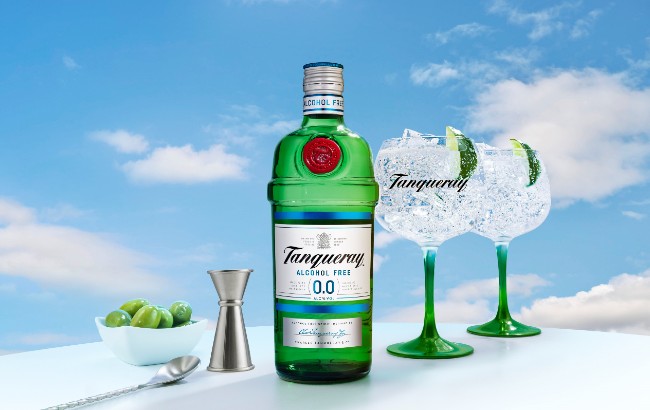
The business offers big‐name brands such as Diageo’s Gordon’s 0.0% and Tanqueray 0.0%, as well as Lyre’s, Crossip, Sea Arch, and Caleño. The business started trading in 2021, and saw double‐digit growth of 92% in 2024 and a 63% increase last year.
Drink Dry’s non‐alcoholic ‘spirits’ sales soared by 242% last year, while its beer sales rose at the same rate as the business, at around 50%‐60%, she says.
Beer alternatives remain the biggest proportion of Drink Dry’s sales, at around 60%, but founder Erika Doyle says the cash margin of an alcohol‐free ‘spirit’ is better than beer due to its bottle size.
“Non‐alc spirits become exciting for the licensed trade because it’s a recognisable taste profile,” she says, pointing to the likes of Diageo’s alcohol‐free portfolio, as well as Pernod Ricard’s Beefeater 0.0%.
The alcohol-free Beefeater is set to launch in the Middle East market by the third quarter, Doyle says, while the company’s Ceder’s brand has been discontinued.
“Spirits is the one opportunity that we see could be exponential,” she says of the zero‐ABV segment.
“We’ve done well with Crossip,” she says, adding that Drink Dry has worked with the UK-based brand since 2022. “We were 93% of Crossip’s total revenue,” she highlighted.
“We started with craft brands,” she explained. “We built them as brands here. The big brands came to the market last year. I think the big brands will take the market share. But the pie is big enough to share.”
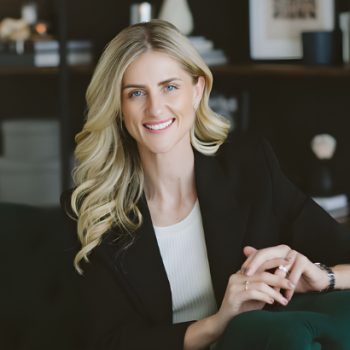
Doyle also believes there is demand for alcohol alternatives from strong brands like the ones in Diageo’s portfolio. Drink Dry has brought Diageo’s non-alcoholic products to supermarket chains Waitrose and Spinneys in recent months.
Drink Dry also secured a listing for Tanqueray 0.0% with Emirates on its UK routes in February this year.
“It’s one of the most renowned and accessible airlines,” she says, adding that the product is being used in well‐known cocktails like the Basil Smash and Breakfast Martini, which is being served to passengers in business and first class.
Given the growth of agave spirits, Doyle is also working to bring Pernod Ricard‐backed alcohol‐free Almave (founded by Lewis Hamilton) to the region this year.
Doyle believes the UAE offers the most potential for the alcohol‐free category, describing the market as the “window into the Middle East”, where brands must establish themselves first.
“UAE is our massive stronghold but we do have distribution across the GCC [Gulf Cooperation Council],” she says, an area that also covers Bahrain, Kuwait, Oman, Qatar and Saudi Arabia. The latter and Kuwait have a “no‐alcohol culture”, she says, which poses a challenge to drinks brands.
Middle East disruption
Drink Dry was also impacted by the conflict in the Middle East, which led to a 40% loss in sales, according to Doyle.
Doyle added that her company – which employs around 20 people – “has not reduced salaries or put anyone on unpaid leave”, instead the business tightened its marketing spend.
Doyle says the conflict has hit the top end of hospitality, including fine‐dining restaurants. “It has started to recover,” she says, “but it probably won’t [fully] recover until the fourth quarter.” The industry has been supported by local residents as people continue to spend and visit local venues, with the economy remaining strong, she says.
She adds: “Four months into the conflict, the UAE is a lot more established than everyone thought. It’s a stronger resident market than people anticipated.
“We realised we had underestimated how strong the market is.”
Related news
Middle East weighs on Pernod FY forecast