


Inside the new wave of mixer innovation
Whereas in the past tonic and mixer brands were thought of as accompaniments to alcohol, they are increasingly stepping into the spotlight.
*This feature was first published in the April issue of The Spirits Business magazine.
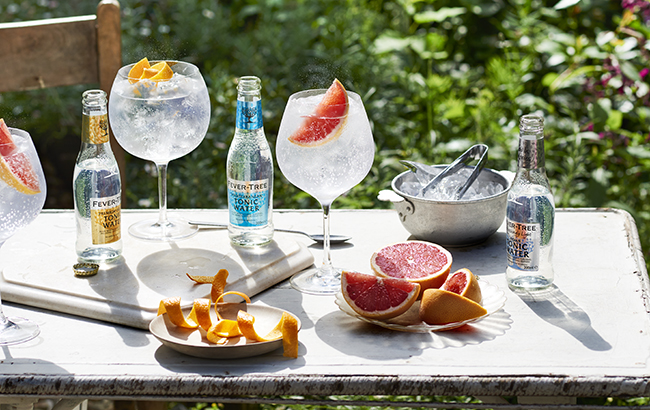
Flavour innovation in spirits keeps the hype train moving, but there comes a time when consumers begin to tire of new riffs that feel clichéd and unoriginal – cupcake vodka, anyone? The same rules apply to tonics and mixers, a category that has expanded dramatically in the past decade in terms of the breadth and depth of its offering. Once, all people had to choose from was a Schweppes or a Canada Dry tonic. Now there is a slew of savvy premium tonic and mixer brands that have been taking the category to new heights with new product development that moves the needle, from flavoured tonics that complement and enhance the botanicals in a G&T, to on-trend flavoured sodas designed to shine in specific serves.
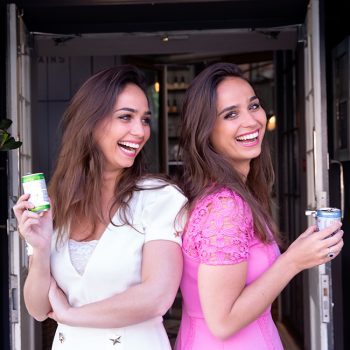
“Meaningful innovation in the mixer category isn’t just about launching new flavours, it’s about helping bartenders and consumers to think differently about what a mixer can do, whether that’s pairing unexpected flavour combinations with spirits, creating lighter or longer serves, or enjoying mixers as sophisticated soft drinks in their own right,” says Raissa de Haas, co-founder of Double Dutch. Rather than cluttering their portfolios with dozens of new flavour expressions for the sake of it, tonic and mixer brands are aware of the need to own specific drinking occasions and serves.
Meaningful innovation
Rose Cottingham, head of innovation at Fever-Tree, says: “For us, meaningful innovation starts with the drinking occasion rather than novelty for its own sake. Consumers don’t want endless flavour extensions without a clear role. The most successful NPD in tonics and mixers tends to be flavour-led, but also grounded in a genuine serve or occasion.”
For Joe Mantle, Franklin & Sons’ brand ambassador, new product development is about creating mixers that work with premium spirits and popular serves behind the bar. “People are a lot more switched on to flavour now than they were a few years ago. If a new mixer doesn’t clearly improve a drink or open up a new serve, people see straight through it,” he says. “Bartenders want something versatile that enhances a drink rather than overcomplicates it.”
In bars around the world, there seems to be a thirst for Mediterranean flavours and serves, a trend that’s weaving its way into tonics and mixers, leading London Essence to launch a Riviera Tonic in March. “Made with rosemary extract from the Italian coast, it brings a fresh twist to classic serves and transports people with a taste of the Med,” says Russell Goldman, managing director of breakthrough brands at London Essence’s owner, Carlsberg Britvic.
Double Dutch is also diving into the Med trend with its new Sun & Sea Tonic, which adds layers of aromatic thyme and rosemary, and a burst of bright lemon, to its Indian Tonic Water. Taking a nimble approach, twins Joyce and Raissa de Haas created it thanks to bartender demand. “We were getting repeated requests from our on-trade customers for Mediterranean-style flavour profiles, particularly herbal notes like rosemary and thyme that work beautifully with gin and lighter cocktails,” Raissa says.
In 2012 Fever-Tree was early to the party, launching its fragrant Mediterranean Tonic, which features rosemary and lemon-thyme from Provence. More recently, Franklin & Sons has taken the trend a step further, adding a savoury twist into its Med-inspired rosemary tonic with the addition of black olive. “Mediterranean flavours are definitely having a moment,” says Mantle. “There’s a growing curiosity around more savoury, aromatic flavours, which is where combinations like our Rosemary & Black Olive tonic really stand out.”
Dialling up the saltiness a notch, Coca-Cola HBC-owned Greek mixer Three Cents, the premium pour at agenda-setting bars like The Clumsies and Line in Athens, will soon be adding a “fresh and bold” pickle soda to its range. Dovetailing with the trend for aromatic tonics and mixers, Mediterranean citrus flavours are also in vogue, and tonic and mixer brands are keen to ride the wave. Any brand worth its salt has a pink grapefruit tonic or soda in its range to capitalise on the Paloma cocktail boom. “We’ve seen strong interest in our Grapefruit & Bergamot Tonic and Pink Grapefruit Soda, both of which bring a fresh, vibrant citrus profile that works across a range of serves,” says Franklin & Sons’ Mantle.
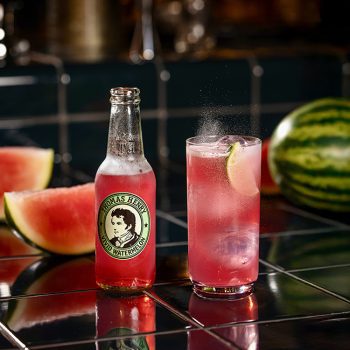
Berlin-based brand Thomas Henry, which is on pour everywhere from Superbueno in New York to Handshake Speakeasy in Mexico City, adds a pinch of salt to its pink grapefruit mixer. “If we follow a trend we want to be unique in the way we bring it to life,” says international marketing lead Marco Frizzarin.
Blood-orange sodas and tonics are also proving a bartender favourite at nightspots like Lyaness in London and Firefly Bar in Bangkok for their ability to sing in an array of serves. Firefly Bar’s beverage manager, Dicky Hartono, uses London Essence’s tart Blood Orange & Elderflower Tonic in his Above and Under cocktail to balance out the saltiness of the sea-grape distillate and the sweetness of the Japanese pear liqueur. “Tonic and mixer producers are increasingly measuring themselves against spirits categories outside of gin and the serves built around them,” says Olivier Ward, founder of Everglow Spirits. “Grapefruit tonic maps directly to the Paloma, while blood orange and citrus-forward ideas are chasing the Spritz.”
Three Cents is enjoying success with its Mandarin & Bergamot Soda, while Franklin & Sons looked to Japan when it launched its Yuzu Soda, which comes into its own in a Highball. “The inspiration was driven by what we’re seeing in modern cocktail culture, where bartenders are increasingly exploring Asian ingredients and more complex citrus flavours,” says Mantle. Thomas Henry was early to spot the thirst for Japanese flavours, having launched its Cherry Blossom Tonic more than a decade ago, sparking a trend for flavoured tonics that enhance a traditional G&T serve. “We worked with bartenders to create a tonic that added a delicate floral dimension while keeping the classic bitterness of tonic water,” says Frizzarin.
Flavoured tonics and mixers are helping budding mixologists to create bar-worthy cocktails at home. “Consumers are becoming more experimental and are looking for ways to recreate a restaurant-style experience at home,” says Raissa de Haas of Double Dutch. “Flavours like our Cucumber & Watermelon Soda and Pomegranate & Basil Soda represent a higher percentage of retail sales compared with hospitality.” Ward of Everglow Spirits believes that honing in on a specific serve is one of the biggest advantages a mixer brand can have in the off-trade right now. “The lesson all brands should be obsessed by is to be indispensable in a singular moment and own one occasion,” he says. “At a time when authenticity and differentiation are what’s driving velocity of sale, serve-specific alignment with a spirit or flavour profile is what’s cutting through.”
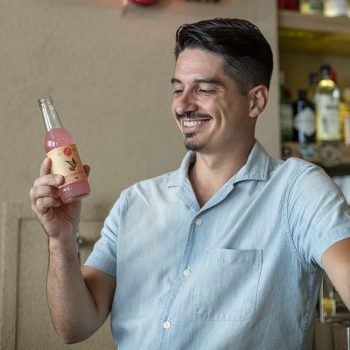
While Mediterranean herbs and citrus may lead the flavour charge now, Three Cents’ co-founder George Bagos has noticed another trend taking hold. “After years of pared-back serves dominating bar menus, playful drinks and flavour pairings that offer a welcome dose of nostalgia are making a comeback,” he says, revealing that their Cherry Soda is being used in retro serves like the Cherry Americano and Rob Roy Cherry Highball. Frizzarin says Thomas Henry’s bold, fruity mixer flavours like Vivid Watermelon, Piña Asada (roasted pineapple), and Mystic Mango are finding favour with Gen Z drinkers. “Younger consumers drink more consciously and across more occasions, so a mixer needs to work in many different contexts,” he says. “A great flavour should perform well in cocktails and with no- or low-alcohol ‘spirits’, but also taste great on its own. If it can do all three then it has real relevance today.”
Brand extensions
Illustrating how far market leader Fever-Tree has grown beyond its tonic-led foundations, head of innovation Rose Cottingham reveals that 45% of the firm’s revenue comes from brand extensions outside of its core tonics.
“Our products are still deeply rooted in mixed drinks, but we are increasingly relevant in standalone premium soft drink occasions,” she says. She points out that Fever-Tree’s non-alcoholic RTDs, which include an Italian Spritz, have been the brand’s fastest-selling innovation to date. Mantle of Franklin & Sons says the rise of the no/low sector has created new opportunities for premium mixers.
“Gen Z are more open to drinking in different ways now, whether that’s no alcohol, low alcohol, or zebra striping [alternating alcoholic drinks with non-alcoholic ones],” he says. “A well-made mocktail or low-alcohol serve can feel just as premium as a traditional cocktail, and quality mixers play a big role in delivering that experience.”
Raissa de Haas agrees: “Consumers want drinks that feel sophisticated and thoughtfully made whether they’re alcoholic or not.”
At Lyaness, head bartender Louis Macpherson makes a hero of tonics and sodas in no/low serves. “Tonics especially have always played a big part in our alcohol-free options,” he says. “The uplifting nature of the bubbles gives a great brightness and lightness to drinks, giving them length, and pulling them away from being too heavy.”
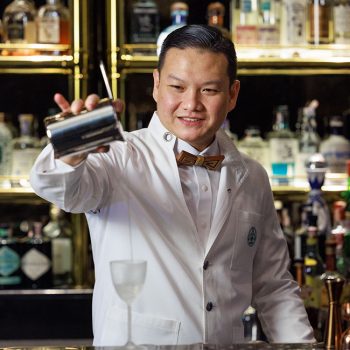
At Firefly Bar, artisan sodas play a starring role in non-alcoholic cocktails. “In our Penja Highball, we use London Essence White Peach & Jasmine Soda as the main ingredient, with Thai black tea and a white Penja pepper cordial to give the sensation of a whisky highball without the alcohol,” says Hartono.
Marketing guru Tom Khan-Lavin, CEO of drinks marketing agency YesMore believes mixer brands have a golden opportunity to own the adult soft drink serve. “It’s a total no-brainer for mixer brands to lean into the no-and-low movement,” he says. “By positioning the mixer as a standalone drink, they cut out the need for a spirit, and capture a bigger slice of the pie in that moment.”
Pivot too hard though and brands risk losing their identity. “Mixer brands are in bed with the big spirits houses, so cutting them out and pushing solo serves has the potential to cannibalise their existing revenue streams,” Khan-Lavin warns.
Ward of Everglow Spirits thinks tonic and mixer brands should be doing more to become the default bar call for those who are not drinking alcohol. “If you want something sophisticated then flavoured tonics and premium mixers have everything you need. The category just hasn’t made that case loudly enough,” he says. To do this, keeping the theatre of the serve is key. “If you aren’t talking about the glass, the ice and the garnish, then you’re just selling fizzy pop,” says Khan-Lavin. “For those that aren’t drinking, tonics and premium mixers are perfectly placed to be the grown-up, calorie-conscious choice that doesn’t make you look like you’re at a five-year-old’s birthday party. The message should be simple: it’s a top-tier liquid whether you add a shot of gin or not.”
Mix and match
Helping to keep the premium tonic and mixer category fresh and exciting, brands have been joining forces with heavy hitters such as bitters brand Angostura and Australian coastal gin Papa Salt (backed by Hollywood megastar Margot Robbie) on high-profile collaborations.
Fever-Tree is at the forefront of the trend, having recently released a ready-to-drink (RTD) Lemon, Lime & Bitters with Angostura in Australia, which is going great guns. “While collaborations are common in spirits, they are far less typical in soft drinks,” says Fever-Tree’s head of innovation, Rose Cottingham. “The launch reflects our belief that the same principles of layering, complexity and craftsmanship should apply regardless of whether alcohol is involved.”
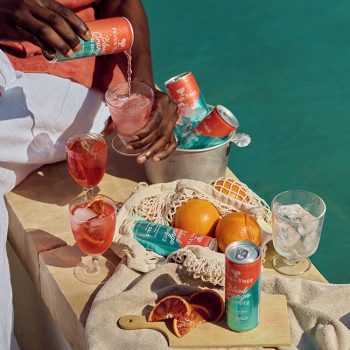
Another Fever-Tree RTD making waves is its Blood Orange Spritz, made with the brand’s Sicilian Blood Orange Soda and Papa Salt Gin. Marketed as “sunshine in a can”, the eye-catching packaging cleverly combines both brands’ logos and colours. We can expect to see more of these kinds of hook-ups in the future as premium tonic and mixer makers seek to stand out among their competitors through savvy collaborations with big-name brands.
How are bartender expectations of tonics and mixers changing, and what makes a mixer brand genuinely valuable to the on-trade?
George Bagos – general manager and co-founder, Three Cents
“The trend for traditional tonics is declining, driven by bartenders looking for more flexible flavours to play with, however this has opened up the opportunity for real innovation in both tonics and sodas. Pairing with gin is of course still important, however there are now more categories to expand into for example, whisky highballs, the ever-popular Paloma, fortified wines or vermouth with tonic. The most valuable traits for the on-trade is a quality and premium product above all else, as well as offering one-of-a-kind and trending flavours that let bartenders get creative.”
Related news
Desi Daru features at Sushisamba