


How have Trump’s tariffs impacted US spirits?
With the impact of tariffs, distribution upheavals and economic pressures, US spirits producers are battling to keep customers happy.

*This feature was originally published in the May 2026 issue of The Spirits Business magazine.
Consumer confidence, or a lack of it, has cropped up in conversation often when discussing the US market for spirits in recent times. The state of the industry has been dominated by uncertainty around tariffs and distribution, with consolidation happening among craft players, distribution giants, and even potential mergers of major spirits companies. Although there are some signs of stability, the economic pressures continue to mean that consumers are changing what they drink, buying cheaper products or consuming less alcohol. Spirits brands are having to work even harder to attract them away from newer segments like canned cocktails.
In its recent economic briefing from February, the Distilled Spirits Council of the US (Discus) noted that consumer sentiment has declined to historic lows, with persistent inflation affecting discretionary incomes. Data for 2025 shows a small drop in value for US spirits sales, but volumes managed to grow. According to Discus, US spirits revenue dipped by 2.2% to US$36.4 billion, while volumes rose by 1.9% to 318.1 million nine-litre cases.

RTDs lead the way
However, this gain was led by ready-to-drink (RTD) and pre-mixed cocktails, which soared by 17.1% in volume to surpass vodka as the leading spirit category in the US. The remaining top four categories – vodka, Tequila/mezcal, American whiskey, and cordials (liqueurs) – were all in volume decline or flat.
“There’s a lot of different factors coming at the marketplace,” says Chris Swonger, president and CEO of Discus. “The starting point is that consumer confidence across the board in the US is not high.” He explains that this has led to “challenging market conditions”, and comes on top of the unpredictability of tariffs and “significant changes in the distributor landscape”.
Spiros Malandrakis, global insight manager of alcoholic drinks at Euromonitor International, has noted a reversal of the “almost untouchable” premiumisation trend of the past two decades in the spirits sector. “I’m not suggesting that everything’s being traded down or that the only way is economy, but I am clearly stating the monolithic minimisation narrative of the past couple of decades. This idea that the only way is up, and the only way is more premium, has reached its limits.”
The challenges of the US market are taking a toll on the revenue of some of the biggest companies in the industry.
Absolut Vodka owner Pernod Ricard reported a 12% sales drop in the US for its third quarter (January-March 2026), and a 14% decrease for the nine months to March this year. In an earnings call, Hélène de Tissot, Pernod Ricard’s executive vice-president of finance and tech, described the US as “soft” but that the company “remains confident in the recovery of the spirits market”. She told investors: “We are convinced that the current challenges are primarily cyclical, linked to affordability issues.” To address the low consumer sentiment, Pernod is adapting by providing smaller formats and “targeted promotion investment on key brands”.
Rising price of cocktails
Similarly, American whiskey giant Heaven Hill Brands has also recognised a shift in “small size growth even among premium products”, says chief marketing officer Matt Blevins. He notes that the on-trade has been affected by affordability. “In many markets today, cocktails can reach US$20 to US$30, which naturally impacts how often consumers go out, or how often they order a cocktail when they do. Bar programmes are being leveraged as challenges of inflation-hit on-premise operators, but we are starting to see some recognition that there are limits to that, and consumers respond well to offering value through well-selected brands and promotions. Consumers are still engaging with on-premise, but they are more selective about when they go out and how they spend. When they do show up, expectations are higher around quality and experience because it costs more to go out.”
Weighing in on the structural versus cyclical debate of recent years, Swonger says: “I have hopes that it’s cyclical.” He emphasises the “critical role” of spirits and how it brings people together, but he adds: “We’re in a unique time. There are a lot of forces, a lot of headwinds that have fallen on our industry, a lot of challenges in the marketplace.”
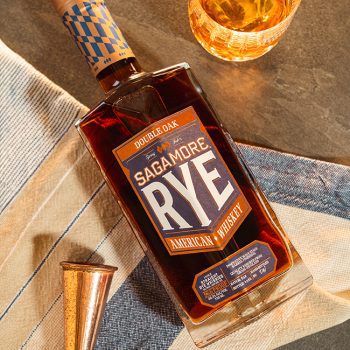
The tariff situation has also hit Illva Saronno, the Italian drinks company behind liqueur brands like Disaronno, as well as American whiskey maker Sagamore Spirit [now known as Disaronno Group]. “We weren’t able to absorb all of the cost of the tariffs; we had to pass that along to the consumer,” explains Robert Cullins, global chief commercial officer (CCO) of Illva Saronno.
“So not only has there been a slowdown in terms of consumer trends and, obviously, consumption but an increase in consumer pricing had a double impact for us, which then affected our volume, our revenue, and our margin.”
The removal of US-made spirits in most Canadian provinces due to trade tensions between the two countries also briefly benefited sales of coffee liqueur Tia Maria during the summer months, Cullins points out, as its nearest competitor, Pernod Ricard’s Kahlúa, was delisted because it was made in the US. However, he notes that Pernod “very quickly changed the production to Canada” so Kahlúa is now back on shelves.
Last summer saw a major change on the distribution side of the US spirits sector, as Republic National Distributing Company (RNDC) exited the enormous Californian market. Other distributors, such as Reyes Beverage Group, have swooped in to take on many brands left without a distributor in that market, along with other states that RNDC has left in the past 12 months.
Reyes has rapidly taken over distribution operations for RNDC in 11 markets, including Texas and Arizona. RNDC is also exiting all 17 control states, inking a deal to offload its operations in these markets to New England’s Martignetti Companies. Meanwhile, RNDC’s operations in Oregon, Washington and Alaska are set to be sold to Columbia Distributing.
“The most stable part of the three-tier system for many years has been the wholesaler tier,” Cullins notes, adding that the departure of RNDC and the shift towards Reyes has been disruptive. “It has affected the ability to have continuity and cohesion in that middle tier, because there’s so much uncertainty,” particularly for employees.
Since the RNDC upheaval, Illva Saronno is working with Reyes in 11 markets, and is in talks with other partners to expand its footprint. “There’s always going to be disruption and impact when you have a change like this,” Cullins adds.
Pernod Ricard has also made a number of distribution changes in the past year, most recently shifting distribution to Reyes for its mainline and RTD portfolio in Maryland and Washington DC, while Southern Glazer’s Wine & Spirits is now in charge of 37 states for the French spirits firm.
Paul Basford, CCO of Pernod Ricard’s US arm, says there has been a lack of disruption since the changes began last summer. Last year also saw Pernod split its portfolio in the US into separate divisions, including Gem for the emerging brands, and a dedicated RTD unit. He notes “green shoots” for some of the Gem brands, which have become more widely available in the on-premise.

With Johnson Brothers and Crescent Crown among its new distributors, Pernod Ricard’s US presence has increased from “two or three of the top-10 distributors in the US” to covering the “top nine or 10”, he adds. Pernod has brought out several innovations in the US, including Kahlúa Dunkin Swirl, Absolut Tabasco, and Malibu Pink.
Basford notes that Malibu is “back to growth in Nielsen for the first time in a long time”, which he attributes to “the choices we made route to market, and the focus that brought, but also innovating in a market that needs innovation, because we are in a very difficult time. Consumption is down due to economic patterns and all manner of other things. You have to do innovation to try and spike interest and bring people back into spirits.”
Illva Saronno’s focus is on its flagship Disaronno and bringing it to new consumers through serves such as the Godfather and Amaretto Sour, Cullins says. Now the company is looking into “lighter, low-alcohol opportunities” like the ever-dominant Aperol Spritz, and the Hugo Spritz, which has been growing in popularity. The company will also look to “take advantage of the Espresso Martini trend with Tia Maria. Despite the downturn in American whiskey, Cullins says Sagamore has been “performing extremely well”, adding: “Overall, we’re still optimistic and bullish.”
There is potentially some respite for producers as the initial tariff that was put into place was deemed illegal by the Supreme Court. “There’s now a process to recoup those tariffs that you’ve paid, which will take a long time, but is of benefit,” says Cullins, who like Discus, is hopeful for a return to zero tariffs. With Sagamore currently off the shelves in Canada, he adds: “We would like to see Canada and the US come to the table and sort that out as well. But really, some of the things that are beyond our control we have to plan for, and take a longer-term view as to not to damage the brand’s health, but also to not walk away from the consumer.”
Cullins is also optimistic that Gen Z drinkers will eventually move beyond the booming RTD category, adding that “more than 50% of Gen Z are not yet legal drinking age”, and are being “introduced to adult beverages” through RTDs, similar to the earlier impact of “wine coolers back in the 80s”.
He adds: “This generation will age, mature, change its habits and but we need to be there for them when they get there.”
How have tariffs changed your planning or sourcing decisions?
Josh Irving – CEO and co-founder of I & A Agave Spirits, maker of Socorro Tequila
“Even with the threat of tariffs, Tequila remains exempt thanks to the US-Mexico-Canada Agreement, which was negotiated during the first Trump administration, and has ensured Tequila enters the US tariff-free. While the threat of tariffs can, and does, create short-term disruptions, we can plan long term. There have been situations where demand has outweighed our ability to get goods from local vendors and manufacturers, but our commitment to being authentic, genuine, thoughtful, and built for scale across everything that goes into our products will never waver.”
Jeff Diego – CEO and founder, Helmsman Imports
“For years, most brands didn’t scrutinise their supply chain. If it was profitable, they refused to rock the boat, and focused on sales. Tariffs volatility changed that overnight. The brands coming out
ahead aren’t the ones who avoided tariffs. They’re the ones who used the disruption to pressure-test every assumption in their landed cost model, from ocean freight and port routing to glass sourcing, closure procurement, and warehouse placement. Courts have now deemed key tariffs illegal, and refund portals are opening for businesses to recover costs. The brands who already restructured their import logistics will recover those costs fastest. The smartest operators turned a crisis into permanent margin improvement.”
Jose Sedano – commercial director, Glenrinnes Distillery
“Tariffs, while undesirable, have not impacted our planning for the US market. We are relatively new to the market, but we still see a real and increasing opportunity for growth for both Eight Lands Organic Vodka and Gin and we are investing accordingly. The fact that the US regime on spirits duty for craft brands is less aggressive than in many international markets partially offsets the 10% tariffs to date.”
Related news
Southern Glazer's to axe 1% of jobs in US
Boatyard appoints Tim Herlihy to drive US growth
Aberfeldy launches white Port cask-finished distillery exclusive