


Ron Viejo de Caldas celebrates best of Colombian rum
“Colombian rum is entering a stage where it no longer tries to look like Caribbean rum. It is expressing its own identity,” believes Ron Viejo de Caldas.

For decades, Colombia’s rum industry has largely sat just outside the centre of the global category conversation. While Caribbean producers such as Jamaica, Barbados and Martinique have shaped the traditional benchmarks of rum style and heritage, a new voice is steadily gaining attention further south.
Produced in the Andean city of Manizales by Industria Licorera de Caldas (ILC), Ron Viejo de Caldas represents a distinctly different interpretation of Latin American rum, one shaped by altitude, protected mountain water and the use of native Colombian white oak. As the brand expands internationally, it is helping define what modern Colombian rum can be: origin-led, technically distinctive and increasingly relevant on the global premium stage.
For general manager Diego Angelillis Quiceno, the ambition is clear. “What motivates us,” he says, “is showing that Colombia can compete strongly in the most universal category of all: rum.”
Founded more than 120 years ago, ILC operates as a 100% publicly owned enterprise of the government of Caldas, with its board chaired by the regional governor. That ownership structure means the company’s objectives extend beyond traditional commercial growth.
“Being 100% owned by our people clearly defines our objective,” Angelillis Quiceno explains. “We generate profitability to create social value.” Revenue from the company’s spirits portfolio helps finance public healthcare, education and sports programmes across Colombia. At the same time, sustainability has become embedded in the company’s strategy, aligning operations with the United Nations Sustainable Development Goals. ILC has also achieved carbon-neutral status – the first spirits company in Colombia to do so. The company sees these commitments not as philanthropic gestures but as part of a broader business philosophy.
“We understand these efforts as shared value,” Angelillis Quiceno says. “They strengthen trust with communities and stakeholders while positioning ILC as a benchmark in environmental innovation.”
Since taking on the leadership of ILC, Angelillis Quiceno has overseen a period of transformation designed to reposition the organisation as a global spirits player. The company’s strategic plan 2024-2027 set the tone for that shift. “Our purpose became the compass for transforming operations, culture and management,” he says. “We want to accompany people around the world by creating unforgettable experiences through carefully crafted products.”
Internally, the company has strengthened transparency, accountability and agility across its teams, while placing greater emphasis on customer and market orientation. Operationally, ILC has focused on standardising production processes and improving efficiency across its manufacturing systems. Digital transformation has played a key role in that effort, with the introduction of data analytics and AI tools across the organisation. “These technologies are freeing more than 1,000 hours of work every year,” Angelillis Quiceno explains. “That time is now redirected towards innovation, management control and continuous improvement.”
The goal is not simply to export more rum, he says, but to ensure the company operates at the standards expected of global spirits producers. Yet while governance and operational improvements have helped modernise the business, the defining character of Ron Viejo de Caldas ultimately comes from something far older: geography.
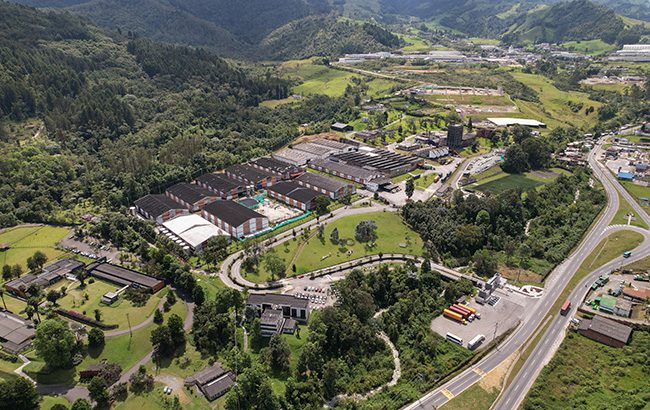
The bottling centre sits in Manizales, in the heart of Colombia’s Andean coffee region, at more than 2,200 metres above sea level. For a rum producer, that environment is highly unusual. “Geography is not only our place of production,” Angelillis Quiceno says. “It is one of our greatest brand assets.” Most rum is matured in warm coastal climates, where heat accelerates the interaction between spirit and wood. The Andean environment offers a very different setting.
In Manizales, average temperatures hover around 16°C, while the reduced oxygen pressure at altitude slows the chemical reactions associated with barrel ageing. “At altitude, the interaction between wood and distillate becomes more controlled and progressive,” Angelillis Quiceno explains. The result is a maturation process that unfolds more gradually than in tropical coastal environments. Rather than a heavy oak influence, the rum develops layers of aroma and texture over time. “It produces a spirit that is rounder, more elegant and built patiently,” he adds.
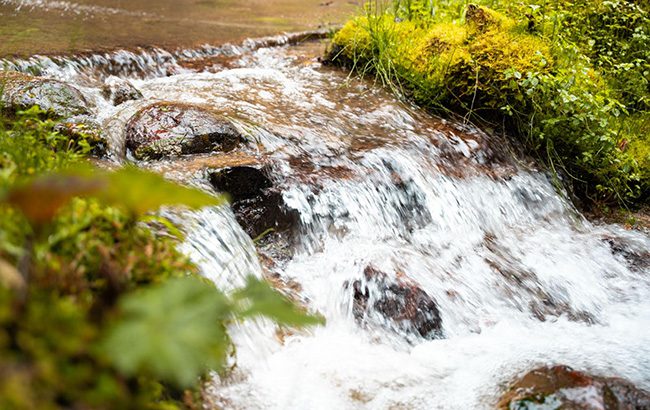
Water is another defining component of Ron Viejo de Caldas’ identity. ILC owns and protects a 260-hectare natural reserve surrounding the bottling centre, where 68 mountain springs feed the streams supplying water for production. The area forms part of the Río Blanco biological corridor, one of the most important biodiversity zones in Colombia’s Andes. “This water is extraordinarily pure,” Angelillis Quiceno says. “It is naturally filtered by the montane forest ecosystem.” The quality of the water is reflected in the surrounding wildlife. The springs are home to the white-capped dipper, a bird species that inhabits only pristine freshwater environments. Protecting these springs is essential not only from an environmental standpoint but also for maintaining the sensory character of the rum. “It directly influences the flavour, aroma and mouthfeel of Ron Viejo de Caldas,” he explains.
One of the most distinctive technical choices in Ron Viejo de Caldas production is the use of native Colombian white oak barrels. In a rum category dominated almost entirely by American oak, this choice creates a clear point of difference. ILC protects 24 hectares of Colombian white oak forest within its natural reserve, ensuring a sustainable supply of the wood used in its barrels. “Colombian White Oak has a different structure, density and porosity,” Angelillis Quiceno says. “That creates a unique interaction between wood, oxygen and distillate.”
The wood allows slower micro-oxygenation during ageing, producing a gradual extraction of aromatic compounds. Instead of strong tannins or aggressive vanilla notes, the barrels contribute subtle complexity. The resulting flavour profile often reveals aromas of noble wood, banana and dried fruit, followed by layers of caramel, vanilla and red fruit. “There is also a local signature,” Angelillis Quiceno notes, “a sweetness reminiscent of panela that integrates naturally into the rum.”
As Ron Viejo de Caldas begins to build a stronger international presence, its quality has increasingly been recognised in global spirits competitions. At The Global Spirits Masters Competitions, several expressions from the range recently received awards.
Ron Viejo de Caldas Carta de Oro won Silver in the Dark Rum (Aged 8 to 12 Years) category, while Gran Reserva Especial secured Silver in the Dark Rum (Aged Over 13 Years) category, with judges highlighting its dark fruit character, treacle notes and gingery spice balanced by restrained sweetness.
Another Silver medal was awarded to Ron Viejo de Caldas León Dormido Finalizado in the same age category. For Angelillis Quiceno, these accolades are part of a broader shift in how Colombian rum is perceived internationally.
Building a global identity
“Colombian rum is entering a stage where it no longer tries to look like Caribbean rum,” he says. “It is expressing its own identity. If I had to define our style in one phrase, it is a balanced and elegant rum with a clear vocation for natural ageing.”
Unlike some heavier rum styles, Ron Viejo de Caldas is built on medium-profile distillates designed to create harmony between sweetness, wood and aromatic complexity. “At ILC we work with distillates that allow us to build a rum where nothing dominates,” he explains. “Everything integrates into a rounder, smoother profile. Our master blenders ensure rigorous batch-on-batch precision,” he says. “That coherence is key to building a global identity.”
Domestically, Ron Viejo de Caldas is already a powerhouse. The brand sells around 1.7 million nine-litre cases annually and commands approximately 82% market share in Colombia’s rum category. International expansion is now a central focus, with Europe and North America seen as the most promising markets, particularly Spain, France, Germany, Italy and the UK.
To support that growth, ILC plans to expand its logistics infrastructure by 40% in the coming years. The company aims to reach one million nine-litre cases in export markets by 2030. But for Angelillis Quiceno, the ambition goes beyond numbers. “We already lead the rum category in Colombia,” he says. “Now the ambition is to see Ron Viejo de Caldas present in more countries and bring our Colombian style to the world.”
The Andes may soon become one of the most intriguing new frontiers in the global rum conversation and Ron Viejo de Caldas offers a compelling alternative to traditional rum profiles. Its terroir, protected ecosystems, and distinctive ageing traditions set it apart in a category historically dominated by tropical coastal producers.
Related news
Quimbaya is shaping the future of Colombian rum