


Fizz-ics: the bars obsessed with perfecting carbonation
Being in control of carbonation makes for better cocktails. We speak to the bartenders who are putting the fizz into their drinks.
*This feature was first published in the March issue of The Spirits Business magazine.
Once upon a time, for many bars, the only way to make a fizzy cocktail was to add soda water or, for something more luxurious, Champagne. Soda syphons, which date back to the 1800s, prompted the creation of classic cocktails like the Tom Collins and the Gin Fizz – but the technology was far from advanced.
To say that US bartender Jeffrey Morgenthaler changed all that might be to overstate his influence – of course, many other bartenders at the time would have been carbonating their own drinks. However, in 2014, Morgenthaler made his bubble knowledge accessible to all by publishing a guide to carbonation on his blog. At the time, his carbonation rig proved more cost-effective and versatile than a top-of-the-line SodaStream, with bartenders able to fine-tune bubble size, mouthfeel and intensity.
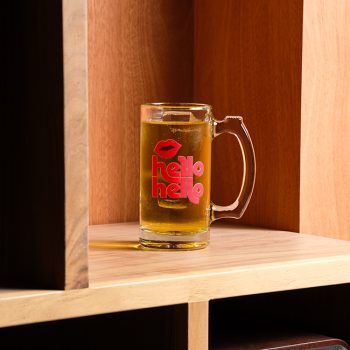
That appetite for control is what drives Luis Hernandez’ drinks programme at Hello Hello in Manhattan, New York City. “I love really heavy carbonated cocktails,” he says, explaining that he thinks Topo Chico sparkling water is “the best thing ever”. But the issue with creating a cocktail, even with a super-bubbly liquid like Topo Chico, is the number of variables. “There are items that are not carbonated, then one item that is,” he explains, referring to the added spirit, liqueurs, and ice. “That first sip is good, and then it starts breaking down.”
His solution is to carbonate the whole drink – spirits included – to ensure consistency and longevity. Cocktails are built, chilled, and carbonated in Cornelius kegs at high pressure – 52 PSI for the bar’s Red Bull Vodka – then left to refrigerate for three days. This resting period helps the CO₂ bind with the liquid. The temperature is also crucial: every element, from the base spirit to the batched cocktail, is refrigerated or frozen to help make the CO₂ more soluble.

Perceived wisdom is that shaking your liquid while carbonating helps to increase fizz, but Hernandez prefers to roll the kegs. Being violent forces the CO₂ to go in and out of the liquid, while rolling a keg on its side increases the surface area of the liquid. “We roll it for about 30 seconds to a minute, depending on the drink,” he says. “We let it settle; we charge it again. You hear the gas going in, and it stops at a certain point. Then you roll it, and you can put a little bit more in.”
Hello Hello’s system isn’t perfect by any means. “We don’t have the equipment to measure it, but if you’re carbonating at 52 PSI, by the time it settles down, it’s probably going to be sitting between 48 and 50,” Hernandez explains. The drink then loses a little more carbonation when discharged, more when it hits the glass and the ice, and even more in the time it takes to reach the guest. Using clear ice helps, but as Hernandez explains, it’s nearly impossible to get ice without imperfections. “You have to hand-carve it and polish it – and then we’re talking about a whole different bar,” he laughs. “Even a perfect diamond has nucleating points. You’d have to serve everything in a perfect sphere.”
Perfection is impossible
As a neighbourhood bar, Hello Hello simply doesn’t have the resources to do that – and Hernandez doesn’t think the effort would be worth it. “Sometimes the beauty of a cocktail is how it evolves over time – that can mean having less carbonation than when you started,” he says. “The cocktail warms up a little bit, the sweetness and the aromatics come out a bit more. Trying to get absolute perfection all the way through a drink is impossible. You’d have to be drinking inside a walk-in [freezer] to get a drink that never changes. Could you do it? Yes. Would anybody want to drink there? No.”

Carbonation enthusiasts and educators Bart Miedeksza and Valentino Girotto – the authors of Bubbles: A Guide to Carbonated Cocktails – also have a theory for perfect carbonation. As with Hernandez, the duo – who run London’s Crossroads consultancy – say temperature is vital. “There’s no such thing as too cold for carbonation,” says Girotto, as long as the liquid hasn’t frozen solid. The colder the liquid, the more CO₂ it can hold.
Even those who have dedicated time, space and money to a sophisticated tap system can be let down. Girotto recalls a project in Dubai where the drinks were batched, carbonated, and refrigerated as advised, but the pipe between the fridge and the tap was uninsulated. That one-metre gap meant that even if the batched drink started at 4°C, when dispensed it could be up to 10°C – with much of the carbonation also lost.
Another key point for the Crossroads team is the method of dispensing. “The queen of carbonation is pressure,” says Miedeksza, who adds that most bars are converting beer systems for carbonation, and they use a lower pressure. “It’s all fun and games to get the gas in, but how do we get the liquid out?”
Girotto and Miedeksza think the future of carbonation lies in bespoke tap systems. “We are great evangelists of cocktails on tap, because it just makes so much sense,” says Miedeksza. Girotto adds: “I believe that in the bar industry, anyone who’s serious about their job is going to have a tap system in a maximum of five years.”
Cost-effectiveness
While bars with extremely tight profit margins might scoff at the idea of investing in such a system, Miedeksza is convinced it pays off in the long run. A typical five-drink order takes around seven minutes to build by hand; meanwhile, on tap, the same five drinks take about a minute. With 200 drinks in 40 orders per night, that’s 4.5 hours of work by hand compared with 40 minutes using a tap. Extrapolate that four-hour saving over five nights a week for a year, and you’re looking at 1,040 hours. At an average wage of £14 (US$19), that’s £14,560 in labour time. “Within eight months, you’ve paid back the cost of the system,” he says.
It’s not for everyone, though. “Maybe you’re a 30-cover bar and want to sell one carbonated cocktail. Then this isn’t for you,” says Girotto. “But you can build a high-quality system without massive investment.” Miedeszka adds: “In our original bar in Camden, our first carbonation rig set me back £160.”
While carbonation technology has developed since Morgenthaler’s blog post, the principles remain the same. But today, innovators are sharing tips freely. “Ask your favourite bar what they’re doing,” concludes Hernandez. “The best thing about our industry is the community aspect. We can all ask questions and help each other out.”
Related news
RTD sales near £200m in Britain's on-trade