


Is rum’s premium moment finally here?
Rum is enjoying a revival, with high-quality expressions at various prices attracting consumers keen to experience a new world of flavours in a sector whose products are endlessly versatile.
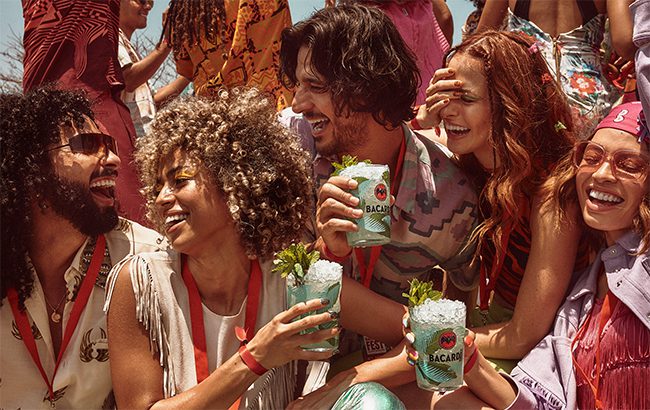
*This feature was originally published in the June 2026 issue of The Spirits Business magazine.
Drinks producers are encouraged to stay in their lanes and do one thing well, nailing their niche in the process. But in a challenging market filled with discerning drinkers, being able to offer a diverse portfolio that appeals to a wide customer base is becoming increasingly important. The trend plays into rum’s hands.
As arguably the most versatile spirit on any back bar, rum has not only found a happy home in mixed drinks and classic cocktails, but, spearheaded by the likes of Foursquare, Appleton Estate and Hampden, has more recently cemented its status as a complex sipping spirit that deserves to be taken as seriously as a single malt Scotch or XO Cognac, with many rums being available for a fraction of the cost of those drinks.
Super-premium is the only rum category currently in growth in the US and the UK, with UK off-trade value sales rising from £29 million (US$39m) to £30.8m over the past year, according to NIQ. Overall rum sales have dipped in established markets like Europe, Latin America, and North America over the past year. The IWSR forecasts a 0% compound annual growth rate for global rum volume and value sales between 2024 and 2029, but emerging markets like Africa and Asia Pacific offer bright spots in a difficult climate. Year-on-year value sales are up by 5.3% in Africa and by 13.5% in Asia Pacific.
“All spirits categories, with the exception of agave, declined in the UK in 2025, and rum suffered less than leading categories like whisky, vodka and gin,” says Humphrey Serjeantson, IWSR’s research director for Western Europe. “Over the next 10 years, premium-and-above rums will see growth, while standard and value will fall, with some premium gold rums growing at the expense of lower-quality bottlings.”
It seems counterintuitive that the top end of the market should hold strong during a time of global political instability and economic turmoil, but the numbers don’t lie. “Because we still only have a small share of the super-premium spirits category, we were always less likely to experience a bubble like whisky, and our hard-won gains are therefore a little more resilient to the broader market shifts,” says Richard Seale, CEO of Barbados-based rum brand Foursquare, whose expressions sell for more than £100 a bottle. Having long flown the flag for quality sipping rums with a story to tell, Seale believes rum has earned its place at the top table. “Rum offers a vastly superior value proposition to single malt Scotch and XO Cognac when it comes to bona fide age-driven quality,” he says. “It has diverse raw material, the most complex of fermentation practices, and the best climate for the maturation of spirits.”

Top-quality product
Despite challenging market conditions, interest in top-end rums is high at The Whisky Exchange. “When it comes to rums over £100, we have definitely seen more interest and sales are up, as is our average transaction value on rum,” says its commercial buying director, Dawn Davies MW. “Our customers are happy to spend over £80 on a bottle of rum as long as they feel it’s a top-quality product with real provenance. At this year’s Rum Show we poured more dream drams (rums priced over £200) than ever before, so the desire is there.”
When it comes to elevating rum’s image, global rum ambassador Ian Burrell believes the spirit’s popularity in cocktails has led people to wrongly assume that rum is simply made for mixing. “In reality, a well-matured and well-balanced rum can be every bit as sophisticated and rewarding as many whiskies or brandies, and in some cases, even surpass them,” he says, applauding brands that have focused their recent marketing efforts on encouraging consumers to try their products neat.
Sipping rums are gaining traction at Trailer Happiness in London’s Notting Hill, where owner Sly Augustin has noticed a particular interest in drops from Jamaica and Barbados. “Jamaican rum is really pushing itself forward as a sipping rum, with standout expressions from Worthy Park, Appleton, and Hampden, which have released some sublime liquids in recent months,” he says. “Barbados has led the charge for a while now, but they’re not sitting idle. Mount Gay has released some incredible single estate bottlings, which are among the best value rums on the market.”
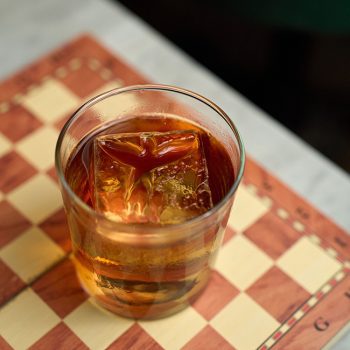
Across the city at Black Parrot bar near Fleet Street, owner Lewis Hayes has seen a surge in interest in sipping rums from Barbados, Jamaica, Guadeloupe, and Guyana. “When we opened, neat rum was already a thing with enthusiasts, and now we see a much broader audience ordering rum the way they’d order a whisky: neat, with a little water, or over a big cube of ice, allowing them to taste the complexity, nuances, and flavours in the spirit,” he says. “There’s a growing interest in ‘New World’ producers, including British-made rums, especially when they’re upfront about production and can hold their own in serious tasting line-ups.”
British rum revolution
Hayes, who founded DropWorks Distillery near Sherwood Forest in Nottingham in 2023, is one of the key players spearheading the British rum revolution, which is starting to make waves both in the UK and further afield. Setting out to redefine the rum category, DropWorks has more than doubled its revenue over the past 12 months.
“British-made rum adds a new disruptive voice to the category, one that’s transparent, creative and unafraid to do things differently,” says Hayes. “We’re not weighed down by 200 years of rum-making tradition that we have to adhere to, so we can challenge the process and create new ways of thinking.”

David Howarth, founder of House of Rum in Manchester, believes British rum has a bright future. “We have over 60 rum distilleries in the UK now, which is a similar number to the whole of the Caribbean,” he says. “We have so much talent in the UK, and passion for the product. We’re producing rum for the modern drinker, focused on small batches, bold flavours, and honest storytelling.”
Davies of The Whisky Exchange is excited about the prospect of a growing British rum industry. “We’re seeing more distilleries producing rums in the UK, and the category is gaining momentum,” she says. “There’s an opportunity to bring more people on the rum journey, as they might be happy to buy something from Britain and then branch out. What’s key is that UK producers create products that have a real sense of place and provenance.”
Burrell, meanwhile, has been extremely impressed by the quality of the rums coming out of the UK from the likes of Scotland’s Ninefold Distillery and Matugga Distillers. “With producers’ growing knowledge, technical ability, and inspiration drawn from traditional Caribbean rum-making, British rum has the potential to carve out its own distinctive niche in the global rum market,” he says. For Tom Khan-Lavin, CEO of drinks marketing agency YesMore, sticking to pared-back packaging is helping British brands to play in rum’s top tier. “We’re seeing a rise in British-branded rums that take traditional symbolic cues of the high seas but translate them into something far more grown-up and sophisticated,” he says.
To thrive in today’s challenging climate, producers need to actively recruit the next generation of drinkers in emerging markets, and speak their language. “Markets like India and China represent a major growth opportunity, not just due to their size, but because of the evolving drinking occasions we’re seeing there,” says Pedro Mendonça, global senior vice-president of Bacardí. “Consumers there are highly curious, experimental, and open to discovering new formats and expressions, but authenticity matters.”
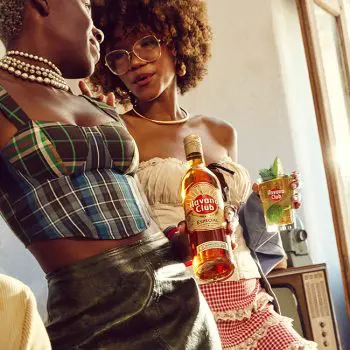
Havana Club also has its sights set on India and China as potential growth engines of the future. The brand’s global marketing director, Nathalie Parte, believes that versatility is key for rum brands moving forward. “Consumers no longer want to choose between premium quality and mixability: they expect both now, and that’s helping to redefine what modern rum occasions look like,” she says. “The brands winning today are those with provenance, craft, and the ability to move seamlessly across occasions without comprising on quality.”
Bacardí’s Mendonça thinks rum brands need to meet consumer demand. “People are looking for brands that can fulfil different needs, whether that’s an approachable rum for an everyday cocktail, or a more elevated expression for celebrating or gifting,” he says. “Success comes from having relevant propositions that create true value in those moments.”
An obvious way of doing this is by tapping into the convenience trend through rum RTDs, which Bacardí has done with its Bacardí & Coca-Cola pre-mixed cans. “We’ve seen very strong momentum there, particularly because it’s helping us to recruit more consumers and expand how people engage with the brand,” says Mendonça.
To earn Gen Z’s loyalty, rum brands should be focusing on the theatre of the serve. “If it doesn’t look good on the grid, it doesn’t exist,” says Khan-Lavin of YesMore, referencing social media. “The bridge between an entry-level spiced rum or RTD, and a premium British brand like Two Lasses or Duppy Share is where the real growth lies.” Reinventing a classic for a new generation, Havana Club is hoping that its Golden Mojito will be the serve of the summer, and will be selling the cocktail at 25 major festivals throughout Europe. Made with Havana Club Añejo Especial or Havana Club Añejo 7, it’s a sophisticated twist on a standard Mojito offering more complexity and depth of flavour.
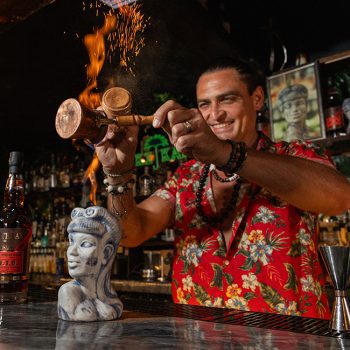
For Andreina Dunne, global communications manager of Maison Ferrand, success lies in creating rums that are worthy of people’s time and attention. “Bartenders play a huge role in that, as they’re the ones who introduce people to rum and bring them deeper into the category,” she says. “The market is challenging, without doubt, but what keeps us optimistic is that people are genuinely curious about rum and what makes one expression different from another.”
If brands want to remain relevant long term, they need to understand how younger audiences socialise, what experiences they value, and the role they can play within those moments, says Havana Club’s Parte, who believes the future of the category lies at the top-end. “Premium-and-above rum has only just begun to realise its global potential. This evolution isn’t only about the liquid; consumers want to understand the story behind the spirit, including its provenance, craftsmanship and heritage,” she says. Hayes of DropWorks thinks it all comes down to transparency. “People want to know that what’s in their glass is properly made and honestly presented, not just covered in sugar with a good back story,” he says. “That same curiosity is driving producers to be more open about origin and process, which can only be a good thing for the category.”
Some like it hot
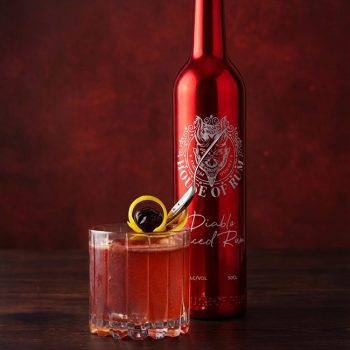
Buoyed by wider cocktail trends and the insatiable global thirst for the Spicy Margarita, flavoured and spiced rums are enjoying their moment in the sun. Responding to rising demand, David Howarth, founder of House of Rum in Manchester, recently released his first spiced variant, Diablo Spiced. “For too long rum has been stuck,” says Howarth. “Buried under pirate iconography, sweetened into submission, or dismissed as something you’ll only survive with a mixer. We wanted to change that. Spiced rum has always been part of the conversation, but I’m not sure it’s ever experienced the visibility and recognition that we’re seeing today.” He hopes the trend doesn’t lead to flavour overkill like happened with vodka and gin.
“I hope that as the rum revolution continues we don’t see too many outliers offering a load of silly flavours and blends, as that devalues the whole category,” he says.
At DropWorks in Nottingham, Lewis Hayes’ spiced rum, Spice Drop, doesn’t contain any added spices. “We wanted to prove that you could get all the warmth and comfort people associate with spiced rum purely from rum-making and using wood to develop flavour and colour,” says Hayes.
Global rum ambassador Ian Burrell believes spiced rum has seen a spike in popularity lately because most are significantly cheaper to produce than aged rums. “We’re also seeing a move towards spiced rums with little or no added sugar, reflecting consumer demand for authenticity, transparency, and more balanced flavour profiles,” he says.
Tom Khan-Lavin, CEO of drinks marketing agency YesMore, views spiced and flavoured rums like Dead Man’s Fingers as “the gateway drug” to the wider category. “They are accessible and hit that desire for bold, experimental flavours, but brands need to be careful not to make them feel juvenile. The moment a spiced rum starts tasting like liquid confectionery you’ve lost the discerning younger drinker,” he warns.
To succeed in today’s market, do rum producers need to offer affordable entry-level brands and top-tier super-premium brands in their portfolio?
Nathalie Parte – global marketing director, Havana Club
“Yes, because consumers want different experiences for different occasions. The brands succeeding today are those that can credibly serve every occasion – from cocktails and nightlife to sipping, gifting, and collecting – while maintaining consistent quality and authenticity throughout. Consumers today want different styles of rum for different occasions, which is why having a diverse and versatile portfolio is increasingly important.
“At Havana Club, we produce the largest and most diverse portfolios of Cuban rum, with quality offerings to suit every taste and palate – from light and elegant expressions ideal for refreshing cocktails, through to rich, extra-aged rums crafted for elevated sipping and gifting occasions. What matters most is that every expression delivers the same authenticity, craftsmanship and Cuban heritage consumers expect from Havana Club.”
In the current economic environment, can rum capture a wider audience of drinkers by being more affordable?
Alexandre Gabriel – owner and master blender, Planteray Rum (Maison Ferrand)
“Rum certainly has an opportunity today, but not simply because of price. Consumers are becoming more selective: they drink less, but expect authenticity, character, and expertise in return. Rum naturally speaks to that. Take our Planteray Barbados 5 Years Old. It spends five years ageing between the tropical climate of Barbados and the temperate conditions of France, following a centuries-old double-ageing method. That journey creates depth, balance, and elegance, which consumers can immediately taste. What matters today is not being inexpensive, but being at the right price for the quality, heritage and experience offered. Great rum has always had that strength.”
Ryan McFarland – chief commercial and strategy officer, Drinksology Kirker Greer
“I believe rum is well positioned to capture a broader audience in the current climate because it offers versatility across price points and occasions. Consumers are more selective with spend, but they still want quality and strong flavour experiences. Rum can deliver that without feeling unattainable. We are seeing continued growth in accessible premium, where drinkers are willing to trade up if the value feels justified. Brands such as Kadoo Rum reflect that shift, offering approachable, flavour-led expressions that appeal to a wide range of consumers and drinking occasions. Rum also benefits from its diversity, spanning simple mixed drinks through to premium sipping serves. The breadth of flavours in the category, from tropical and spiced profiles to richer aged expressions, is helping attract new consumers looking to explore beyond more traditional spirits categories while still offering an accessible entry point.”
Alexander Kong – commercial manager, spirits, Worthy Park Estate
“The short answer is an overwhelming yes. While the industry’s recent push toward premiumisation successfully elevated rum’s status, it also caused bottle prices to creep up. Not inherently a bad thing, it was sometimes driven by genuine age and rarity, other times just by fancy packaging. Fortunately, this price inflation didn’t sweep across the entire category. This has left a massive opportunity for brands to position themselves not just as ‘affordable’ options, but as delivers of tremendous value. Where the quality in the bottle far exceeds the price tag. Rum has long struggled to shake the ‘cheap and cheerful’ stereotype, but in today’s economic climate, that inherent affordability combined with high quality is exactly what will drive new eyes (and wallets) to the category.”
Related news
Trump hits Canadian spirits with 50% tariff