


Asia’s tourism boom creates opportunities for spirits
As international travel rebounds, and amid ongoing disruption in the Middle East, Asia could be the land of opportunity for spirits brands.
*This feature was originally published in the May 2026 issue of The Spirits Business magazine.
Travel disruption has hit the Middle East hard following the conflict in Iran. With formerly sought-after destinations like Dubai and Abu Dhabi now inaccessible, travellers will likely be looking elsewhere for holidays – and Asia is primed to benefit from a tourism boost.
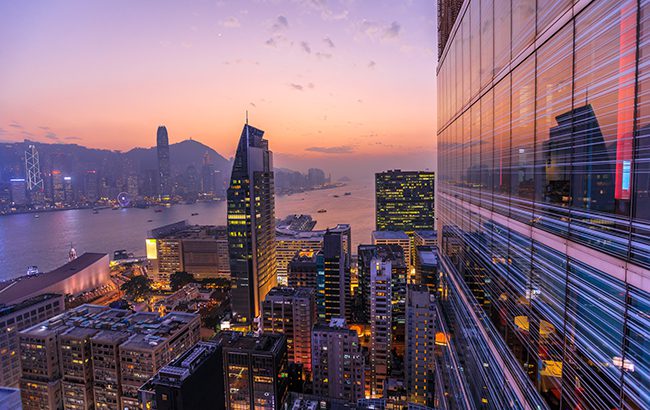
Simon Disler, founder of Hong Kong-based Drinks99, El Tequileño Tequila’s distributor in China and Hong Kong, says: “Dubai, for example, was an up-and-coming spot for many brands, and the places benefitting from things coming to a halt over there are the safer countries, like here in Hong Kong.” Hong Kong saw a 17% year-on-year increase in tourism for the first quarter of this year, according to the Hong Kong Tourism Board. Disler observes that popular tourist spots in Hong Kong and wider Asia are the beneficiaries. He also feels Asia is benefiting from self-tourism, saying: “People here are staying Asia-based, and those people that can fly are avoiding the Middle East, so we’re getting a lot of US visitors, while European countries are finding ways to fly to Asia, avoiding that zone, as well.”
While Middle Eastern tourism may be redirected in Asia’s favour, there is also the inverse of that to consider. “Some destinations like Bali, the Philippines and Vietnam have been impacted negatively because for many travellers coming from Europe, the Middle East was the pathway to Asia,” says Byron Kang, regional director for Asia with Proximo Spirits. “As nobody wants to travel through the Middle East right now, that makes other routes very expensive.” He notes the situation has affected Proximo’s sales in the first quarter for 2026, but “there are still enough tourists visiting different countries in Asia, and coming from Australia, so we’re able to sustain our business”.
Irish Whiskey Association director Eoin Ó Catháin is also uncertain about how the situation will play out. “I’m going to Thailand with the European Commission in May, and had to make sure that our flight didn’t go through the Middle East,” he says. “These are considerations a lot of people are having to make, and [Middle East airports] are the main hubs that cater to that premium traveller.”
The Asia Pacific region hasn’t yet returned to pre-pandemic levels, as international tourism arrivals were still down by 9% in 2025 compared with 2019, according to UN Tourism’s latest World Tourism Barometer report from January 2026. But international tourism in Asia Pacific was up by 6% in 2025 from 2024. Things are clearly moving in the right direction.
Addressing total beverage alcohol in Asia in 2024, Emily Neill, IWSR’s chief operating officer of research and operations, singled out Southeast Asia as a market that offers “room to grow value, supported by tourism, cocktail culture and rising affluence. The region is evolving, with new opportunities emerging.”
According to IWSR’s preliminary 2024-2025 data for Asian markets, spirits value in the Philippines (5%) and Thailand (3%) was up, while spirits volumes in the Philippines increased by 3%, and were flat for Thailand.
Tourism hotspots
Home to tourism hotspots like Bangkok and Phuket, Thailand’s thirst for cocktails has grown, with Tequila and mezcal of particular interest. IWSR data also revealed that agave spirits volumes grew in Thailand’s on-trade by 57% in 2024.
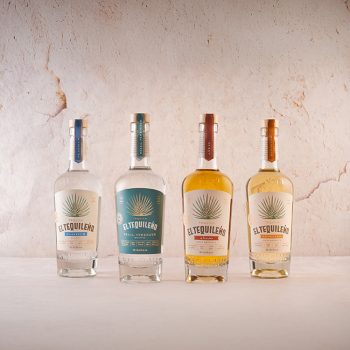
Steffin Oghene, vice-president of business development at El Tequileño, has had a first-hand account of the demand in Thailand, and throughout Southeast Asia and the wider region too. “Despite all the craziness, there are some top-class cocktail bars in Bangkok,” he says. “Then you’ve got Bali, which is hot, Singapore, Hong Kong and Beijing. The level of bartending in Tokyo has been known for many years, but they’re getting bigger and bigger.” Bar culture in Asia has matured. “There’s a really robust on-trade growing because you had so many people come in and inject their ideas, from London, Madrid, they’ve come with all their experience and enhanced everything that’s already great out there,” Oghene says.
He notes Asian markets have always had a taste for fine spirits, but this has been typically for whisky and Cognac. “For craft spirits, and especially Tequila, Asia is becoming a huge market,” he says. He also observes how premiumisation has shifted from retail into the on-trade, and how cocktail culture has evolved in Asia in recent times to cater to both growing international visitors and the interest that then trickles to the locals themselves.
“Up until now, you have had fine-dining restaurants and high-end retail, meaning collectors and wealthier consumers, buying high-end whiskies in Asia,” he says. “But I don’t think Asia’s had a huge number of cool-casual cocktail bars that deliver high-end cocktails in the past, and now these are coming onto the scene, and are high-energy places that people go to for the drinks – like Cat Bite Club in Singapore. It’s not just the fancy hotel bar anymore.”
Increasing interest
In July 2024, El Tequileño launched in China, Hong Kong, and Singapore, and in February this year in Thailand. Oghene adds: “We’ve pretty much doubled our sales in the past year in Asia, and it might be easy to see 100% growth on zeros, but it’s not quite as black and white as that. It’s really down to people becoming more and more interested.”
Disler believes the opportunity is with the countries and governments that are trying to drive tourism. In Hong Kong, he notes the effort the government has made on subsidising flights and putting on showpiece events and building stadiums in the past few years. “Some of it was long-term planning and some of it really just came up in the past 12-18 months where you had Singapore getting Taylor Swift and Ed Sheeran. Those big acts not coming to Hong Kong really put a rocket up a lot of people’s funds because of how much that swells the economy.” Disler also highlights cruise tourism, in which Hong Kong’s government has invested heavily. “You need to find the pockets in Asia where there is a healthy population, good government support for driving tourism and supporting the industries that need to be supported.”
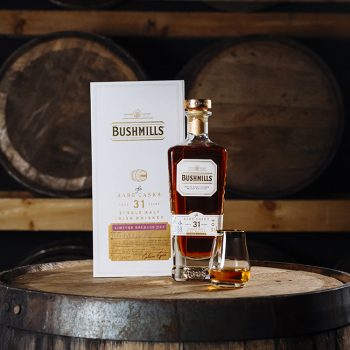
Speaking of tourism, Kang points to the number of travellers that countries like Vietnam and Japan welcomed in during 2025, more than 20 million and 40m respectively. “Asia is the fastest-growing unit for Proximo,” Kang says, noting that the company is also well-positioned in the region given its portfolio focus on Irish whiskey and Tequila, led by the likes of Bushmills, Jose Cuervo and 1800. According to IWSR data, the biggest growing spirits categories in terms of volume across Asia Pacific in 2024 were Irish whiskey (up by 27%) and Tequila (up by 14%). “We happen to have very strong brands in both of the categories, so Proximo is in a really good position to continue to grow in Asia,” Kang says.
One market Kang identifies as being abuzz with tourism and developing a discerning appreciation for Tequila is Bali. “It’s an interesting place,” he says. “It touches every price point, from budget-travel backpackers or entertaining the luxury tourists.”
In Asia, whisky has high saliency when it comes to ultra-premium and prestige spirits, with Cognac in there as well, but Tequila is starting to penetrate that segment too in Bali, notes Kang, for affluent travellers. “It’s been a great market for those US$200-US$400 Tequila bottles at retail price, or the on-trade, where it can get up to US$800 per bottle,” he says. “Our 1800 Milenio and GuachiMonton Tequilas are doing really well in Indonesia.”
As tourists flock to Bali and other areas in the region, and agave spirits grow too, the opportunity is there for the taking. “It’s not like the US. The evolution of Tequila is still in its infancy here, and it is critical for us to have the dominance of the standard or premium-price range Tequilas,” Kang adds.
Scotch is a more familiar category in Asia Pacific, but its growth in the region has tempered over the past five years, in part due to the global cost-of-living crisis and export fluctuations after the pandemic recovery. Tourism is playing a “significant role” in enhancing its profile as a premium product, says Stuart Smith, head of trade, Asia Pacific, at the Scotch Whisky Association (SWA).
Smith says: “Scotch whisky’s versatility and variety is well placed to tap into the many varied consumer demographics in Asia Pacific, and its importance in a modern hospitality setting should not be overlooked in the context of increased visitor numbers from around the world.”
FTA optimism
However, for Scotch to capitalise, Smith contends that appropriate trading conditions need to be in place. “We’ve so far seen positive developments in the form of the tariff reduction [halved] in China to 5% [Scotch whisky’s ninth-largest market by value, worth £161m in 2025] and the UK-India free trade agreement that is set to come into force this year,” he says. “Trade deals such as these not only make these crucial markets more accessible to a wider range of Scotch whisky companies, but have the added benefit of widening the range of brands and expressions available to consumers in those markets.”
Always on the trail for new growth opportunities, the Irish Whiskey Association’s Ó Catháin, speaks of Asia’s importance for his category. He cites Japan and India as top markets for growth over the past two years, and notes that with planned expansions in the US being paused, resources are being directed to Asia.
In Japan, he believes Irish whiskey’s profile from its triple distillation works in cocktails, namely the Highball, and therefore the category has taken off in the market. “We’re up to about 300,000 cases per annum there, and it’s a real bright spot,” he says. Regarding India, he says the growth has been significant, and it’s now the fifth-largest market for Irish whiskey: “We sell over 700,000 cases in India now compared with 70,000 five years ago, so it’s a huge jump in a small timeframe.”
Like the SWA’s Smith, Ó Catháine also notes the promise from the finalisation of the free trade deal between the European Union (EU) and India, which will gradually reduce taxes on EU spirits imports to 40%. “At the moment India has a 150% tariff to export our product there and that will be dropped to 75% once it’s ratified for both UK and Irish products. That’s a huge saving straight away, and it’s a relationship that would open the doors.”
An obvious place to look when considering tourism is travel retail, and Kang says “you can’t really talk about it without mentioning India”. IWSR data shows spirits volumes in India’s travel retail grew by 13% in 2024, and the region is viewed as the driving force for future growth in the channel, with the number of Indian travellers expected to grow by 50% over the next five years, according to Oxford Economics’ air passenger forecast from June 2025. “India’s middle class is rising, they’re travelling across the globe, across Asia, and they’re shopping tremendously in duty free,” Kang says, “because the price differential between Indian domestic pricing and India duty free pricing [or any duty free] can be triple, due to duties.”
Asia’s lift in tourism has also reinforced travel retail as an important channel for Taiwanese whisky Kavalan, particularly at major gateways such as the country’s Taoyuan International Airport. “We have collaborated with Everrich Duty Free to launch exclusive editions such as the Rhythm of Taiwan Collection – Ocean, inspired by traditional Hakka indigo dyeing and the Pacific Ocean that shapes Taiwan’s climate,” global brand ambassador and global PR officer Kaitlyn Tsai says. “These releases allow us to connect local culture, craftsmanship, and storytelling in a way that resonates strongly with international travellers.”

Destination distilleries
Beyond the airport, Kavalan is also emphasising its distillery as a destination. “Visitors are not only introduced to the whisky-making process, but are immersed in the story behind it, from subtropical maturation to cask management and flavour development,” Tsai continues. To date, Tsai says Kavalan has welcomed more than 10 million visitors.
From a US perspective, Rob Maron, trade expert for the Distilled Spirits Council of the US (Discus), recognises the opportunity Asia presents. “There’s a lot of dynamism, a lot of growth, growing middle-classes, and a younger adult generation that are very connected around the world and want to experience new things,” he says.
Discus hosted a delegation of American distillers at the end of April in Singapore to underline the country’s standing as a gateway to the region. Singapore recorded nearly 43% growth in US spirits exports in 2025. However, Maron says there’s plenty of work to be done. “Across Southeast Asia where our smaller craft members are looking to export, in Vietnam, Malaysia, Indonesia, and the Philippines, there needs to be a lot of education about what makes American whiskey different, or unique, and what makes it particularly good for cocktail culture.”
Kang welcomes the biggest challenge posed by Asia’s tourism boom, the competition: “Everybody sees the opportunity, the increased tourism, particularly in some of the focused areas like Bali, Tokyo, Osaka, and Ho Chi Minh, different resort cities in Vietnam and Singapore, and all those opportunities mean more competition – and at the same the cost of doing business rises.”
IWSR preliminary 2024-2025 year-on-year % changes in volume and value for Asian markets
| Country performance | ||
| Country | Value | Volume |
| India | 4% | 3% |
| Philippines | 5% | 3% |
| Thailand | 3% | 0% |
| Japan | -3% | -4% |
| China | -17% | -12% |
| Taiwan | -11% | -7% |
| Country performance, excluding national spirits (baijiu, soju and shochu) | ||
| Country | Value | Volume |
| India | 4% | 3% |
| Philippines | 5% | 3% |
| Thailand | 3% | 0% |
| Japan | -4% | -3% |
| China | -15% | -5% |
| Taiwan | -15% | -12% |
Which Asian markets are your top priorities for growth, and why?
Seiji Susuki – general manager, overseas department, Choya Umeshu
“In Asia, we prioritise three key regions for growth, each with a distinct strategic role.
“China represents the largest long-term opportunity, due to its scale and growing interest in fruit-based alcoholic beverages. We approach this market with a localised strategy to expand category penetration while carefully managing brand positioning.
“Southeast Asia, particularly markets such as Singapore and Thailand, plays a critical role in building consumption occasions. With strong tourism flows and a rapidly developing cocktail culture, these markets are ideal for introducing umeshu as a versatile cocktail ingredient through on-trade and experiential activations. In Singapore this month, we will open a permanent The Choya Bar to further showcase the appeal of ume fruit-liqueur cocktails to both local consumers and international visitors.
“Meanwhile, North Asian markets such as Korea, Taiwan, and Hong Kong are essential for establishing our premium positioning, as consumers have a strong affinity for Japanese products and craftsmanship.”
Kaitlyn Tsai – global brand ambassador and global PR officer, Kavalan
“Our priority markets in Asia include Korea and Japan, alongside key travel retail hubs such as Singapore and Vietnam.
“In Korea and Japan, strong whisky culture and openness to new world whisky drive demand. Cultural relevance is also important. Kavalan’s Solist Oloroso featured in Park Chan Wook’s film Decision to Leave, while figures such as BTS’s RM have helped introduce the brand to younger audiences. In Japan, collaborations such as Hololive VTuber [virtual YouTuber] Juufuutei Raden help us connect with digital-native consumers.
“Importantly, many of these moments are organic rather than paid, which strengthens authenticity and emotional connection. Meanwhile, travel retail markets like Singapore and Vietnam serve as key gateways to international consumers, supporting both brand visibility and long-term growth.”
How is tourism growth in Asia affecting your sales?
Marieke Liesting – global brand and customer marketing director, De Kuyper Royal Distillers
“The tourism boom across Asia has a positive impact on the broader hospitality industry, which naturally drives also the demand for high-quality cocktails. With more international travellers visiting bars and hotels, the need for consistent great-tasting drinks is increasing rapidly. However, as we see globally, the hospitality sector often faces challenges, like staff shortages and the need for speed of service, especially during peak seasons.
“Globally, our answer to this growing demand and these industry challenges are our pre-mixed cocktail solutions – democratising cocktails by allowing venues to serve bar-quality drinks efficiently. We see huge potential for these concepts as the Asian hospitality sector continues to grow.”
Related news
Desi Daru features at Sushisamba