


Can global brandy capitalise on Cognac’s challenges?
Not being restrained by the rules governing the production of Cognac and Armagnac means the world’s brandy producers are able to be creative. Now it’s up to them to convince consumers to try their drinks.
*This feature was originally published in the May 2026 issue of The Spirits Business magazine.
The conversation about brandy, at least at the premium end of the market, tends to be dominated by Cognac, despite the fact that grape-based spirits are found pretty much anywhere grapes are grown. That’s potentially changing though, with Cognac, and to a certain extent its French cousin Armagnac, facing a variety of challenges, opening up opportunities for brandies produced elsewhere.
“The classics moved their focus massively away from the UK, one of their most stable markets, and focused on the short wins, which has now come back to bite them,” says Dawn Davies, commercial buying director for The Whisky Exchange and The Whisky Exchange Trade. “In the meantime, brandies from other regions of the world are coming though with more attractive pricing, more modern looks, and a fresher, younger face.”
Denis Lesgourgues, owner of Château de Laubade Armagnac, paints a picture of tough times for both of France’s major brandies, while acknowledging that Cognac’s situation is the more complicated of the two.
“The challenge is the combination of protectionism policies, regional geopolitical crises, and slow demand and price sensitivity in key markets,” he says.
The opportunity for others is certainly there, but the world’s brandies are yet to take full advantage. Latest figures from IWSR reported an increase in volumes of all brandies, excluding Cognac, of just 1%, predicting this would remain at a flat compound annual growth rate from 2024 to 2029. Grape brandy, specifically, declined by 1% over the same period, and was predicted to follow the same trend.
The fight, if there is one, will be at the higher price points. As IWSR reports, Cognac only accounted for 6% of global brandy volumes in 2024, but at the premium-and-above price bands, this rises to 80%.
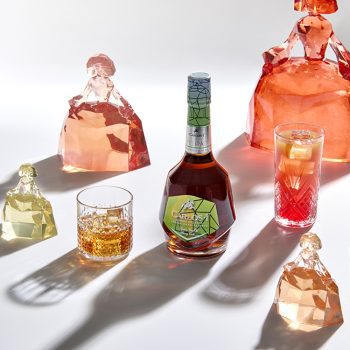
In Spain, Grupo Osborne is seeing the potential at the higher end of the market. “Our premium portfolio is benefiting from a growing appetite for spirits with genuine heritage and distinctive character, and Brandy de Jerez offers precisely that,” says Orlaith Whelan, brand manager of Carlos I and 1866 at Grupo Osborne, speaking about consumers who are “increasingly open to exploring beyond Cognac”.
At González Byass, Victoria Jupe, head of agency and spirits brands, recognises Spanish brandy’s specific advantages. “Traditional production methods such as Solera ageing and authentic Sherry cask maturation provide a compelling point of difference,” she says.
There’s clearly an opportunity for Spain’s brandy producers, but Gonzalo Medina, director of international marketing for Bodegas Williams & Humbert, suggests the situation is nuanced. “Sherry brandy can position itself as a credible alternative within aged spirits. However, the opportunity is not automatic. Cognac still enjoys significantly stronger brand equity and global presence,” he says.
“The challenge for Sherry brandy is not to replace Cognac, but to leverage this context to gain visibility, enter new consumption occasions, and position itself as a relevant option within the premium segment.”
French brandies from beyond the well-known categories are well positioned too, says Seven Tails co-founder Arnaud de Trabuc. “Unlike Cognac and Armagnac, French brandy is less regulated, offering greater flexibility.
“This allows us to meet a wider range of consumer tastes while maintaining high-quality standards,” he says.

Embracing creativity
Simon Wright, CEO and founder of UK brandy maker Burnt Faith, which opened in 2023, agrees: “The time is now to embrace the creativity that being outside appellations allows you. Brandy, up until now, has acted like Cognac, barely differentiating itself.”
For Greece’s Metaxa, too, this flexibility is key. “Cognac is sophisticated, and mostly enjoyed during special occasions, while brands like Metaxa are more adapted to everyday occasions,” says Huity Konstantinidou, hospitality, heritage and events director for Metaxa at Rémy Cointreau. “With reduced consumer purchasing power linked to global uncertainty and geopolitical context, these provide relevant alternative choices for sophisticated brown spirits consumers.”
Cognac’s reputation can indeed be both a blessing and a curse. “Its image is still often associated with formal luxury, perceived as unreachable and stiff, particularly by younger and more modern consumers,” says Alessandro Soleschi, chief marketing officer spirits for Italy’s Gruppo Montenegro, with Vecchia Romagna in its portfolio. “The current challenges faced by Cognac don’t weaken the brown spirits segment overall, but rather open meaningful headroom for Italian and other premium brandies.”
Rob Bourdon, CEO of Copper & Kings in the US, agrees that brandy can benefit by contrasting with Cognac’s traditional image. “It has largely been positioned as an after-dinner luxury, not something that lives in cocktail culture, and that’s limiting as consumer habits shift,” he says. “With things like tariffs and global pressures, and a new generation coming of age, there is a real opportunity for high-quality American brandy to step in.”
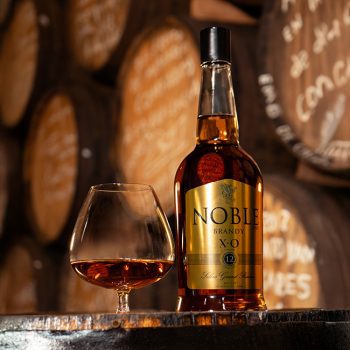
Also referencing tariffs faced by European brandies, among other headwinds, Nathan Picciotto, exports director for Brandy Noble 1954 at Casa Domecq Colombia, says: “This creates a genuine competitive window in markets where we were previously up against much larger players. The advantage is real, and we intend to leverage it.”
One way to leverage this is by making the most of brandy’s potential as a contemporary, relevant spirit, highlighting its inherent qualities. Brandy’s sometimes-stuffy image isn’t exclusive to Cognac, and it’s something that the broader category might do well to shake. As Davies puts it: “If they want to speak to this new market, the snobbery in the classic brandy categories needs to go away, and they need to show why the category is so wonderful.”
Yet in Spain, the challenge lies in shedding a contrasting reputation. “Sherry brandy has exceptional foundations, but has lost relevance due to a positioning historically focused on volume and mid-range products, associated with traditional consumption,” says Medina. “This isn’t a product issue but a perception one.”
Bourdon, in the US, experiences both ends of the spectrum. “We see it every day at the distillery. It’s been boxed into either low-end or high-end, and seen as something sweet or only for after dinner.”
Meanwhile, the ace up Italian brandy’s sleeve, according to Soleschi, is the country’s heritage and lifestyle. “These tend to be more appealing internationally, allowing the category to connect emotionally without feeling intimidating or overly ceremonial.”
The time is right for the flavours offered by brandy too, believes Davies. “The aged spirits category has opened up, thanks to whisky and aged Tequilas, so with their fruit-forward styles there is a palate for brandy.”
Wright highlights these characteristics too. “Go back to reminding consumers what a brandy actually is, and why it’s one of the most flavourful and versatile liquids in the world,” he says, leading to the category’s potential in the on-trade, and its mixability in particular. “Brandy’s versatility makes it the perfect companion for cocktails, but it’s probably the most underutilised of the major spirits categories.”
Producers are aiming to change that. “We are focused on shaking off brandy’s old-school image and stepping boldly into the mixology spotlight, to appeal to younger, trend-savvy drinkers,” says Whelan.
“The mixology trend is helping us reach new consumers beyond the traditional base, and we believe this will be a key driver of market growth in the coming years,” adds de Trabuc.
“Bourbon went through something similar, in the early 2000s, when a new generation – led by mixology – rediscovered it and brought it back into cocktail culture. We think brandy is set up for that same shift,” says Bourdon.
Geographically, promising brandy export markets vary from one brand to the next, as does the importance of their domestic markets. “The greatest opportunities lie in those markets and channels where consumers already understand and appreciate the premium segment, so the US is our top priority,” says Medina.
It’s a market proving to be successful for Château de Laubade; the Armagnac brand recently posted double-digit growth there, according to Lesgourgues.
At Casa Domecq, which also prioritises the US, Picciotto is optimistic about the Latin American market. “The category that has been largely overlooked here for years, with no clear brand ownership or leadership, and the broader context of dark spirits, where brandy competes with whisky and rum, is dynamic right now.”
Gruppo Montenegro, while retaining its focus on its domestic market of Italy for Vecchia Romagna, has been successfully setting its sights on China and Thailand, while enjoying significant growth in Romania, Canada, and the Balkans, says Soleschi.
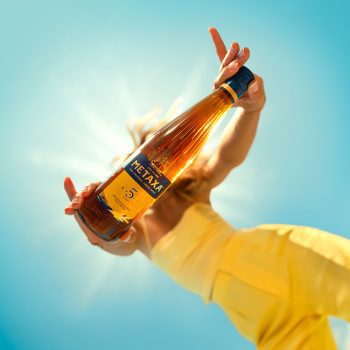
Another brand combining success at home and abroad is Metaxa, says Konstantinidou. “Its importance in its home market, together with the increasing popularity of Greece as a worldwide vacation destination, are contributing to the brand’s development worldwide,” she says.
Part of the culture
For others, the domestic market remains the priority. As commercial brand manager for Heineken Beverages in South Africa, Luwanda Mxhosana, puts it, “brandy is an integral part of South African culture.”
The company, which counts brands like Klipdrift and Richelieu in its portfolio, is, according to Mxhosana, responsible for 76% of the country’s brandy volumes. Here, much like elsewhere, the challenge is to keep moving with the times. “It is vital to understand that the traditional brandy consumer is ageing, and that we need to establish ways of building brands that resonate and appeal to younger consumers,” he says.
Similarly, Ukrainian brandy producer Aznauri is focused on the domestic market, which accounts for 90% of sales. Here, Alexey Druzenko, CEO of Global Beverage Trade, is seeing a shift towards the category from others such as whisky, vodka, and wine, “as consumers seek greater flavour diversity and new drinking experiences”. Specifically, Aznauri is enjoying success with flavoured expressions, which are helping to introduce new consumers to the category.
Whether it’s products like these, or more bartenders mixing the world’s diverse brandies into cocktails, the conversation is clearly broadening beyond products from established French regions, and is all the richer for it.
Is now the time for brandy to double down on premium cues, or lean into accessibility and everyday drinking?
Ahmed Rahimtoola – chief marketing officer sales and marketing, Tilaknagar Industries
“Brandy doesn’t have to choose between premiumisation and accessibility; the opportunity lies in doing both well. The category has traditionally been anchored in accessibility, but evolving consumer expectations are opening up clear headroom for premium cues. The focus, therefore, should be on building a strong ladder, where entry segments drive scale while premium offerings elevate perception and margins. At Tilaknagar Industries, we believe the real shift will come from making brandy more culturally relevant and contemporary, so it can play across occasions, not just price points.”
Related news
Juan Gil Reserva Solera Brandy makes UK debut