

Middle East weighs on Pernod FY forecast
Pernod Ricard sales stabilised during its third quarter but the Middle East conflict is expected to drag down its full-year revenue.
Pernod Ricard noted that it returned to growth in its third quarter (Q3), covering January to March 2026, with a slight uptick in organic net sales of 0.1% to €1.94 billion (US$2.28bn). By volume, Q3 organic sales grew by 4%.
In its two biggest markets, the US and China, sales plunged by 12% and 7% respectively during Q3. Excluding these markets from the rest of the world regions, Pernod Ricard’s Q3 organic net sales grew by 5%. Pernod noted a ‘challenging’ environment in China with ‘weak consumer confidence’ and tight regulations.
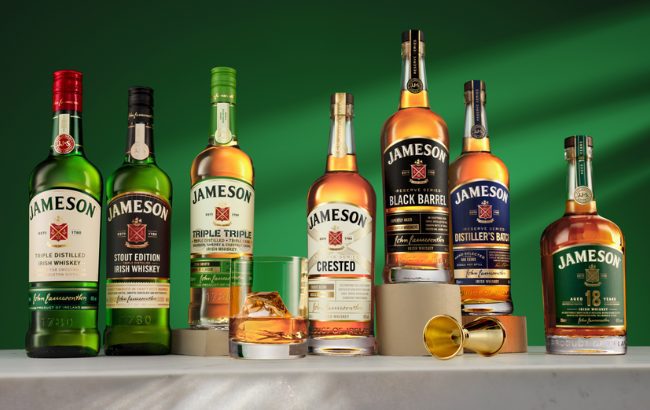
In the Americas region, sales dropped by 8% in Q3. However, in Canada, Pernod Ricard experienced double-digit growth in Q3 due to its ready-to-drink (RTD) portfolio, Canadian whiskies, and Jameson Irish whiskey. American products have been banned from the majority of Canadian provinces since March last year due to trade tensions, which has helped to boost sales of non-US spirits.
In the Asia and rest-of-the-world region, sales were down by 2% in Q3.
Q3 revenue was up by 6% in India, and both Brazil and Korea returned to growth in Q3.
In Europe, sales grew by 1% in Q3. The rebound was led by Bumbu rum, Jameson and Perrier-Jouët Champagne.
Pernod Ricard did not provide specific sales figures for its strategic international brands, but noted that the division rose by 2% in Q3. Scotch brands Ballantine’s and Royal Salute, and rum-based liqueur Malibu, drove Q3 sales.
Global travel retail performed strongly for the firm, up by 11% in Q3.
The ‘strategic local brands’ arm reported a 1% gain in Q3. The division’s performance was led by Indian whiskies Royal Stag and Blenders Pride, and blended Scotch brand 100 Pipers.
The RTD portfolio was up by just over a quarter (26%) in Q3.
YTD sales
For its year-to-date sales in the nine months to the end of March 2026, organic net sales dropped by 4.4% and total revenue was down by 14.8% on a reported basis to €7.2 billion (US$8.5bn).
In China and the US, sales plunged by 24% and 14% respectively during the nine-month period.
Year-to-date sales in China were impacted by declines for Martell Cognac and Pernod’s Scotch whisky portfolio, but premium brands posted ‘positive sales momentum’.
In the Americas region, Pernod saw its sales fall by 10% in the year to date.
In Canada, the business reported ‘solid’ year-to-date gains.
In the Asia and rest-of-the-world region, year-to-date sales were up by 6%, and in India sales grew by 11%.
Africa and Middle East YTD sales up but decline expected
The Africa and Middle East region grew by double digits in the year to date, led by Turkey, Nigeria and South Africa.
Pernod said it was ‘monitoring the evolving conflict in the Middle East’ with full-year net sales expected to be impacted.
As a result of the Middle East conflict, the French firm now expects total organic sales to decline between 3% and 4% for the full year.
In global travel retail, year-to-date sales were up by 2%. The group expects its GTR sales to decline slightly in its full-year results due to travel disruption from the Middle East conflict.
In Europe, sales were down by 2% across the nine months. France and Germany both declined in the year to date, while Poland was stable.
However, in terms of the year-to-date performance, its major global brands fell by 5%.
The ‘speciality brands’ portfolio is down by 8% in the year to date (down by 9% in Q3) due to ‘weak’ sales for Lillet apéritif, but Bumbu and Código Tequila rose by double digits over the nine months.
‘Transition year’
In its outlook, Pernod Ricard described 2025-26 as a ‘transition year with improving trends’ for the second half.
It expects to deliver one-third of its €1bn operation efficiency savings goal for 2026-2029 by the end of the current fiscal year.
In the medium term (fiscal 2027-2029), the business predicts organic sales will rise by between 3% and 6% on average.
The business also intends to tap into consumer trends and needs such as ‘addressing affordability’ through smaller formats and its standard and premium brands.
It also plans to capitalise on consumer experiences like music festivals and the convenience trend through RTDs, as well as launch no-and-low products to leverage the ‘broadening of consumer occasions’.
Pernod Ricard also did not provide an update on its recent merger talks with US spirits player Brown-Forman, owner of Jack Daniel’s.
But the French firm potentially has competition from another spirits company, Sazerac, which is reportedly eyeing up its Kentucky neighbour Brown-Forman.
Related news
Pernod Ricard reportedly mulls India IPO