


Pernod Ricard: can the apéritif category be defined?
Pernod Ricard recently appointed Francesco Ottaviano to the position of vice-president for gins and apéritifs. In his first interview in the role, he tells The Spirits Business what is exciting him most about these two diverse categories and shares his vision for the firm going forward.

While gin and apéritifs are two separate and distinct sectors, they both share a level of diversity and potential that excites Ottaviano, who was appointed to the role of vice-president of the categories at the beginning of 2026.
On one hand, he says, “gin is a category with a lot of legacy, which makes it very rich. It has interacted and built bonds with consumers over many decades, and it has enjoyed big growth, especially in Europe, over recent years – a growth that is softening more recently, but still remains very open to innovation.”
In fact, he notes that there are not many categories as open to innovation as enthusiastically as gin is, especially when the flavoured gin market is considered alongside the emerging non-alcoholic category.
Furthermore, he explains that the potential for gin’s success in Europe to be replicated in other growth markets is exciting, and one such emerging market he expresses interest in for the category is Latin America, which he refers to as a “growth pocket of opportunity”, and where they’re seeing the category “being flamboyant, and growing year on year.”
Meanwhile, on the other hand, he says, “there’s this other category that we call ‘apéritif’, which is a label that we give, but is yet to be defined, because I don’t think consumers globally always define it in the same way the industry does.
“Apéritif is still being shaped in consumers’ minds, with huge room to build understanding and occasions,” he explains. But while both gin and apéritifs are at very different life stages, finding synergies and “points of contact” between the two, and having the opportunity to curate and grow these contrasting yet complementary categories, is what excites him most.
Positioning vs execution
In approaching these two categories from a global perspective, Ottaviano shares that brand positioning always stays universal, with the core brand ethos remaining true regardless of the market. But it is how it’s brought to life that changes by region and drinking culture.
This means that the occasions each brand leans into, how the drink is served, and the channels in which that drink is pushed, are all flexible. As he puts it, a brand may always be “urban and energetic”, but that energy will be expressed differently in somewhere like Brazil versus Europe.
He uses apéritifs as an example of how regional drinking cultures reshape the way Pernod Ricard positions its brands Lillet and Italicus globally.

In traditional apéritif cultures, such as France and Italy, the drink is strongly anchored around the meal – used as a moment that “breaks the ice”, signalling conviviality and opening up the social occasion. Meanwhile in newer apéritif markets such as Latin America, there is little or no link to food, and rather the category is being enjoyed earlier in the day as an alternative to hard spirits, on account of them being lighter and more refreshing. They also allow for longevity of enjoyment, on account of being lower-ABV.
However, this trend for earlier drinking transcends cultures and geographies and also moves into generations. According to recent reports, younger legal-drinking-age generations, such as Gen Z, are losing interest in late-night drinking and nightcaps, and instead turning to ‘daycaps’ – ordering lighter alcoholic drinks throughout the day or immediately after work – a trend that is said to be “indicative of broader shifts in Gen Z’s drinking patterns”, according to Slurrp. By shifting away from the culture of late-night binge drinking towards more thoughtful, quality-focused imbibing, a gateway has opened for the apéritif category.
Ottaviano explains: “There’s a growing trend of starting drinking earlier in the day, and drinking something lighter, both in terms of ABV and in terms of taste, so less rich taste; something refreshing.” Apéritifs by definition cater exactly to that need, he says. “This is one of the two major forces behind the growth of the trend. Even in markets where the name ‘apéritif’ means nothing.”
The growth of the ‘aperitivo moment’ and the success of the Spritz is the other force behind the category’s continued success, but for Ottaviano, the Spritz itself has moved beyond its recipe to become more of a beacon to the occasion, rather than just a serve on its own.
“The name ‘Spritz’ today is no longer associated with the recipe. What I mean is that the Spritz signals a light and refreshing drink that you can start early in the day and keep on drinking. That said, I do believe that this helps with landing that ‘category notion’, where a category doesn’t actually exist.”
He clarifies: “When I say the category doesn’t exist, I mean it’s very diverse – it isn’t a vertical category. Vodka is a vertical category. Whisky is a vertical category. But apéritif has multiple facets in terms of liquid and product. The name Spritz has helped to anchor it into a definition.”
The right time to launch
At the beginning of March, Pernod Ricard launched Lillet 0% – the first non-alcoholic line extension of the brand.
At the time of the launch, Ottaviano noted that the alcohol-free ‘spirits’ sector is the fastest-growing spirit category, and is set to reach a value of €1.1 billion (US$1.27bn) by 2034. Alcohol-free apéritifs, he said, are the key driver of this rapid growth. “This shows that alcohol-free isn’t just a trend, it’s a new way of socialising.”
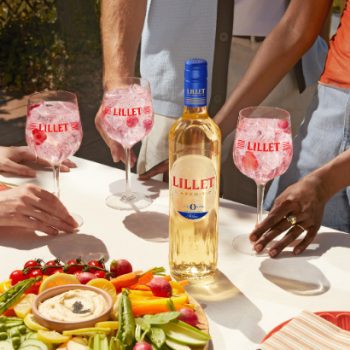
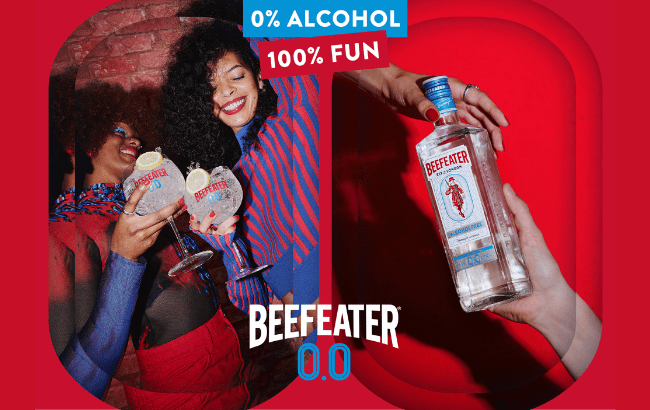
The launch of Lillet Blanc 0% coincides with Pernod Ricard’s expansion of its non-alcoholic Beefeater SKU, which is now in 25 distribution markets globally.
But how does Pernod Ricard determine which markets it is going to launch its new no-and-low products into?
Ottaviano explains that timing new launches is essentially a balance of consumer truth and market readiness. To make sure they land that balance, they look at whether there is a real, proven consumer need. “If there’s an opportunity, if there’s a consumer occasion that can be satisfied, that’s what we’re listening to, and that’s what we want to cater for,” he says, pointing to the trend of ‘zebra striping’ as an indicator of the moderation movement that in turn indicates a readiness for lower-ABV products.
Then they assess whether a market is receptive by looking at signs, such as the maturity of the wider no-and-low category. He explains that he uses beer as a proxy for this, as by determining if there is “a knowledge and consumption of non-alcoholic beer that is significant” in that market, it can determine the levels of consumer attention to the category.
The second element they explore is the relative strength of the brand in that market, evaluating whether a specific brand has a real “right to win” in that country, with strong enough equity and credibility to make the launch meaningful.
“These two elements, assessed case by case, would determine where we want to be,” he says, because launching too early risks rejection, while launching too late means merely following the market. As such, only when consumer need, timing, and brand power all align do they move, which is why, he says, they chose to debut Beefeater 0.0% in Spain initially to test and establish the proposition in a place where both the brand and the no/low trend was strong.
The strategy, he explains, has been to treat Beefeater 0.0% not as a niche experiment but as a global expression of a long‑term moderation trend, building a broad footprint where consumer demand, timing and brand power align. “Looking at this, we realised that there is space for Beefeater 0.0% to have a very broad global footprint. That’s why we are entering markets in a targeted way on a bigger scale.”
Returning Pernod Ricard to its roots
As Ottaviano readies to complete the first quarter in his new role, I ask what his long-term vision is for the two categories at Pernod Ricard, and what he hopes to achieve over his tenure as vice-president for gins and apéritifs.
“Pernod Ricard was built on the apéritifs Ricard and Pernod pastis; the company’s backbone and the foundation is apéritif,” he explains, noting that only later did the firm expand beyond its apéritif core into a broad global portfolio of spirits.
Ottaviano’s vision, therefore, is to honour and return Pernod Ricard to its apéritif roots while future‑proofing both categories globally. To achieve this, his vision is to determine a leading, defining role for apéritifs worldwide, going back to what Pernod Ricard’s “founding fathers” built with pastis, while expressing that heritage in a way that is “contemporary and relevant” to today’s occasions and drinking cultures.
Meanwhile, across both categories, he wants to build a portfolio that can straddle full‑strength and low/no, so consumers can move fluidly between alcoholic and non‑alcoholic options without losing the ritual, conviviality and visual pleasure of the drink – positioning Pernod Ricard as a global reference point for both classic and modern expressions of gin and apéritifs.
Related news
Freixenet moves into apéritifs with Solare