


Worthy Park: single estate, many possibilities
The only single estate rum brand in Jamaica, Worthy Park, offers a rare, fully integrated approach, with total control from cane to bottle.

Considering the reputation Jamaican rum has, you might be surprised to learn that only one distillery on the island grows its own sugarcane: Worthy Park. “We’re 100% Jamaican-owned and -operated, and we’re single estate,” explains commercial manager Alexander Kong. “There’s no one else like us in Jamaica. There are very few rum distilleries globally that are a full-sugar operation in terms of growing cane and a sugar factory.”
Worthy Park’s history dates all the way back to 1670. For most of its life, the estate’s main business activity was the cultivation of sugarcane and the production of sugar. The site’s earliest record of sugar production was in 1720, with rum production following in 1741, giving the estate the earliest record of rum production on the island among the active distilleries.
The property was sold to Frederick Clarke in 1918. His family remains the majority owner today, with the company led by his great-grandson, CEO Gordon Clarke. In the 1960s, Worthy Park halted rum production and sold its molasses to other producers. In 2004, however, Gordon Clarke convinced the family to fully re-enter the world of rum by building a new distillery, with the goal of distilling, ageing, blending and bottling its liquid on site and developing Worthy Park’s own brands.
A taste of Jamaica
As an expression of Jamaican terroir, nothing comes close to Worthy Park rum. The brand’s liquid is, of course, made with the estate’s own sugarcane, which is grown 1,200 feet above sea level. The area’s combination of cool nights and warm days, as well as its rich soil, is perfect for the cane. The rum is also aged on site, with the tropical conditions ageing the liquid much more effectively.
“The terroir of Jamaica is perfect for making perfect rum,” says Clarke, “and Worthy Park is the best location within Jamaica.”
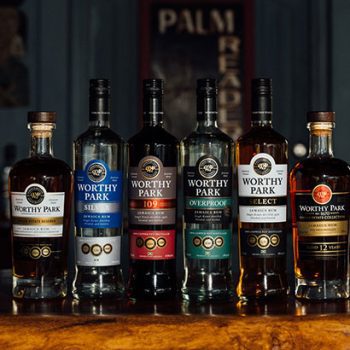
Using homegrown sugarcane gives Worthy Park an immense level of control over its rum quality. “A cut of ribeye steak is a lot different to using ground beef,” muses Kong. “The raw material is so important, and having full control over that is just second to none.” Other distilleries that source their raw materials from other countries will have challenges with consistency. “If you drink a bottle of Worthy Park Select this year and you love it, we want it to taste the same when you try it in the next year,” explains Kong. “To do that, fermentation, distillation and other factors are important, but you also need to have consistency through your raw materials.”
In addition to its single estate status, another way Worthy Park sets itself apart is through its absolute dedication to pot still rum. “Worthy Park is 100% pot still rum. We don’t even have a column still,” explains Clarke. “Jamaican rum is famous for flavour due to the techniques used, the location and climate, and having blends which include traditional Jamaican pot still rum.”
That doesn’t mean the brand doesn’t innovate. “We’re not just trying to push boundaries; we’re trying to show a different side of Jamaican rum while still using traditions and following the rules of Jamaican rum,” says Kong.
Jamaican rum is generally known for its molasses base, but this is an area in which Worthy Park has experimented. Its Overproof expression features rum made from cane juice alongside molasses-based rum, and it has also created a few smaller releases of expressions made entirely from cane juice.
Cask finishes are another area for experimentation. “We have a variety of casks currently ageing and some already been released that have had secondary ageing in barrels previously used for Calvados, Cognac, Marsala, Port, and Madeira,” says Kong.
Finessing flavour
In terms of a house style, Worthy Park likes to “skirt the middle” of the Jamaican rum spectrum. If high ester, funky rums are at one end, and light blended column and pot still rums are at the other, Worthy Park is a balance of the two. “There’s no denying that our rum is 100% pot still, and our distillery team has done a good job with all our releases – they’re widely accepted by the rum community, but they’re also easy to introduce people to Jamaican pot still rum,” says Kong.
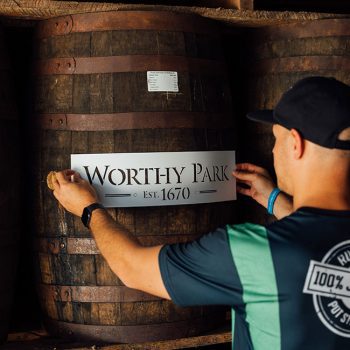
Although it aims to strike that balance, Worthy Park can’t be something for everyone. “Taste is subjective, and you get to a point where you realise you’ll never make everyone happy,” he laughs. “But one great thing about our portfolio is that the team has created such an amazing diverse portfolio of rums, and it’s all from one still.” That helps to maintain a common thread between all of its expressions, even as the brand experiments.
In terms of demographics, Kong believes Worthy Park drinkers tend to be the more modern rum consumers. “We’re trying to be the new option for people who aren’t trying to drink what their grandfather drank all the time growing up,” says Kong. “They see that rum can be a different style and be premium. We want to appeal to those bold tastemakers who are not afraid to step out on their own and create their own style and buzz.”
Kong believes rum truly is at a turning point, and it’s up to producers to represent the change they want to see. “It’s our role at Worthy Park to educate people that rum can be bold but also refined and elegant,” says Kong. “It can be traditional – with pot still rum – but also progressive – in terms of ageing, secondary barrels and cane juice. That’s what we’re trying to do at Worthy Park.”
https://worthyparkestate.com/
Related news