

Is the ‘Ozempic era’ an opportunity for no-and-low?
With growing research to suggest GLP-1 drugs reduce the desire to drink alcohol, Eloise Feilden asks whether the ‘Ozempic era’ offers opportunities for the no- and low-ABV sector to thrive.
*This feature was first published in the February issue of The Spirits Business magazine.
The pressure that GLP‐1 receptor agonists – better known by brand names like Ozempic, Mounjaro, and Wegovy – are putting on the restaurant sector has been well documented. Originally developed to treat type 2 diabetes, GLP‐1s have since been widely adopted as weight‐loss wonder drugs, with users spending significantly less on food and dining out as a result. With one in eight US adults taking GLP‐1s, and nearly a tenth of adults in Great Britain using or considering turning to these drugs, the impact on the on‐trade is significant. Restaurants have been forced to innovate to keep up with resulting changes in consumer habits. Heston Blumenthal’s Berkshire restaurant The Fat Duck has launched a “scaled‐down” version of its tasting menu in response to the growing use of GLP‐1s. In New York, the Clinton Hall chain has developed a “teeny‐weeny mini meal”, complete with a bite‐sized burger and a portion of fries that fits into a shot glass.
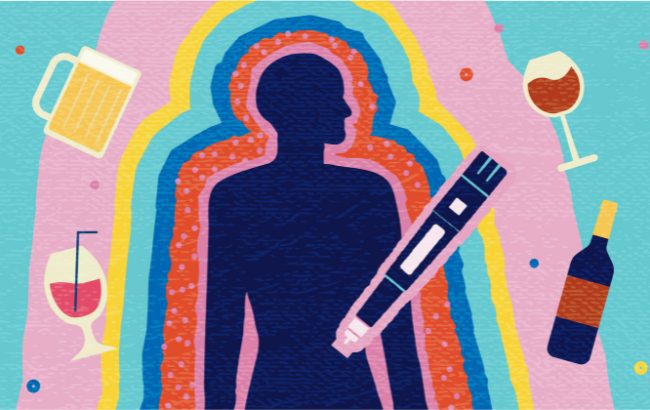
But food services are not the only ones having to innovate, with growing evidence that GLP‐1s reduce the motivation to drink alcohol too. These drugs work by modulating reward responses in the brain, and studies have shown them to decrease alcohol intake, reduce the motivation to consume booze, and potentially lower alcohol‐induced reward.
Anna Sebastian, founder of consultancy agency Anna Sebastian Hospitality, and non‐ profit organisation Celebrate Her, believes these drugs are having a fundamental impact on our drinking culture. “People are not eating as much [on these drugs] because they can’t, but also drinking habits have had to change,” she says.
Drinking differently
Not all of this is bad news. Sebastian believes that GLP‐1s are responsible for people “drinking differently” rather than avoiding alcohol altogether, opting for less sugary drinks and “going back to vodka and Tequila sodas”.
The rise of these medications is also creating new opportunities, particularly for brands in the no‐ and low‐alcohol category, which can capitalise on the moderation shift. No‐and‐low drinks have been gaining ground for some time. Volumes in the world’s leading 10 markets rose by 4% in 2024, and value increased by 6%, according to IWSR’s No/Low‐alcohol Strategic Study 2025. By 2029, IWSR forecasts no‐alcohol volumes will have expanded by as much as 36%.
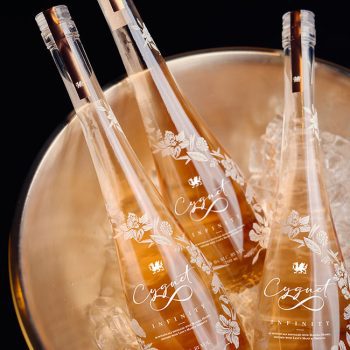
Spirits producers have taken note. In December, Welsh gin brand Cygnet, launched in 2023 by classical music singer Katherine Jenkins OBE, released non‐alcoholic botanical ‘spirit’ Cygnet Infinity.
Katie Potter‐Jones, the brand’s global marketing director, says Infinity is Cygnet’s response to changes in the experiences people are seeking from their drinks.
“We’ve witnessed a fundamental shift in drinking culture,” she says. “People want choice and flexibility in their occasions, whether they’re moderating or choosing not to drink at all.”
Made with functional botanicals including lion’s mane, Siberian ginseng, schisandra, and manuka honey, Cygnet Infinity also taps into the growing interest in functional drinks.
IWSR data reveals ‘alcohol‐adjacent’ drinks containing mood enhancers such as CBD, nootropics and adaptogens are being embraced by younger consumers for their functional benefits, with volumes up by 11% in 2025. The increased adoption of GLP‐1 drugs goes hand in hand with this trend, as health and wellness transform the way we consume food and drink.
Tom Bell, founder of DrinkWell, a UK retailer that specialises in lower‐calorie alcoholic drinks, argues that GLP‐1s are “an accelerant” of an “endemic psychological shift towards health and wellness” that is already taking place. “Brands in that space will continue to see a significant development in traction,” he says, driven by an “increased propensity to purchase things that have a better‐for‐you, more functional approach”.
New products coming to market reflect the rise of the wellness trend. In January, Maison Ferrand‐owned gin brand Citadelle debuted its first non‐alcoholic expression, Citadelle 0.0, in France and Italy.
The brand is targeting “mindful drinkers who care about flavours, balance and craftsmanship, and who are also attentive to their wellbeing”, says owner and master blender Alexandre Gabriel. He developed the expression to be lower in calories to make it “even more relevant” to health‐ conscious consumers.
But health is not the only factor influencing people to use GLP‐1 drugs. “It’s about the aesthetics of how this drug can make you look,” says Sebastian, suggesting that while people on GLP‐1s may be moderating their drinking, they “still want the night out”. The rise of GLP‐1s has coincided with a growth in businesses catering to teetotal nightlife. Ronnie Traynor founded The Sober Social in 2020, hosting alcohol‐free events in spaces “where people think they need alcohol, like nightclubs and bars and restaurants”. Health and wellness therefore aren’t the main focus for Traynor’s business. “People have said to me before, ‘Why don’t you do a sober social and go to yoga or do a cold plunge?’. But generally, people do those things sober anyway. You don’t generally go to yoga after a bottle of wine or 10 shots,” she says.
The same motivation inspired New York’s Bright Nights Social, which hosts regular sober dance parties in the city. Founder and CEO Sam Bail self‐identifies as a “sober party girl”, and believes this demographic is underserved by brands and venues. “It’s very easy to be sober at two o’clock on a Thursday. What do you do at nine o’clock on a Friday or Saturday night when your friends are out partying at the club?,” she says. “We crave that connection, and we crave a little bit of hedonism, fun, joy and dancing. That is barely present in the sober space.”
One venue trying to fill this gap is Hekate. When it opened nearly four years ago it was New York’s first bricks‐and‐mortar sober bar. Manager Eliott Edge says health messaging has no place in the bar’s branding. “In trying to create a bar‐like atmosphere, you don’t really want to push forward the messaging of wellness,” he says. “You want your bar to feel a little dangerous, because when it feels dangerous, it feels sexy, and there’s nothing terribly sexy about wellness messaging.”
No‐ and low‐alcohol brands therefore risk pigeonholing themselves if they put too much focus on health and wellness. Instead, a holistic approach to lifestyle is key to staying relevant.
“Ultimately, what we are trying to do more than ever is live longer, happier, healthier lives,” says former Diageo executive Claire Warner, founder of Drink Positive. “Whether we like it or not, bars, pubs, restaurants – they’re the third spaces we go to connect,” she says, arguing that no‐and‐low drinks, and the venues that offer them, can broaden the way we socialise and the occasions when we come together.
“Now, we can still go and have those moments that are critical to our physical and mental health, and we can equally have delicious drinks whether they contain alcohol or not,” she says.
Brands are following suit, aligning their alcohol‐free expressions with existing consumer habits to engage with people looking to moderate their drinking without changing their lifestyle.
Flavours and ritual
London‐based gin producer Hayman’s recently launched its first alcohol‐free expression, two years after revealing its low‐ alcohol ‘spirit’, London Light. The goal of the latest addition is to emulate the experience of a G&T without the booze, says co‐owner and fifth‐generation family member Miranda Hayman. “A zero‐alcohol alternative still has to emulate the flavours and ritual of their favourite cocktails if it is to become a go‐to,” she says.
Cygnet’s Potter‐Jones agrees. “This isn’t about creating a product for ‘non‐drinkers’ as a separate category – it’s for anyone who values exceptional taste and craft,” she says. Indeed, Cygnet Infinity was developed to broaden the types of occasions the brand can cater to, whatever the motivation, whether it be “wellness, performance, or simply because it’s Tuesday”.
Willoughby adds: “This is about social inclusion, having the right drink for the right occasion, and something that tastes nice. Ultimately, flavour and taste is what keeps people drinking these drinks.”
Industry insights
The price of low/no-alcohol products continues to be a divisive talking point regarding the category. What work needs to be done in this area to show the worth of low/no products?
Vedran Milosevic – global managing director, Cygnet Gin
“I completely understand why pricing is a talking point – there’s an assumption that removing alcohol should make a product less expensive or more cost‐effective. But the reality is that creating a 0% [ABV] ‘spirit’ with genuine complexity is incredibly challenging and often more expensive. With Infinity, we’re using carefully selected ingredients like lion’s mane, schisandra, and manuka honey, and the extraction process is incredibly hands‐on – Lion’s Mane alone requires a two‐hour infusion. There’s no alcohol to provide body or warmth, so every element of flavour and texture has to come from the botanicals and the craft. Craft at this level doesn’t reduce the cost of production versus alcoholic spirits – if anything, it often demands more. “The good news is that consumers who want quality get it. When Infinity won Gold at The Spirits Business’s global Low & No Masters within weeks of launch, that validated the approach. It’s about finding your audience – the people who refuse to compromise on quality, whether they’re drinking alcohol or not. As more people experience genuinely exceptional non‐ alcoholic ‘spirits’, the value proposition becomes crystal clear. Quality speaks for itself.”
Is mid-strength alcohol gaining ground?
Should all lower‐ABV drinks be considered under one umbrella? For a growing number of people, the answer is “no”.
No‐and‐low brands and products are often considered as one category, but while the choice to drink alcohol‐free “is an active choice that you’re not drinking”, low‐ABV alternatives are “more of a lifestyle choice”, says Anna Sebastian.
The Celebrate Her founder believes there is a “gap in the market” for mid‐ strength products to shine.
Laura Willoughby, Club Soda’s founder, agrees, noting she has seen mid‐strength products “beginning to grow” in popularity. “People are looking to have the same number of drinks but half the alcohol, and it’s a really easy sell to the consumer,” she says.
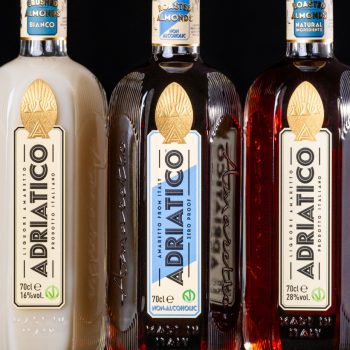
Italian liqueur Adriatico has jumped on the trend. Owner Jean‐Robert Bellanger says his aim was to create the first liqueur brand offering three alternatives to traditional amaretto, with a full‐strength amaretto liqueur (28% ABV) “made a different way”, with roasted and salted almonds from Puglia, a non‐alcoholic version, and a lower‐ABV 16% Bianco, made with white crushed almonds, which is “unique on the market”.
Session Spirit is another brand tapping into the growing demand for mid‐ strength. Brad Crompton and Nick Johnson launched the brand – a 25% ABV gin – in 2019 “in the jaws of lockdown”.“For us, it’s all about creating better sessions,” says Crompton, wanting his brand to act as an alternative to existing “all‐or‐nothing options” to offer consumers “the best of both worlds”.
Rather than an alternative to booze, mid‐strength products “allow you to stay for two drinks rather than one”, he adds. “The mid‐strength appeal and the collective message across wine, spirits and beer is about better balance. It’s making it easier for you to make better choices – it’s about lifestyle.”
Sebastian agrees this is where mid‐ strength drinks can thrive – “bridging” the gap between lifestyle and moderation. She says: “That’s the direction of menus and back bar products – it’s more than just a product now, it’s got to tap into that lifestyle.”
Related news
Desi Daru features at Sushisamba