


Why Africa remains a growth market for spirits
Africa is one of the few regions with positive growth for spirits, according to Euromonitor, led by markets like Nigeria and Kenya.
Euromonitor International data shows the Middle East and Africa (MEA) region saw volume growth of 3.7% for spirits last year, with a compound annual growth rate (CAGR) forecast of 3.3% between 2025 and 2030. The data excludes spirits-based ready-to-drink (RTD) products.
Christopher Day, a Cape Town‐based consultant at market intelligence company Euromonitor International, says Africa is “just above positive growth” in the spirits market.
He attributes the growth to local heritage brands, such as ogogoro, a popular Nigerian spirit that is “expanding regionally”. Day notes that African spirits “are starting to become more global”, explaining that the country has typically imported international brands as “status-driven consumption in Africa is still very high”.
He continues: “What we’re now seeing is that local heritage and local identity are becoming very important for Africans. Internationally, it’s being seen as something different as a product offering. Within the spirits market, innovation is slowly petering off, just because so much has been done. It’s why we’re seeing spirits players more aggressively entering RTDs, because it allows for that innovation to do better.”
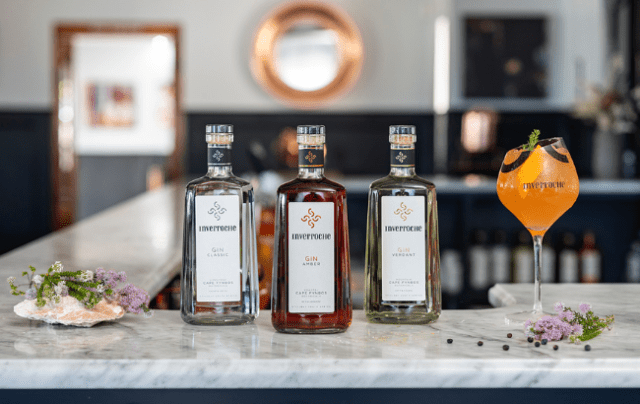
He adds that South Africa has a “massive gin culture on the craft side”, citing the acquisition of local brand Inverroche by French spirits conglomerate Pernod Ricard in 2025. He believes the deal shows how African brands are being positioned for the global market.
Beyond gin, whisky’s performance is mixed. According to Day, economy brands are “relatively stable” while super-premium “is generally doing quite well”, but this comes down to the “distribution of wealth” across markets.
Data for the MEA region shows that the total whisky category rose by 4.2% in volume in 2025, with a CAGR forecast of 2.8% from 2025 to 2030. Meanwhile, gin saw a 3.7% volume gain last year in MEA, with its five-year CAGR set to rise by 5.15%.
The Cognac/brandy segment’s volumes rose by 2.3% in MEA last year, with an expected CAGR of 1.33% in the five years to 2030.
Vodka is also set to grow its volumes by 2.5% CAGR from 2025 to 2030, following a 3.5% volume increase last year.
Day highlights four noteworthy spirits markets: South Africa (up by 1.9% in volume last year), Nigeria (+2.3%), Kenya (+5.5%) and Morocco (+1.7%).
For spirits, the “safe bet” is South Africa, which Day describes as “stable and relatively consistent”. He explains: “This stability is underpinned by relatively high disposable incomes versus the rest of the continent, while sustained product innovation across premium gin, whisky and local craft propositions keeps consumers engaged and trading up rather than out of the category.”
However, Nigeria is outpacing South Africa, with growth driven by bitters brands, particularly Diageo‐owned Orijin.
Meanwhile, Irish whiskey exports to Africa rose by 26% last year, a Bord Bia report showed, with growth of 48% since 2023. Exports to Nigeria soared by 40% and South Africa grew by 30% in 2025.
Day describes Nigeria as an interesting market, which has “a lot of local infrastructure”, including a factory for producing Diageo’s Guinness. “That’s obviously not within the spirits category, but it does set up that Irish kind of identity within Nigeria,” he adds.
“When it comes to Irish whiskey, it’s very much tied to status-driven – more affluent Nigerians who are looking to position themselves as successful. Generally, it will be with friends at dinner or on-trade, being seen as a status symbol.”
Vodka leads Kenyan spirits growth
Day calls Kenya “one of the stronger growth markets on the continent, led predominantly by vodka”.
Within the country, the vodka category “benefits from its accessible price point and its perception as a ‘cleaner’, lower-calorie spirit”, says Day, “which aligns well with a comparatively health-focused Kenyan consumer base”.
As such, vodka has become the “default entry category across consumer demographics and value-led shoppers, improving its performance versus darker, heavier, and more expensive spirit categories”, Day highlights.
Regarding Morocco, he says it “remains one of the smallest spirits markets in Africa, illustrating how local culture and religious practices can constrain alcohol demand, even in a relatively higher income North African economy”.
When talking about the region as a whole compared with the rest of the world, Day says: “We’re in a better position than developed markets, but I don’t think developing markets are going to run away with growth, either. This comes down to demographics; we may have a younger population, a population that is growing more than more ageing Western populations, but we still need to transition to a higher average income.”
Major players shift focus to premium
Day has also noticed that some producers are turning to local manufacturers and bottlers to take on their value products.
“If you look at how your global players are now operating in Africa – and this is still developing, and it could change – but what I’m now seeing is that they are happy to let a secondary or third bottler basically produce the brand and they collect the royalties,” he says.
“But they will focus on the more premium products they control in terms of production, so they can ensure the quality side of that premium is upheld.”
Regarding the challenges facing Africa, Day says it comes down to “improving disposable incomes, which then allows for better discretionary spending”.
He adds: “We have quite a strong culture of drinking across Africa, and I don’t think that would change. The younger generations are drinking less, but they are still drinking; they’re just being more discerning in how they’re drinking and what they’re drinking. We are seeing a lot more mindful drinking in Europe, but to a lesser extent here.”
Related news