


How Barro Negro is redefining Tequila in Greece
Athens’ Stelios Papadopoulos has spent two decades championing Tequila and mezcal, and most recently has been turning Greeks into agave devotees at the city’s Barro Negro – one Paloma at a time.
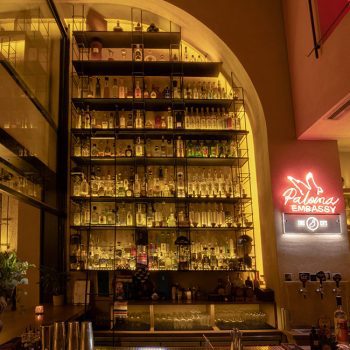
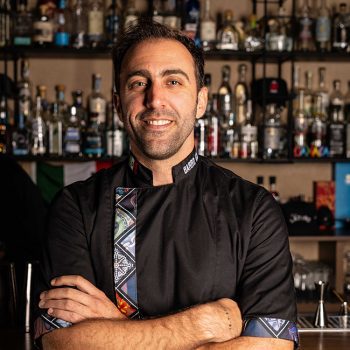
Today, it seems like Tequila is everywhere, but when Stelios Papadopoulos opened Barro Negro in Athens in late 2019, he was ahead of the curve – particularly in Greece. “Everybody all around the world knew Tequila as ice-cold shots and frozen Margaritas,” he explains. “This is something we really needed to change. We wanted to become advocates for the category.”
With 15 years in the spirits industry under his belt, and a reputation as an agave spirits specialist, Papadopoulos knew exactly what he wanted Barro Negro to be: not just a bar, but a vehicle for bringing Tequila and mezcal to Greek drinkers through delicious cocktails.
His agave career began with a chance encounter with the late Tomas Estes, who is credited with bringing Tequila to European drinkers. “He put me into Tequila properly,” Papadopoulos explains. Estes’ advice to him was to get to Mexico, which he did in 2009, visiting distilleries without appointments but with the confidence to knock on any door. “The guys were so welcoming,” he remembers. “It’s as they say: mi casa es su casa. The food, the culture, the whole thing just got into me.”
Barro Negro is small – around 40 square metres – but the spirits selection punches way above its weight, with more than 300 expressions decking out the back bar, which extends from floor to ceiling. When the bar opened, neat spirits sales were about 4% – a figure that has grown to around 60% today.
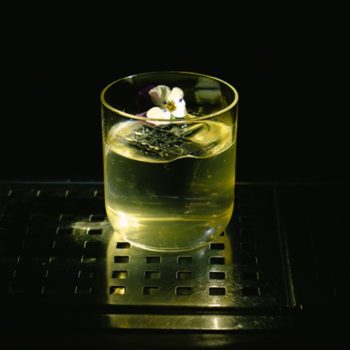
Introducing Tequila and mezcal to an audience more accustomed to gin, tsipouro, and mastiha meant a deliberate focus on accessibility, with Papadopoulos building the bar’s early reputation on the Margarita and the Paloma. “The Paloma is a new Gin Tonic for Greeks, for sure,” he says, speaking of the growing “pink phenomenon” spearheaded by both Barro Negro and Greek grapefruit soda brand Three Cents.
The Margarita served a different purpose. “It’s one of the most legendary classic drinks,” he explains, “but if we go out for a bar crawl and visit five or 10 outlets, we’re gonna have five or 10 different Margaritas. Most of them will be more boozy or more on the sour side. There’s no balance.
“Our mission was to deliver the best possible Margarita in the town, in the country, and hopefully one day globally.”
Signature cocktails are where the bar team get to shine, even if the classics remain the entry point. A nitro Espresso Martini – served on tap to get the “Guinness phenomenon of foam on top” – combines Tequila, Fernet-Branca, mint, and cold brew. Meanwhile, Los Abuelos is described as a “Mediterranean Margarita”, featuring olive oil fat-washed Tequila, fennel and a saline rim, and sits somewhere between a Marg and a Gimlet.
Perhaps more outré is a Highball inspired by gazpacho, made with a housemade tonic infused with cucumber, mint, basil, and green peppers. The tonic is then added to mezcal and rhum agricole, which amplifies the drink’s vegetal character.
“We have all the latest technology, and we are super efficient, but we don’t want to showcase that to people,” he explains. “We want to focus on the agave spirit.” Whatever the cocktail, the base spirit is always the hero. “The good thing about agave is that it’s so versatile. It’s not easy to mix just with one category.”
In addition to educating customers on the versatility of agave spirits, Papadopoulos is keen to share his insights with other bartenders. Key to that is the Academia de Barro Negro, a programme of seminars and producer newsletters. Each year, he also curates a 10-day trip to Mexico, taking a group of around 20 bartenders, journalists and even the bar’s customers to distilleries and palenques in Guadalajara and Oaxaca. The trip concludes with a stay in Mexico City to experience the bar scene. “We want people to have an overall take on Mexico,” he explains.
A need for understanding
That deeper understanding of the category and its heritage is something Papadopoulos feels is lacking across the industry. On the topic of premiumisation, he is sceptical. “I’m not a big fan of where the category is heading,” he explains. “I think premiumisation is the easy way for brands to sell products. For years, they were pushing shots and then frozen Margaritas, and now it’s all these blingy Tequilas.”
He can, however, understand the reasoning in a world where sales volume is down. “[Selling] one bottle of super-premium Tequila is like selling 100 bottles of value Tequila,” he says. “I would dare say the clubbing occasion is dead, compared to 15 years ago,” he explains. On the other hand, one benefit of premiumisation, he notes, is that premium Tequilas have been recruiting drinkers from other categories.
He’s keen not to blame super-premium and celebrity Tequilas for all the ills in the category, explaining that there’s a lack of understanding from even the most avid agave spirits fans. “There are the extremists who say they don’t drink Don Julio, Casamigos or Clase Azul, and you need to stick to the original products – Tapatio or Fortaleza, these traditional brands that are tiny, amazing products,” he says.
These so-called experts are the most likely to begin criticising brands for not being additive-free. Vodka, gin, rum, and wine all contain additives, he points out, without attracting anything like the same scrutiny. “There’s a lack of education and understanding. And if we don’t change that, I don’t think agave will ever properly compete with other Western spirits categories.”
He believes Tequila is more similar to wine than a spirit. “A different variety of agave, different production process, different growth, different terroirs – all of these would give you a completely different Tequila.
“You cannot compare agave with any other spirit,” he says. “Every two or three years, even the same Tequila changes slightly, because it’s so dynamic. That’s what makes it fascinating.”
Related news
London tube strikes could slash on-trade bookings by 67%