

The big interview: Company Distilling’s Cassie Halley
With its ethos of putting the customer first, Tennessee’s Company Distilling is building its reputation, and its reach, carefully and organically, as CEO Cassie Halley reveals.
*This feature was first published in the May issue of The Spirits Business magazine.
As its name suggests, Company Distilling was built on the ethos that good whisky should be enjoyed with good company. Announced in 2021, the distillery is one of the newer kids on the block compared with more established counterparts, but it has already made a name for itself in its home state of Tennessee, and wider afield in the US.
Company Distilling was the brainchild of former Jack Daniel’s master distiller Jeff Arnett, former president of the Tennessee Distillers Guild Kris Tatum, founder of H Clark Distillery Heath Clark, construction management professional Corey Clayton, and Clayton Homes CEO Kevin Clayton.
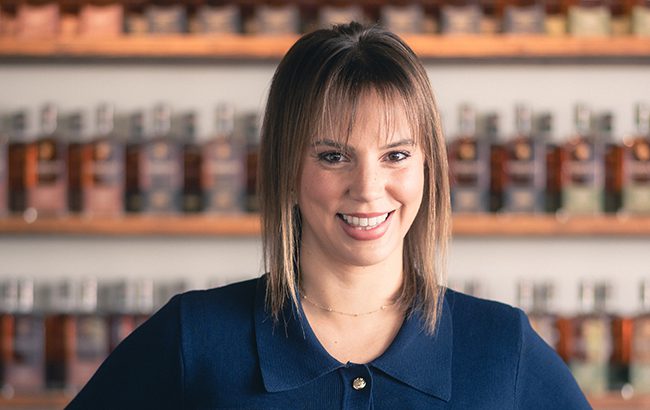
At the start of 2026 a new CEO took the helm of Company Distilling – Cassie Halley. Her promotion came less than a year after joining the firm, in February 2025, as director of marketing and retail operations.
“I love cutting my teeth in this industry,” Halley says. “I first started in marketing and advertising for about seven years in Kansas City. Then for the past seven years, I moved into hospitality, where I was doing marketing in the hospitality industry and operations. The common thread has always been building those experiences that people connect with, and that’s so easy to do with the marketing and with hospitality, and then moving into the spirits industry.”
Start with the guest
Her experience in hospitality has definitely affected how Halley approaches spirits now, she says. “It does change how I think about spirits,” she continues. “I start with the guest, and at Company they’re very good at that too. We start with the person and their experience; it’s not just about the product. I want people to experience who we are and emotionally connect with us, to make it about how people feel. Great spirits matter but the experience around the person is what they remember – and that is what brings them back to a brand.”
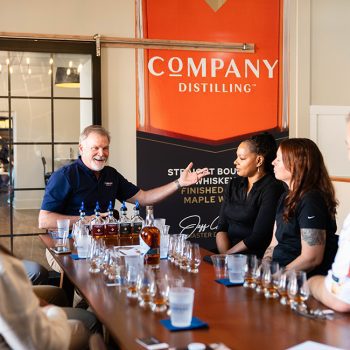
Company Distilling’s setup is spread across three sites. One facility is located in east Tennessee in Townsend, next to the Great Smoky Mountain National Park, “which is really great for tourism”. The remaining two locations are situated in mid-Tennessee, one in Thompson’s Station, just south of Nashville, that has a “neighbourly feel”, and the other in Lynchburg, Tennessee, “where we feel that people can really get introduced to the brand and storytelling”.
“We’re creating spaces where people genuinely want to gather and connect, and then each of them has their own personality, which is really fun. They’re all so different,” Halley adds. “They’re not just retail spaces since they’re all unique in their own way.”
The original distillery location in Townsend boasts a tasting room, retail space, and a beer garden along the river as of last year. There’s also a playground and café, all carefully implemented to create that community Halley speaks about.
Brand story
The newest site in Lynchburg is an opportunity to delve deeper into the brand story, particularly being situated in close proximity to Jack Daniel’s “where Jeff Arnett, our master distiller, came from. People are always really interested in that story. It’s our largest space. We have a whole room dedicated to our retail and merchandise, and our bottle shop. We have another room that’s entirely just a bar where we hold some special tastings, then another room that’s focused on our production area, which is great for tours,” Halley explains.
This summer, the space will also house an extra room with capacity for more than 100 guests. “That’ll give us a huge leg-up and opportunity that Lynchburg doesn’t really have. It’s going to be great, and open lots of doors for private parties, events, and experiences,” she adds.
Thompson’s Station, by comparison, is “very small”. It features a five- to seven-person bar, “but man, it does a lot of tours. We get a lot of people coming from Nashville. It’s a place you want to go after work, or on the weekend. It’s higher-end but still homey.”
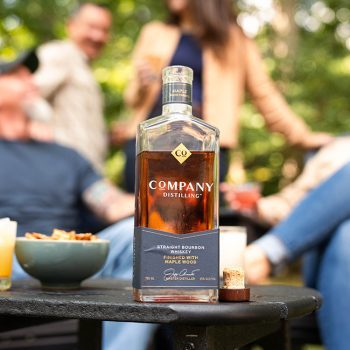
Ensuring Company Distilling continues to hold these values high will be key for Halley. As CEO, she has several short-term and longer-term goals to execute. “In the short-term, my goal is to build operational systems to really see what we’re doing, what’s working, what’s not working, and deepen our presence in existing markets,” she explains. “We want to build that retail velocity short-term, make sure our teams and our systems are working well and firing on all cylinders, being consistent in how we’re telling our story. Long-term, the goal is sustainable growth, strong brand reputation, and expanding, but with intention. For us, growth matters but only if it’s intentional.”
Excitingly, intentional growth includes new markets and potential new sites. “It’s definitely not off the table,” Halley says. “Definitely new markets, and maybe a new site.”
That is refreshing to hear, given the number of production pauses and visitor centre closures in the American whiskey category in recent months, and further afield in the spirits world. I ask Halley to share her perspective on the American whiskey category in general and how it can move forward positively.
She replies: “With supply, it is a real issue for the category at a macro level. But it creates an opportunity for brands like Company and other craft spirits that have an authentic story and a genuine experience behind them. Building new audiences in this environment means meeting people where they are. It means welcoming the person who’s never tasted whiskey or Bourbon before just as warmly as the person who can describe every mash bill in their collection. Our three locations are one of the best tools for that. That’s how you build loyalty that holds up through any market cycle.”
Company Distilling is more than whiskey, though. The distillery also produces Ghost Rail Tennessee Dry Gin, Ghost Rail Heirloom Gin, Nothing Vodka, Ace Gap (a selection of flavoured spirits), and Company Beer.
Ghost Rail Tennessee Dry Gin is made with just six botanicals – juniper, coriander, cardamom, lemon peel, orange peel, and angelica root – just like Heirloom Gin before it is put in barrels to mature briefly.
“Gin is having quite a resurgence [in the US] especially in cocktails,” Halley says, noting that at Company’s Thompson’s Station location, the Gin and Tonic is the site’s second-biggest-selling drink. “In the US, I’m seeing a Martini trend like crazy. Last year was the Espresso Martini, and now Dirty Martinis are coming back. Our gin is so great for that; it’s a little lighter in style, but it makes for great drinks in all seasons.”
For Halley, the diversity of the Company Distilling portfolio puts it in good standing to weather additional headwinds and add to the firm’s appeal among different drinking audiences. “Gen Z is hopping from this spirit to that one, and maybe back to RTDs; they’re everywhere. The market is more competitive, but it’s more thoughtful,” Halley says. “You have to figure out how you can get ahead. But this is a long-game industry, and I know that Company’s here to play it.”
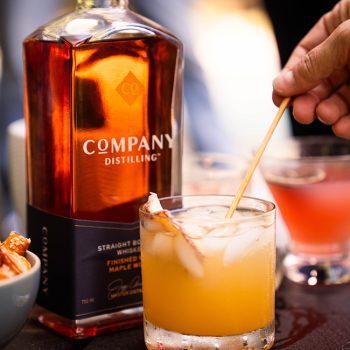
Company Distilling is aiming to grow its US presence before it looks overseas. Southern states in the US are strongest for Company but other states are on the horizon.
Halley notes Wisconsin, Indiana, and Kentucky as states with potential, but highlights how distributor consolidation, notably with Republic National Distributing Company (RNDC), brings added challenges.
“What’s happening now with RNDC is making that a little trickier. So we want to be sure that we’re intentional anywhere we do expand, and that we know it will be worth it for us. If that means waiting a little bit or focusing on markets that we’re already in just a little bit longer, that’s OK. We’re looking at different strategies in 2026.”
Halley is eager to see more flexibility for direct-to-consumer sales for spirits in the US. It would be a significant development to support smaller, craft producers.
“The current three-tier system makes sense in many ways, and we definitely have respect for our distributor partners, but I do think there’s a version of direct-to-consumer that works for everyone, that doesn’t eliminate the system or cut anyone out, but gives consumers the freedom to buy what they fell in love with regardless of what’s available in their home state. That would be a meaningful win for craft producers and for consumers. But until then we’re going to stay focused on supporting our partners, on encouraging our fans to request our products in their markets,” Halley says.
As the industry continues to navigate various headwinds, Halley is confident the adaptability that Company Distilling can flex by being a smaller producer will help the business continue on the right trajectory.
She notes: “We’ve got to be adaptable when we want to try something. We can move, we can test an idea at one location and see how it lands, and roll it out. Bigger companies can’t do that. We can make real decisions based on real feedback, and quickly. Our size is genuinely an asset right now in this industry, and I don’t think every small producer recognises that as clearly as they should.
“Meaningful growth means growing in a way that never compromises quality, experiences, or who we are as a brand. And if we can do that, if we can reach more people while still feeling personal and intentional, then that’s success.”
Related news
Desi Daru features at Sushisamba