


Does the spirits industry have a short-term problem?
The spirits industry needs to address its “short-term perspective to brand-building” and return to establishing brands “built to last”, believes the CEO of Origen X, owner of Kinahan’s Irish whiskey.
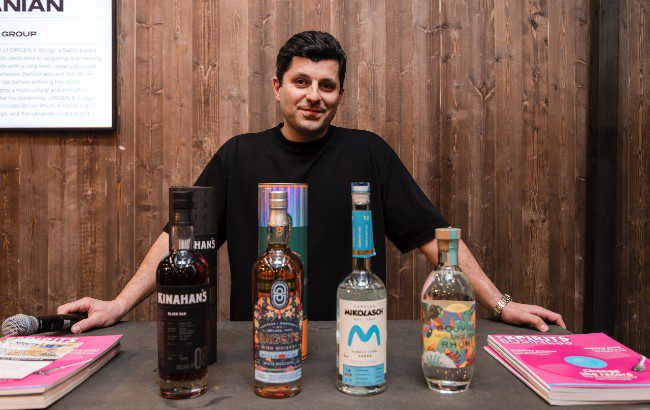
CEO Zak Oganian said his tagline of advice to anyone building a brand today would be “grow slow”.
He believes the spirits industry should return to developing 15-year, or “ideally 30-year” visions, rather than the shorter-term three- to five-year plans, which he said he was frequently seeing.
“I think there were two shifts,” Oganian explained during a panel talk at The Spirits Business Hub during ProWein 2026. “Past World War II, when the world became very mainstream and industrial and mass market, that kind of laid the infrastructure to mass produce.
“Then towards the end of the [20th] century, late 90s, early 2000s, potentially triggered by the IT industries, the dot-com boom and fast money generation, the venture capital money entered the game, and pretty much spoiled the industry in a way that is more like a lottery.
“The way venture capital works is they invest in 10 projects. They don’t expect 10 to succeed; they expect one to succeed. But it spoils the other end of it. So, it spoils these startups because then they have very short-term thinking because they want to be billionaires overnight.”
Origen X’s portfolio also includes Ukrainian vodka Mikolasch, Irish whiskey Bagots and Haitian rum brand Bouvil.
Each brand in the portfolio was acquired to build on its existing heritage and create further longevity, with no plans for Origen X to sell at any point, Oganian explained.
‘Grow slow’
“This is what we do, grow slow,” he said. “We don’t work with people that are trying to disease us with the idea, which is very prevalent in the industry, that we need to invest for 10 years before we start having a commercial result. That’s wrong, especially in today’s market.
“If you are EBITDA-negative [earnings before interest, taxes, depreciation and amortisation] year one, that means you have a really terrible product market fit.
“So any project we are looking at, that’s why infrastructure is important, not just the brand. Any project that we’re looking at, if it cannot be EBITDA-positive year one, we don’t get involved.”
How does having a 15-year goal, or longer, aid sales in the present or near future?
“If you have a 15-year goal, you’re moving towards it and this is fixed, you know this is right and it’s much easier to make twists and turns, which we do every other month. It used to be every other year, not every other month because of how the industry is changing.
“But when we make adjustments, we don’t detour.
“I’ll give you a practical example: there was a time when premiumisation not so long ago was a real thing, so we’re really focused on that. Today, premiumisation is still a thing but this has slowed down tremendously. It’s going to come back, but it’s slowed down tremendously.
“Right now, what really works is a Ferrari at the price of a Fiat, which means you need to find a way to have an entry-level product within your portfolio. That will be the volume builder, which will allow you to propel with the rest of the category because of the way the market’s changed in the past two/three years. Had we not done this, we would have lost a lot of share and we would have lost a lot of growth potential.
“But it doesn’t mean you cheapen your brand – this is where you have to be careful.”
Related news
Origen X takes Bouvil Haitian rum global