

Pernod downplays US slowdown amid Brown-Forman talks
Pernod Ricard’s finance boss has expressed confidence in the “soft” US market, noting that its current challenges are linked to affordability, while confirming discussions are ongoing with Brown-Forman.
During an earnings call for its third-quarter (Q3) results yesterday (16 April), Pernod Ricard’s executive vice-president of finance and tech, Hélène de Tissot, started the conference by stating that the business would not comment further on its recent talks with Brown-Forman over a “merger of equals”.
Tissot said of the potential deal with Jack Daniel’s owner Brown-Forman: “We did not intend to communicate further until either an agreement is reached or discussions are terminated. Discussions are ongoing. So at this stage, I have no further comments to make.”
It recently emerged that US spirits company Sazerac is reportedly eyeing up a deal with its Kentucky neighbour Brown-Forman.
Pernod Ricard returned to growth in Q3 (January to March 2026), with a slight uptick in organic net sales of 0.1% to €1.94 billion (US$2.28bn). By volume, Q3 organic sales grew by 4%.
The French group’s strategic international brands portfolio, which includes Absolut Vodka and Jameson Irish whiskey, rose by 2% in Q3.
In its biggest market, the US, sales plunged by 12%. Excluding the US and China (down 7%), total sales were up by 5%.
Regarding the US, Tissot stressed that market conditions “remained soft” with spirits, excluding the ready-to-drink (RTD) category, “down circa minus 5% compared to circa minus 3% one year ago”.
The business also experienced a “soft” October-December performance in the US, but “improved to minus 4%, slightly ahead of the year-to-date trend,” Tissot explained.
She added that the US consumer sentiment “remains low”, impacted by affordability pressures. The business is adapting to this by providing smaller formats and “targeted promotion investment on key brands”.
US challenges mainly ‘cyclical’
Tissot noted: “While the US market remains soft, we are convinced that the current challenges are primarily cyclical, linked to affordability issues. However, we are not complacent, and we monitor with vigilance the changing consumer trends, adapting and flexing our brand strategies in response. We remain confident in the recovery of the spirits market.”
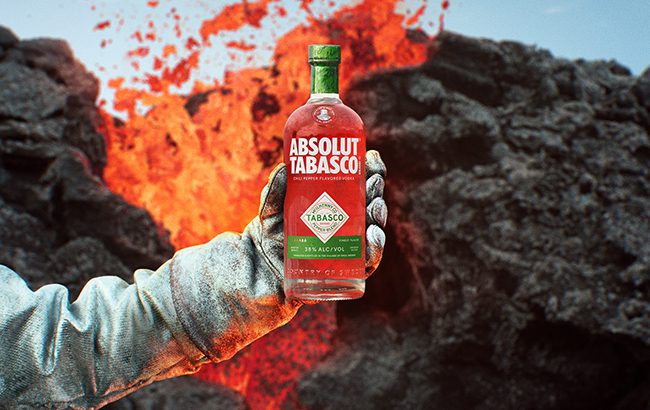
In the US, the company has launched expressions such as Jameson Triple Triple as an “affordable upsell opportunity”, alongside Absolut Tabasco and Malibu Pink.
Tissot told investors that there are many activations for the company’s brands in the US in the fourth quarter, including Absolut Vodka at the Coachella music festival. There is also a “strong innovation pipeline” with new flavours in the “weeks to come”.
“We believe that our broad portfolio is well-positioned within the US market, and we continue to activate our brands to meet consumer needs across price points,” Tissot enthused. “We are maximising the consumer impact and value creation of price promotions. Our teams leverage our revenue growth management expertise and AI tools to plan and execute those promotions at the optimum depth and frequency.”
When asked about the performance of the on-premise versus the off-premise in the US, Tissot noted that the company has a “kind of overexposure” to the former, adding that the on-trade is performing better.
Pernod has been “accelerating activation in the on-trade recently”, Tissot explains, to recruit consumers. “There was a need to reinforce that a bit,” she continued. “And it shows as well in terms of consumer behaviours and willingness to socialise and to celebrate.”
She also expects full-year sales in the US to be “much worse than the underlying trends because of the inventory adjustments and the high comparison last year linked to the tariff uncertainty”.
Organic sales for the first nine months of Pernod’s 2026 fiscal year were down 4.4%, with the US falling by 14%. Full-year results are due to be announced on 27 August.
Middle East conflict
The conflict in the Middle East is expected to cause organic sales to decline between 3% and 4% for the full year, Pernod Ricard revealed.
Addressing the conflict, Tissot noted that the market represents approximately 2% of total group sales.
“We expect full-year sales to be impacted, though the scale will naturally be dependent on the duration of the conflict,” she noted during the call, adding that the business is “monitoring the situation closely.”
When discussing the group’s duty free performance, Tissot said: “As you can imagine, the Middle East faces travel disruptions as a result of conflict there, and full-year sales in global travel retail are now expected to be in slight decline.”
The business did experience a slight impact from the conflict during Q3, particularly in March, Tissot confirmed to conference call participants.
“But to give you some colour, if there was no conflict in the Middle East, Q3 would probably have been more close to, let’s say, something like plus 0.5%, 0.6% growth,” she said. “So the impact, obviously, is, again, mainly in the affected area in March, both domestic market and travel retail.”
She also noted that there could be a “limited secondary impact outside of the affected areas” when considering logistics and “limited disruption in terms of supply” and consumers’ willingness to travel.
Tissot added: “That’s what we are taking into consideration to modestly, I would say, change the outlook for the year.”
Related news
Pernod Ricard reportedly mulls India IPO