


Is third-party distilling in crisis?
In a turbulent spirits market that is being buffeted from all sides, third-party distillers are banking on innovation to guarantee their long-term success.
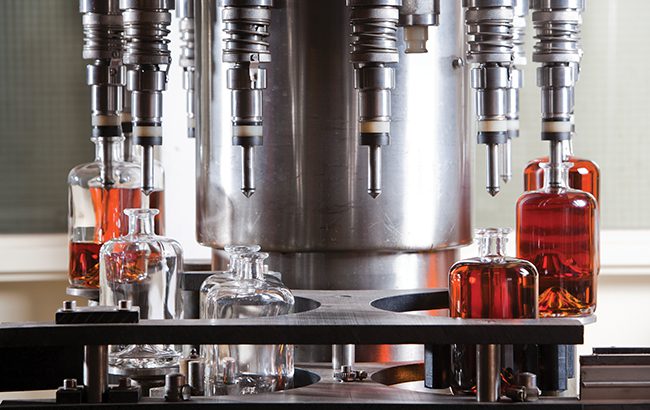
*This feature was first published in the March issue of The Spirits Business magazine.
Tariffs. Rising production costs. Inventory backlogs. Inflation. Falling disposable incomes. Geopolitical tensions. Consumer moderation trends. It’s a tough time to be a spirits producer when you’re making just one or two products, or even a modest portfolio in a single category. But what happens when you produce hundreds of them?
For contract distillers that’s the reality, with success dependent on accurately planning ahead for the needs of a myriad of other businesses, not just your own. So how are third-party spirits producers faring in the current economic environment?
News from two major producers, MGP Ingredients and Lofted Spirits shows two very different realities.
While Kentucky-based Lofted Spirits is expanding its main facility in Bardstown – doubling its footprint, and tripling its capacity to 35 million bottles a year – last month MGP Ingredients reported a full-year sales slide of 24%, and a fourth-quarter drop of 23%. The Kansas-based third-party spirits producer said its 2025 sales were hit by a 45% decline for its Distilling Solutions segment. Full-year brown goods sales plunged by 52% after ‘many large companies paused purchases’.
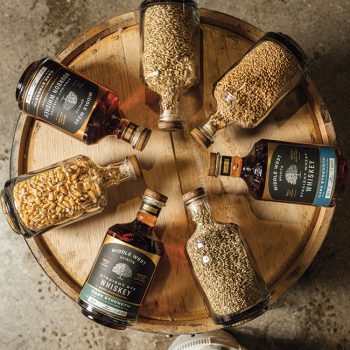 Others are reporting similarly mixed fortunes. Middle West Spirits is one of the US’ largest contract distillers. For it, business is bullish. Founded in 2008 the company is Ohio’s largest distillery, and produces own brands including Middle West Bourbon and rye whiskey, Bourbon Cream, OYO Vodka, Vim & Petal Gin, Lux & Umbra from grain to glass.
Expanding footprint
Middle West is expanding its portfolio, production capabilities, and global footprint, and recently acquired Old Elk Distillery in Colorado. Luis Gonzalez, formerly CEO of Old Elk, moved with the purchase to become chief commercial officer at Middle West. The company describes its contract-distillation programme as “rapidly scaling”.
“We all know the data about what’s happening in the industry today,” says Gonzalez. “But with every slowdown on one side of the business, there’s always an opportunity on the other side. Where we’ve really started to carve out and find our niche and support the continued growth and development of not only our own brands, but I would say more importantly for our contracted brands, is by being very creative in how we’re approaching either how our partners work with us, or in the insights and innovations to mash bills that are coming around the corner.”
Making the business “as flexible as possible”, and abandoning the “rigidness that people are facing with some of their contract partners” right now is key, he adds. In short, success has meant putting the customer first, which in real terms has included everything from adapting manufacturing contracts to meeting the cash flow of customer’s businesses, or bringing in outside partners such as barrel financing brokers and banks to cut customer costs. It says it is working with “alternative financial institutes” to invest in its own business needs.
All of this is “really making it possible for our partners to continue to plan for their inventory needs but continue to put the cash and focus on their brands and customer, which is super-important right now,” adds Gonzalez.
He says customers are switching from buying new make for aged inventory they “can commercialise today. Some partners have slowed down,” he says “We’ve seen some partners grow. But more importantly, we’re seeing all of our partners come to the table looking for ideas on how they continue to grow and drive their business and invest in the right things at the right time.”
The current success of contract distillers is pinned to the health of the spirits categories they produce for. Timing then – and no shortage of good luck – is vital. Jerry Heddy, chief operating officer at American Custom Distilling, which specialises in American single malt, would know all about that.
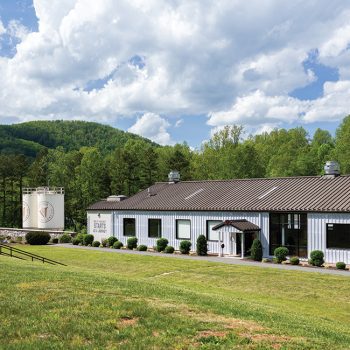
Located in the Blue Ridge Mountains, the contract division of the Virginia Distillery Company offers full custom distilling and spirits production services across craft bulk spirits. It has a current storage capacity of 15,000 casks and construction plans to build three more barrel houses with additional storage of 22,500 barrels. Using Forsythe double copper pot stills, and closed-top fermentation, it has an annual “ultra-premium” new-make capacity of 400,000 proof gallons.
American single malt
Though the Virginia Distillery Company was founded in 2011, and has always has a contract-distilling arm, American Custom Distilling itself is only a couple of years old. It launched when the prospect of the American single malt category became “very real”, says Heddy. In January 2025 the category was officially ratified by the Alcohol and Tobacco Tax and Trade Bureau, pushing demand.
Now the early work of the “largest privately owned supplier of American single malt whisky” to lay down casks, invest in the category, and contributions to the push for it to become officially recognised, are paying off. It has aged stock up to 10 years old.
Revenue was up 150% year on year from 2024 to 2025, Heddy says. Even so, a point of difference is key to fending off competition and growing demand. “We saw great growth last year, probably due to our specific position in the market,” he says. “Us being not Bourbon is incredibly helpful.
“There are a lot of players that are making American single malt whiskey in the bulk space in the US. But fortunately for us, a lot of them are effectively utilising Bourbon methods, using column stills.
“I think that the spirit that comes off is not necessarily the calibre the market globally is looking for from single malt. We’re never going to be the cheapest producer, but we’re going to win with quality. We’ve certainly found enough customers that also look at it that way. We have some of the oldest aged stock.”
Demand is holding up
Even in an in-demand segment, “part of our success is that we’ve been extraordinarily flexible with customers”, Heddy adds. He says so far demand seems to be holding up, though replicating the surge in growth experienced in 2025 is not the goal.
Another category that has experienced momentum in recent years is cream liqueurs. Creamy Creation specialises in cream liqueur development and production globally. Founded in 1979, it has production facilities in the Netherlands and in New York.
“It’s definitely a dynamic market. But cream liqueurs are well positioned, thankfully,” says chief commercial officer Matthew Benny, adding that being low-ABV, positioned as an after-dinner option or treat, and serving as a blank canvas for flavour experimentation, is helping it find a new audience among Gen Z consumers.
Yet he too says flexibility has been one of the main tools the company has had to use to weather events such as changing tariffs, which had caused “quite a few headaches”. “What we’ve seen with our customers is that there are really two main approaches to the headwinds coming into the market,” he adds.
“It’s either you cut costs or condense your portfolio. Or be more smart about your strategy, take the innovation route, and create something that’s new and exciting and different, something that will garner interest from different consumer groups. In my opinion, that’s where the success lies. Especially in this market, you’re not going to come out with another coffee cream liqueur and really expect to be successful.”
Some of the top trends Benny is seeing in the sector include a return to dessert flavours and a strategic swapping out of spirits for wine and malt bases. “With wine and malt, depending on the state you’re in, you can get into convenience stores and grocery stores. That just allows you to be in way more outlets,” he adds.
A tough market
Although projections for the company show expected growth, Benny acknowledges market conditions are tough. “We’ve certainly had worse stretches where nobody wanted to launch anything,” he says. “Our products weren’t being valued; cream liqueurs weren’t interesting.
“[More recently] growth in years past came pretty easily, and there was a lot of demand and enquiries; people were really interested in innovation. We’re finding that we have to work a little bit harder to gain that momentum. But it’s still there. We can still find it. We’re certainly not in dire straits.
“We’re not ignorant to the fact that there are headwinds in the market, and there’s still some pessimism. But we can’t sit here and wait this out, and say there’s just going to be a few bad years.”
“The way out is either to innovate and keep pitching and working on new product concepts that create some energy and excitement, or look a little bit more horizontally to some wine and malt products and companies as almost a horizontal hedge on our main business.
“Previously, that wasn’t the focus. It was always on spirits.”
Middle West’s Gonzalez agrees: “Creativity is more important than ever right now. We’re here for the long run. Short-sighted decisions, or decisions that really push our partners to the edge, are not what’s of value today.”
Related news
Desi Daru features at Sushisamba