


Can staff safety training stop bar closures?
Just 6% of venues in the Safe Bar Network have closed over the past three years, according to the US-based non-profit – a figure that appears significantly lower than national averages.

According to the US Bureau of Labor Statistics’ Establishment Age and Survival data, only 68% of hospitality venues are still operational at the end of their third year. While the reasons for those closures are numerous and not always negative, venues in the Safe Bar Network are beating the odds on paper.
Of course, that data needs context. The organisation has 383 members across bars, restaurants, breweries, nightclubs and more. Members operate in 35 states and 126 cities, and participating businesses range from small teams to much larger operations.
It’s a positive story for the network, but Darian Everding, the organisation’s business development representative, is keen not to overstate her team’s influence. “We’re not talking causation – it’s definitely correlation,” she says, indicating that venues likely to sign up for training have other factors helping them to survive.
“Those venues that give a damn about their teams and spend a little bit of time and care into clearly communicating expectations – you have better communication. You have more invested staff who feel like they can raise their concerns, who feel like they can invest in the workplace, as opposed to just being a cog in a machine.”
Safe Bar Network’s training model focuses on helping staff identify and respond to early signs of unsafe or uncomfortable behaviour – from boundary-crossing to overconsumption – before situations escalate.
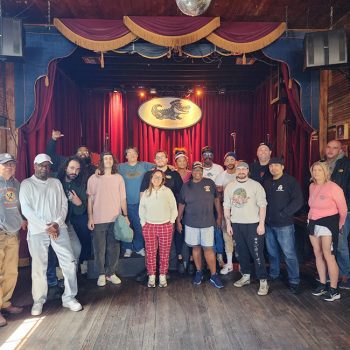
“When a venue trains their team on the skills to notice uncomfortable and unsafe behaviour, and then use de-escalation strategies to interrupt that behaviour, that is really great for the employees,” adds executive director Haleigh Harrold. “It helps them feel empowered and like they’re in control of the space and the experience they’re providing. It helps them feel connected to and supported by each other. It increases the level of communication – and we found it translates to the guest experience too.”
However, it’s not just bars that are already engaged in staff training that work with the organisation. “Our membership ranges from bars that are already amazing community key players to the other end of the spectrum,” says Everding. “Venues that maybe have been referred by city enforcement or community members who are saying: ‘You need some help, we’d like you to have some accountability’.”
While Safe Bar Network doesn’t have the dataset to analyse specific trends, Everding has observed that closures among members generally align with broader market pressures rather than operational failings tied to safety or culture.
For instance, most of the network’s member closures have happened in Chicago. “That seems to be a theme where there is a density of hospitality venues. Maybe competition is a little harder,” she says. “We’re seeing reasons including ‘we were tired and nobody wanted to take it over’, or ‘the building we were in is being purchased by developers who want to push us out’, or ’it’s just not profitable any more’.
Inside the training
The Safe Bar Network’s training is free to access, with venues only required to pay staff for the hour-long session. In some cases, the organisation can subsidise wages to ensure venues are able to participate. Funding comes from a mix of industry partners, including drinks companies, as well as local government and hospitality stakeholders.
The training sessions are deliberately lightweight to make them easier for venues to adopt: a one-hour, discussion-led session that asks teams to map the issues they face in their own venue and work through responses together.
“We don’t want folks to feel like the facilitator is the expert,” says Harrold. “We want them to know that all of the expertise they need is right there on their team.”
The sessions focus on three key themes: boundary-crossing behaviour, alcohol being used to excuse bad behaviour, and people isolating or targeting staff.
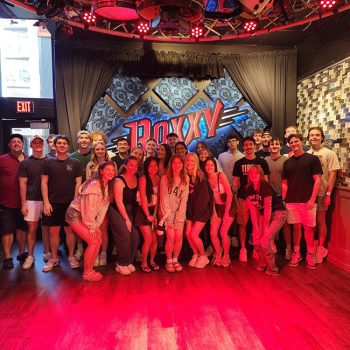
“We focus on recognising when there is a power imbalance, or when there’s going to be a power imbalance,” Harrold continues. “That is the most powerful tool people can have to spot a problem, outside of just your gut feeling that tells you something’s not right.”
These situations could involve one person doing all the ordering or paying. “Sometimes even tipping customers feel like they have power over the team,” she suggests.
The model reflects a broader reality within the on-trade: that staff are already managing more than service. But should these issues be a bartender’s responsibility?
“By giving the team the ability to think through these problems on their own, we are recognising and honouring that there is an unspoken expectation of emotional labour in the hospitality industry, and we’re putting a spotlight on it,” says Everding.
“Having the team decide how they respond creates ownership. Bartenders shouldn’t be the first line for mental health, houselessness, or food insecurity – but we are. We and churches are often the only accessible third spaces.
“I agree they shouldn’t have to do it, but ignoring that reality is more harmful, because it means that work isn’t recognised.”
To find out more about Safe Bar Network’s work, visit www.safebarnetwork.org
Related news
London tube strikes could slash on-trade bookings by 67%