


Tequila’s price rebalancing act
The Tequila sector is changing its stance in line with consumers wanting to enjoy quality liquid at wallet-friendly prices.

*This feature was first published in the February issue of The Spirits Business magazine.
For much of the past decade, Tequila’s growth story has been driven by premiumisation. Super-premium and ultra-luxury expressions proliferated as consumers traded up, collectors chased rarity, and producers rushed to stake claims at the top end of the category. But as economic pressures bite and Tequila matures in key markets, the category’s growth trajectory and its opportunities are evolving.
Today, Tequila brands are reassessing what ‘premium’ really means – and, crucially, where sustainable growth will come from next. Rather than racing ever higher on price, many are refocusing on core ranges, accessible premium tiers and styles that offer both versatility and value.
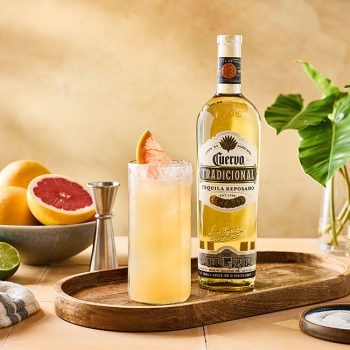
According to Proximo Spirits, owner of category giant José Cuervo and a broad Tequila portfolio spanning multiple price tiers, premiumisation is not slowing so much as rebalancing. “Consumers are still looking to buy better Tequila and to learn more about the category,” says Lander Otegui, executive vice-president of marketing and innovation at Proximo Spirits. “But there’s less appetite to overspend on brands priced at US$100 and above. There’s more interest in the US$40-US$100 range, where consumers feel they can get real quality without needing to justify the price.”
Consumers trade down
Diageo’s latest first-quarter trading update supports this development. In November, executives noted that overall Tequila category growth has softened, with evidence of consumers trading down from super-premium brands like Don Julio and Casamigos into premium segments where Astral sits – roughly US$19-US$35 in the US – as wallets tighten.
Deirdre Mahlan, Diageo’s interim chief financial officer at the time, reported “increased competition, particularly in Tequila” with the category declining.
“The weaker overall results in Tequila reflected a number of factors,” Mahlan said, citing tough comparatives from restocking and size extensions, consumer downtrading, general category weakness, and increased promotional intensity.
In response, Diageo is “leaning into Astral”, positioning the brand as an opportunity in the mid-tier premium segment as consumer behaviour shifts. Former interim CEO Nik Jhangiani described Astral as a “great example” as the business eyes a “shift from ultra-premium into super-premium or even premium”. He noted the opportunity to “meet the consumer where they are but still continue to drive affordability”, including through smaller bottle sizes.
After years of rapid growth in ultra-premium launches, brands are acknowledging that the sweet spot for volume, repeat purchasing and long-term equity lies lower down the price ladder.
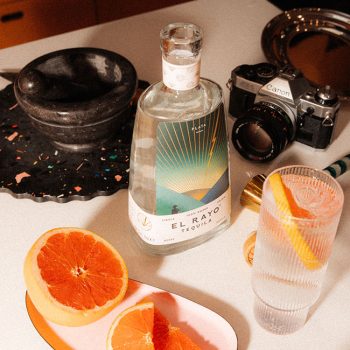
From a UK perspective, that recalibration has arguably been under way for longer. Tom Bishop, co-founder of El Rayo Tequila, says the brand was deliberately built in what he describes as an accessible premium space – not as a response to recent downtrading, but as a founding principle. In April 2023, El Rayo become the first Tequila in the £30-plus (US$37.31) price point to be carried by UK supermarket Sainsbury’s.
“We position ourselves in an accessible premium tier, sitting around the mid-£30 price point,” he explains. “From the start, the idea was to attract people who wouldn’t normally drink Tequila – particularly jaded gin consumers looking for something different.”
Bishop notes that pushing past key price thresholds can quickly become a barrier to trial. “Once you go above £40, you’re asking consumers to jump through another hoop,” he says. “We’ve been very strict about holding our price, even while absorbing agave price increases, because that accessibility has been central to our growth.”
On the retail side, there appears to be a shift towards premium brands that offer drinkers affordable ‘100% agave’ products. At UK supermarket Waitrose, Tequila continues to outperform many other spirits sectors, even as shoppers become more price savvy. Waitrose’s Tequila sales in the 13 weeks to 3 January 2026 rose by 4.3% year on year, “even while the market is transitioning slightly with more focus on the cost-of-living crisis,” says John Vine, Waitrose spirits buyer.
“This has led some brands at Waitrose to have great growth in the last year, including Altos and El Jimador, which are fighting for top sales in our shops, and we are seeing styles like blanco being more popular than ever.” Both Pernod Ricard-owned Altos and Brown-Forman’s El Jimador are priced around the £30 mark on Waitrose online for their blanco and reposado bottlings.
That doesn’t mean brands on the higher end of the price scale have lost relevance. Vine adds: “Tequila lovers understand the time and quality behind more specialist options such as Casamigos and Patrón [both priced at around £50]. Blue agave takes up to eight years to grow, and our customers appreciate this and still choose to buy premium bottles.”
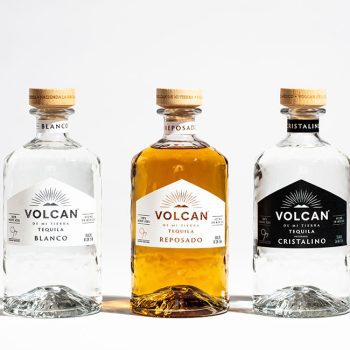
This renewed focus on clarity and consistency is also visible among prestige-led producers. LVMH-owned Volcan de mi Tierra, which made headlines with the launch of its high-end X.A expression (priced at an eye-watering £215 on Selfridges) during the height of post-pandemic exuberance, is now deliberately refocusing on its core range. CEO and co-founder Santiago Cortina Gallardo is candid about the context behind that earlier push. In the immediate post-Covid period, high-spend nightlife and luxury consumption were booming, creating demand for Tequilas that could compete visually and price-wise with Champagne and Cognac in nightclubs. But that emphasis came at a cost.
“The high-end expressions took focus away from the core range,” he admits. As the market normalises, Volcan is once again prioritising its blanco and reposado, rather than chasing high-end prestige.
Founded in 2019, UK-based El Rayo Tequila has taken a similar approach, albeit from a different starting point. Bishop says the brand has consciously avoided prestige launches or limited editions, choosing instead to invest in its core SKUs and drinking occasions.
“For us, innovation is more about how Tequila is served, rather than chasing aged expressions or limited releases,” he says. “We’re more interested in disrupting Tequila drinking occasions.”
Last year, the brand launched a ready-to-drink Tequila and tonic in a 250ml can, highlighting an accessible serve while bringing new drinkers to the brand at a lower cost, without requiring them to invest in a full bottle.
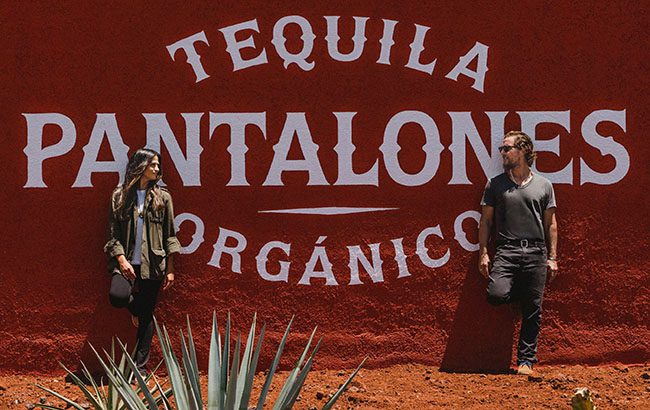
For newer brands like Pantalones Organic Tequila, co-founded by American actor Matthew McConaughey, this environment plays directly into their positioning.
Rather than competing at the luxury end of the category, the brand has intentionally built what it describes as an approachable premium proposition. “Consumers want reassurance that what they’re buying is well made and thoughtfully produced, without feeling like they’re paying for hype,” according to Gareth Williams, global sales and brand director at Pantalones. “We’re premium, award-winning, organic – and approachable.”
Pricing discipline is central to that strategy. Pantalones has kept its blanco entry point competitive (£43 on Waitrose) and avoids steep jumps between expressions, encouraging consumers to explore the range rather than trading across elsewhere.
El Rayo’s approach mirrors this thinking. Bishop notes that resisting the temptation to push prices up – even in the face of rising production costs – has helped maintain momentum in both the on- and off-trade.
Across brands and markets, blanco remains the primary volume driver, particularly for consumers entering the category. Waitrose reports blanco as the most popular style among its customers, while Pantalones identifies it as the key entry point in both the UK and US. It’s also a style known for its versatility in cocktails, often being used in Margaritas.
However, reposado is increasingly emerging as the category’s engine of value growth. At Proximo, it is the strongest-performing style in the US, benefiting from consumers trading across from brown spirits.
Williams describes reposado as offering “flavour without intimidation”, while Bishop sees it as a natural progression as consumers become more confident with Tequila. “As people understand the category better, they start looking for more texture and depth – and reposado delivers that without losing versatility,” he says.
Añejo, by contrast, is settling into a narrower, more clearly defined role. Rather than acting as an everyday upgrade, it is increasingly positioned as an occasional indulgence – a super-premium expression designed to be sipped rather than mixed.
Another major shift underpinning Tequila’s evolution is the changing role of the off-trade. While bars remain vital for education and credibility, brands increasingly acknowledge that retail and e-commerce now carry equal weight. “The pandemic fundamentally changed consumer behaviour,” says Williams. “Retail and e-commerce are no longer secondary channels – they’re critical growth drivers.”
Bishop agrees, noting that consumers are now far more confident discovering Tequila in supermarkets and specialist retail. “Historically, the on-trade led everything,” he says. “Now, if the product makes sense on shelves, and the price feels right, consumers are willing to buy in without needing that first bar experience.”
Despite talk of slowdown, few industry insiders believe Tequila has reached true maturity. Outside of the US, penetration remains relatively low, suggesting there is plenty of growth opportunities in emerging markets where cocktail culture can attract curious spirits drinkers from other segments.
The category’s success appears to rely more on building brands that can win consistently at scale – products with disciplined pricing, clear and accessible core ranges, and various formats from cans to smaller bottles.
Industry insights
Has Tequila moved from ‘boom’ to ‘maturity’ – and what does that mean for your brand’s strategy?
Lucy Smith – founder, Neurita Tequila
“The US Tequila market has begun to moderate in growth; however, due to the sheer size of the segment, it continues to deliver significant projected volume increases. For Neurita, the market’s maturity creates an ideal platform for expansion into innovation, including flavour-infused Tequila. It also reflects a high level of consumer awareness and education around Tequila usage and cocktail applications.
“Outside of the US, Tequila remains firmly in a growth phase. Margaritas are now the number-one trending cocktail in key markets such as the UK and Australia, with momentum building across Europe. While these regions still lag behind the US in overall penetration, this gap represents a substantial opportunity for brands that are focused on addressing local consumer needs and accelerating category development.”
Related news
Ghost Tequila names Ryan Wilson CEO