


Margot Robbie’s Papa Salt raises allergen concerns
Gin brand Papa Salt, co-founded by Barbie actor Margot Robbie, has denied claims that the UK on-trade has expressed concern about its use of oyster shells as a botanical.
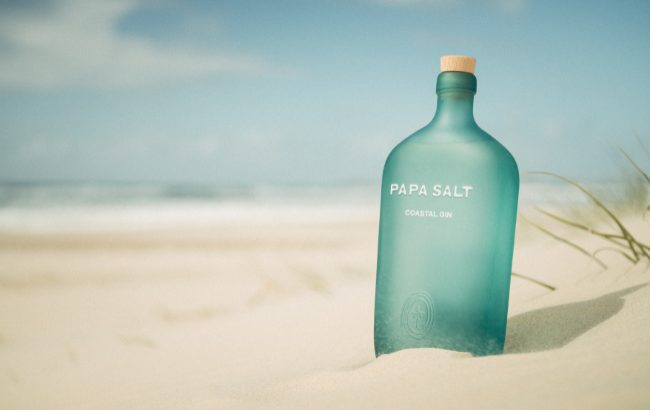
Barbie actor Robbie founded the brand along with four friends – Charlie Maas, Regan Riskas, Tom Ackerley and Josey McNamara – in May 2023. Its botanicals aim to reflect the Australian coast, with elements including oyster shells, roasted wattleseed and pink peppercorn.
The Guardian alleged that certain on-trade venues raised issues with the allergen, however Papa Salt denies the claim that any bars have refused to stock the product because of it.
Distillation is highly effective at removing allergenic proteins from a liquid, which is why whisky is considered to be gluten-free. The same is believed to be true for nuts, with gin brands such as Bombay Sapphire using them as a botanical. Despite this, many brands urge those with severe allergies to take caution, as it cannot be guaranteed that 100% of proteins have been removed.
Spirits are not legally required to provide a full ingredient list like many other food and drink products, however they must list allergens. In the UK, an exception is granted for alcohol distillates that use cereals, whey and nuts. No such exemption exists for crustaceans or fish.
Papa Salt’s bottles carry an allergy warning for molluscs, which is what triggered the concerns.
A spokesperson for Papa Salt explained that a professionally cleaned shell, containing no oyster meat, is placed directly into the copper pot stills during distillation.
The brand has also commissioned ‘extensive’ allergen testing through Agrifood Technology, an independent Australian laboratory, which found no detectable risk from allergens. The spokesperson added: “Out of an abundance of caution, the brand declared molluscs an allergen on the bottle.”
Posting on LinkedIn, spirits specialist and judge Olivier Ward said: “Labelling law hasn’t kept pace with production innovation… The science around allergen transmission through distillation has been a conversation in the industry for years. There [are] regulatory exemptions for distillates such as cereals or nuts, largely because enough producers were using them when the rules were written. No one thought about using molluscs and seafood in gins or other spirits back in 2014.”
According to The Guardian, Papa Salt is now reformulating its gin to be shellfish-free. A spokesperson told The Spirits Business that the recipe has now been altered to omit the oyster shell, with the ‘distinctive minerality’ retained through an adjustment to the remaining botanicals.
In response to The Guardian article, The Natasha Allergy Research Foundation posted on Instagram: “Hidden allergens in alcohol is something we have posted about before. Even when risks are considered small, for people living with food allergies, the consequences can result in allergic reactions and, at worst, anaphylaxis, which is life-threatening.
“What is powerful here is the response from the venues being asked to stock Margot’s gin. Many have chosen not to stock it because they do not want to introduce additional risk to their allergic customers.
“Following this feedback, Margot Robbie’s brand has confirmed it is reformulating to remove oyster shells entirely, with an oyster-free version expected in the UK by the end of 2026.
“When it comes to food allergies, there is no such thing as a small risk.”
Other gins that have used shellfish as a botanical include fellow Australian gin Never Never’s Oyster Shell Gin, which won a Gold medal at The Gin Masters 2025.
Hawkridge Distillers also created a gin using crayfish claw shells in collaboration with The Kennet Crayfish Company last year.
Oyster shell isn’t the only botanical that has landed Papa Salt in difficulty. The brand is currently in the process of getting wattleseed approved by the US Food and Drug Administration (FDA), so that it can import its gin into the US.
According to co-founder Charlie Maas, the process has taken two years and “an enormous amount of money”, despite wattleseed being a commonly used ingredient in Australia.
Related news
Gin 1689 minis arrive at Schiphol Airport