


Asia Pacific drives GTR gin growth
As Europe matures, gin in travel retail is finding new momentum in Asia Pacific as classic styles are making a comeback.
*This feature was first published in the February issue of The Spirits Business magazine.
For a category once defined by relentless innovation and flavour experimentation, gin in global travel retail (GTR) is seeing a shift as retailers consider their assortments and brands return to clean, classic styles like London Dry. While Europe’s interest in gin may have waned in the face of fierce competition from other categories, areas like Asia, Australia and New Zealand are taking note of the juniper-forward spirit.
According to IWSR data cited by Bacardi, GTR remains a bright spot for the category. Gin sales in the channel are forecast to grow at a compound annual growth rate (CAGR) of 3.2% from 2024 to 2029. In terms of the traditional and flavoured gin segments in GTR, IWSR data shows the former grew its volumes by 2% in 2024, while value rose by 9%. Flavoured gin struggled, with its volume dropping by 7% in 2024 and by 3% in value.
“Global travel retail is a dynamic growth engine for gin, outpacing domestic markets and driving significant value for the spirits industry,” says Darragh Ryan, marketing director at Bacardi GTR. “While Europe remains the largest and most established GTR region for gin, there is a clear opportunity in AMEA [Asia Pacific, Middle East and Africa], where growth is expected to accelerate.”
Europe still accounts for the lion’s share of gin sales in travel retail, representing 64% of the segment, and delivering forecast CAGR growth of 3% through to 2029, according to IWSR. But signs of maturity are evident. Saturation, discounting and intense competition have softened momentum, particularly in traditional gin heartlands such as the UK and Spain. Asia Pacific – alongside Australia and New Zealand – is emerging as a key source of incremental growth.
At Pernod Ricard GTR, Rae Gibson, global marketing director, says this divergence has been building for some time. “The Pacific, from a gin perspective, has been a source of growth for quite a while,” she says. “Premiumisation is a much stronger trend in Asia than in Europe, and consumers are more open to discovery.”
That appetite is translating into tangible results. “Across our gin portfolio, the Pacific region has been growing at around 18%,” Gibson notes. “For Malfy specifically, the Pacific represents more than a third of its global [GTR] volumes, growing at around 30% year to date [year ending 30 June 2025].”
Bacardi sees a similar pattern. Ryan highlights AMEA as a region with “anticipated CAGR of 4.7%” for gin over the next five years (2024 to 2029), underlining why global brand owners are planning travel retail activations and investment eastwards.
However, retailers caution against overstating this shift. Manuel Schilling, head of buying spirits at Gebr Heinemann, describes gin as one of the most balanced categories in GTR. “Sales trends across both EMEA and APAC reflect equilibrium,” he says. “We don’t see material deviations or dramatic regional discrepancies.”
Instead, Heinemann focuses on tailoring its range to local dynamics. “Gin is one of the segments where local products perform most strongly,” Schilling adds. “That creates complexity, but we’ve succeeded in balancing international trend-driven brands with strong regional offerings.”
Alongside geographic change, the other defining trend shaping gin in GTR is a return to classic styles. After years in which flavoured and infused gins drove excitement and new SKUs, evidence suggests demand is moving back towards classic, high-quality expressions.
“Shifting consumer preferences underscore a gravitation towards traditional gin,” says Ryan. For Bacardi, this reinforces the importance of core propositions like Bombay Sapphire, which leads the GTR gin category with a 20.5% value market share.
Pernod Ricard’s portfolio illustrates how those dynamics vary by region. “In Europe, classic dry styles dominate,” Gibson explains. “But in the Pacific, flavoured gins actually over-index. For Malfy, flavours still represent most of the brand’s business.” This reflects different stages of category maturity. In emerging gin markets, citrus and flavoured variants often act as entry points, while more established markets now want traditional styles.
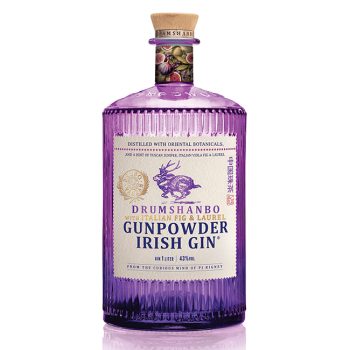
From a distributor perspective, Duty Free Global – which represents Gunpowder Irish Gin and Mermaid Gin in the channel – also sees retailers narrowing their focus. While innovation remains important, there is greater emphasis on clarity and core SKUs, with less tolerance for vague or typical flavour extensions. Going beyond flavour norms like rhubarb or raspberry, Barry Geoghegan, founder of Duty Free Global, points to the “big success” of Gunpowder’s Italian Fig & Laurel flavour, as well as its Sardinian Citrus and Brazilian Pineapple gins.
Despite shifting tastes, GTR remains vital for gin producers. For Bacardi, GTR plays a crucial role in recruitment and brand building. “It serves as a global showcase,” Ryan says. “It enables discovery and connection while reinforcing Bombay Sapphire’s visibility, desirability and premium credentials on an international stage.”
Immersive activations
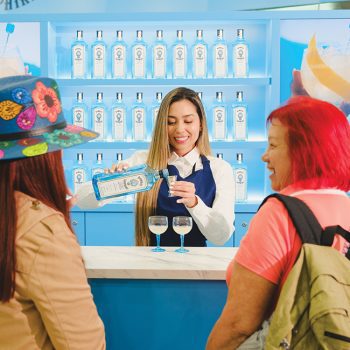
That role is increasingly fulfilled through immersive activations rather than vast product lines. In November 2025, Bacardi brought its global Step Into The Blue campaign to life at Miami International Airport through an installation linked to its partnership with the E1 Series, the world’s first all-electric race boat championship.
“It was tailored to the GTR audience,” Ryan notes, “and reinforced Bombay Sapphire’s leadership and cultural relevance.”
Pernod Ricard has followed a similar path, using high-impact exclusives and collectable formats to engage travellers. Gibson points to Monkey 47’s GTR-exclusive Traveller’s Compendium (with five sets to collect), as an example of how storytelling, packaging and rarity can drive trade-up and gifting.
“Gin has become our most balanced spirits category,” Schilling says. “It has not experienced the dramatic fluctuations seen elsewhere.” Future growth, he suggests, will come from premiumisation, discovery-led propositions and smarter use of space rather than an ever-expanding assortment. Upcoming airport developments, refreshed store concepts and targeted GTR exclusives are expected to play a central role.
Related news
Has Tequila peaked in travel retail?
Travel retail push for Gin 1689
Diageo readies Tequilas for World Cup travel retail takeover