


Could aluminium replace glass bottles for whisky?
Scotland-based Stirling Distillery has teamed up with Heriot-Watt University to explore whether whisky can be stored in aluminium bottles, instead of glass.
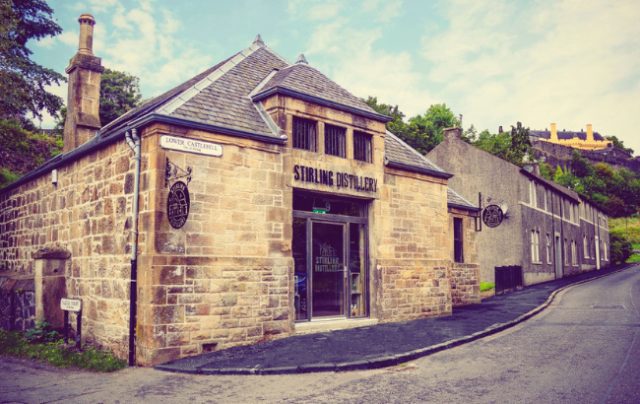
Stirling Distillery is working with experts from Heriot-Watt University’s International Centre for Brewing and Distilling (ICBD) and its Institute of Chemical Sciences (ICS) to investigate how whisky behaves when stored in aluminium rather than traditional glass bottles.
The Stirling-based gin producer is aiming to make its distillery “as sustainable as possible” before the release of its debut whisky in 2027.
“The whisky industry is looking at lots of ways to minimise its footprint,” said Kathryn Holm, head of marketing and communications at Stirling Distillery. “We’ve already undertaken a range of sustainability measures – packaging is one of the remaining areas where we can innovate and make an impact.”
Holm noted that the weight of glass makes it heavy to transport, and highlighted the reliance on high recycling rates to lower the environmental impact of glass.
She continued: “Aluminium is lighter and widely recycled, so I asked the experts to investigate whether it’s a viable alternative.”
At Heriot-Watt, the researchers have used advanced chemistry and sensory tests to assess whether aluminium interacts chemically with whisky in a way that alters its flavour, alongside checking if it can meet safety requirements.
To do this, the university experimented with spirits from Stirling Distillery over several months, putting them in aluminium bottles.
Dr Dave Ellis and student Charlotte York tested the spirit using nuclear magnetic resonance spectroscopy – a technique that uses a powerful magnet combined with radio frequency waves to identify what a substance is made of by measuring how its atoms respond – and inductively coupled plasma mass spectrometry, which detects levels of metals in liquids.
“We know that certain organic acids naturally present in matured whisky can react with aluminium, which can lead to aluminium entering the liquid,” Ellis explained.
“If we stir samples with aluminium metal, the levels were well above what would be considered acceptable for drinking water.”
The tests found that compounds such as gallic acid, which develop during whisky maturation, were reduced or removed after continued contact with aluminium. According to the researchers, this reaction was less pronounced in new make spirit because it has not yet developed the same chemical profile.
Professor Annie Hill from Heriot-Watt’s ICBD noted that the next stage of the research would look at finding a liner for the aluminium bottle that can “withstand high alcohol levels for a prolonged period of time without degrading”.
Through a sensory tasting, panellists couldn’t tell the difference between whisky stored in aluminium and whisky in a glass container.
“So the changes detected in the laboratory didn’t translate into differences in aroma,” Hill reflected. “That’s great news – if we can find an effective liner.”
Stirling Distillery plans to share the project with the wider industry to enable it to meet net zero targets.
Holm added: “We are not suggesting glass disappears tomorrow. But offering customers a lower carbon option for a premium product is something worth exploring. As a small distillery, we can help start that conversation.”
Stirling Distillery was opened in 2019 by husband and wife June and Cameron McCann.
Several spirits producers have turned to aluminium for their packaging. Sustainaholics was launched in 2023 as a packaging start-up specialising in ‘100% recycled’ aluminium miniatures. Meanwhile, Herefordshire’s Penrhos Spirits began switching its range to ‘100% recycled’ aluminium in January 2023.
Spirit brands have also trialled paper as an alternative to glass, including Absolut Vodka, Diageo-owned Baileys liqueur and Johnnie Walker whisky, and Buen Vato Tequila.
Related news
Could you sink a hole in one to win cask of whisky?