


Ex-WhistlePig CEO Jeff Kozak joins Cazcanes Tequila
Jeff Kozak has swapped whiskey for Tequila. He talks to SB about how he plans to guide Cazcanes through its next stage of expansion in his new role as president.
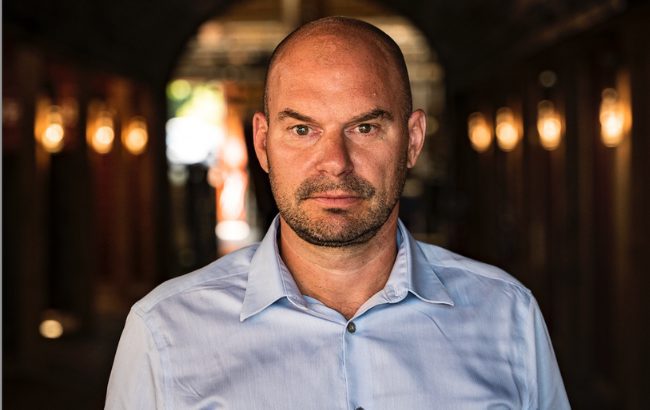
In January, Jeff Kozak stepped down as WhistlePig CEO after 10 years at the Vermont-based distillery, taking it from a small start-up to a multi-million-dollar brand.
If you’re wondering what Kozak has been up to since then, he’s spent a good portion of his time scoping out the Tequila scene in Mexico, and has taken on the role of president at Cazcanes.
“I’ve been down to Mexico three or four times and visited a whole suite of characters from authentic Mexican brands to the celebrity ones, trying to figure out which one would be next,” he tells The Spirits Business.
“I landed on Cazcanes because it had more of that challenger mentality. The team is super young, there’s tonnes of innovation happening and it’s not a brand steeped in history, or traditions, which was actually very appealing.”
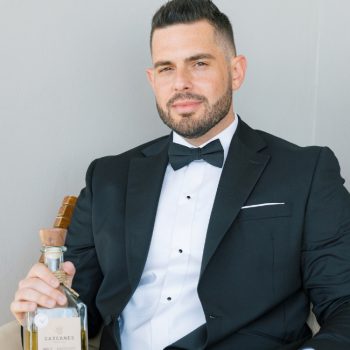
Alongside Kozak’s appointment, Edwin Dolgopyat transitioned from COO to Cazcanes CEO in October, while former Bacardi North America CMO and founder of Heaven Hill Brands-owned Samson & Surrey Juan Rovira has also joined the brand in an advisory role.
The moves are seen as a ‘significant new chapter of growth’ for Cazcanes. Kozak says the brand, which was launched in 2015 by brothers Colin and Chris Edwards, “realised that it would be beneficial to add in some people that have done it before, who have built a business or grown it along for the ride”.
He compares its status in Tequila right now to WhistlePig’s early days as a young brand trying to break into a category. “You have some early wins and you feel like you’re that hotter cult brand where younger consumers are looking at it. It felt very comfortable as a place where there would be a tonne of white space and there wouldn’t be a tonne of restrictions to grow the business,” he says.
“When I first started at WhistlePig we were doing, like, US$1 million, and then when I left we were at around US$100m in sales,” he continues. “It feels like a very similar path here though Cazcanes is further along in that journey because it has a similar feeling where there’s a lot of room, and a lot of runway to build a business.”
Priorities
Cazcanes is distributed in more than 30 states in the US. “We’re not in any control states and there isn’t really an international presence, so it’s really just working with the existing bones of the brand and then trying to form the right partnerships on the distribution side,” Kozak explains of his initial priorities.
“We’ll also pick a couple of key international markets and go a little bit deeper as Tequila grows overseas. That’s still a big white space, especially in the UK, but it’s still early days for the category internationally, too.”

In SipSource second-quarter (Q2) forecast figures reported in June, Tequila’s growth was expected to slow to 1% by mid-2026. However, even if the category is beginning to flatten after years of increases, Kozak doesn’t believe this will hurt Cazcanes’ growth.
He notes: “It’s the bigger ones that are slowing, as well as perhaps celebrity-backed ones that are not authentic. The ones that are growing are additive-free, organic, and authentic with some innovation – that’s the difference.”
“A lot of what attracted me to Cazcanes was in that wheelhouse,” he adds. “I spent time with some of the celebrity-backed brands and that’s not where people are going right now, especially as they drink less and drink ‘better for you’.”
The brand’s products are also priced in the higher-end – though not ultra-premium – in a bracket where Kozac sees “a lot of white space”.
Cazcanes’ blanco is around US$65, for instance. “There isn’t a lot of competition in Tequila between US$50 and US$120, and so it was about, can you find a space where you can say something different, and then also can you carve yourself out on the price ladder? There was a lot of things going for that because it’s true, it’s super competitive at that US$30 price range, and then also at the extreme end.”
Cazcanes is produced at NOM 1614 and its Tequilas are made from 100% Blue Weber agave. “We bring in our own water from the Navichi Springs and when we take barrels from the US, we end up actually recharring them to our own taste profiles,” Kozak notes. “How many steps along the way are you actually imparting your own particular profile – I think that’s what defines craft, not ‘small batch’.
“What you should see on bottles is how many times does your hand actually touch the process throughout the Tequila making. Our brand sources water from those streams and brings it in for the distillation production. We end up taking in barrels from the US for the reposado, and then knock the heads off and char them, and then recharr, which is an extremely messy and labour/time-intensive thing to do. You’re scraping out the old char and we then add three different types of char to our barrels.”
Kozak says one of the brand’s biggest costs is getting people out to Mexico: “We want to show them the roots like the original moonshine distillery with Umberto [Don Humberto Alvarado, master distiller], and where the product came from. And then we go to our main distillery, where our NOM is, and also show them the full production today and the barrels that we’re using for specialty finishing.
He adds that this is where true advocacy is gained. “That’s the way people fall in love with the brand and I think that’s also the only way you get to cult brand. One guy goes to Mexico on a trip that’s a distributor or a retail buyer, and he tells his 10 friends and his 10 buyers, and it goes from there.”
Careful scaling
With plans to expand, Kozak notes this will be done “very carefully”.
“The brand was originally founded at a very craft – almost moonshine-like – distillery, and then [the founders] took that formulation and then moved it over to larger scale producers. It’s been done very carefully, so you don’t lose the original liquid and how it’s defined by that true to earth additive-free style,” he says.
“It’s about not just going super wide, but rather going deeper in the states that are working, and that are key Tequila states. We have a lot of work to do in just moving our business in the existing states that are those lighthouse accounts – in New York and LA, and Miami – and other markets which drive that whole cocktail scene too.
“It doesn’t have to be a race – the brand has this cult, organic pull right now and we want to keep that. The great thing is that it’s not like some of those celebrity brands where you have a timeline or a crunch to get a return of your money within three years or someone comes knocking at the door.”
The brand is growing at a “healthy rate”, Kozak says, at around 30%-40% this year [Nielson], but this is not through market expansion. “It’s just organic growth inside of that price subset in the existing universe,” he explains. “That’s actually the most positive thing, that it’s not growing just by brute distribution. The distributors that we have are more of those brand storytelling distributors.
“I think it’s really early days as far as where we go, but you don’t want to extend too far. Can we go deeper in LA, where the brand does really well? Can we go deeper in New York? We want the markets that are actually harder to penetrate because then you’re getting the right consumers.”
Slowdown in American whiskey
Assessing the slowdown of American whiskey – where many distilleries have paused production this year, and some have even filed for bankruptcy – Kozak is confident Tequila won’t go down the same track. “With American whiskey there was such pent-up production and that’s causing a tonne of price pressure,” he says.
“With Tequila, because the majority of the volume is still in blanco (unaged), or with the growing reposado segment, you’re just not holding as much inventory, so it’s not as capital intensive.
“That’s obviously why there’s more room and there’s not as much pressure as there is in whiskey right now. Tequila is just in a better space from the consumer, from how capital-intensive it is. It just has a better chance coming through the slowdown in the broader industry.”
Innovation and the right distribution
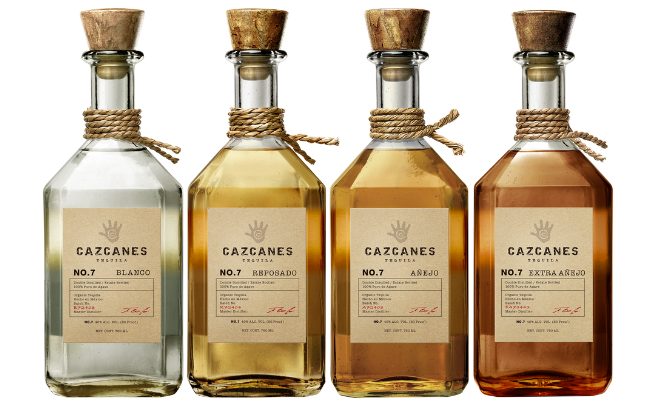
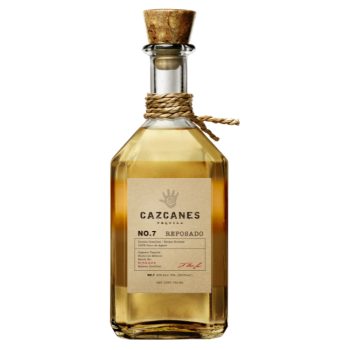
In terms of products, Cazcanes has its core range – the four sevens: No.7 Blanco, No.7 Reposado, No.7 Añejo and No.7 Extra Añejo – alongside a few high-strength Tequilas and a joven expression.
The focus will be on the main range and its distribution, confirms Kozak: “I think the consumer has seen the Tequila shelves are super crowded, so there’s also a little bit about making sure that the three core SKUs are out in the right accounts. The shelves are wide and you could almost think about it in the same way with how many gins are out in the UK.
“You can get lost if you don’t have your core compass. The three sevens are the rallying cry for the company, so we are ensuring those get the right distribution.”
WhistlePig built a reputation for experimental releases, but Kozak is aware innovation with Tequila is a very different game. “How far can you push it because Tequila is an ancestral, historical product,” he considers. “At WhistlePig we were super innovative, but then how can you impart that into Tequila?
“I think best-in-class brands look across categories, not only other spirits, but in winemaking, other types of innovation and food-based products. The brands that are constrained to the way they’ve always done it, well, there’s not a new story to tell. I think you have to be inspired by other parts of the world, other people, and how they manufacture. That’s where inspiration comes from and then that’s what drives innovation.”
Cazcanes doesn’t have the heritage angle of generations of distillers to lean on, or celebrity founders for marketing, so it has to carve its own space out – which is ‘craft’ and being true to the brand, Kozak says. “You have to know who you are. We can’t go against all the historic brands. We’re certainly not a celebrity-led or founded brand, so you’re not going to play there. It kind of frees you up to not play against either the bigger boys with their broad-based campaigns, or play against the historic brands.
“The great thing in small companies is there are no requirements, systems and procedures. Innovation can happen more organically if it doesn’t have to show up on a PowerPoint deck every week,” he adds.
“I’d rather have somebody do something and then come back and ask for forgiveness because it’s just much easier than having to structure it all the time. We’re letting our Tequila makers and blenders be free to go, ‘All right, what else can we blend this month? How can we create something different?’ I don’t see that happening in bigger companies because it’s just way too structured.”
Consistent message
The reposado segment has emerged as a growth driver for Tequila and Kozak feels this could be an opportunity for the brand in reeling in whiskey drinkers, as well as with specialty finishes.
“A lot of what fuelled whiskey’s growth in the last 10 years was those specialty finishes in the category, and there really hasn’t been a lot of it in Tequila yet,” he observes. “That’s going to be another area of focus. We want to look at moving more whiskey drinkers over to the Tequila space, and I think there’s a lot to be done with barrel finishing in Tequila in general.”
For Kozak, the challenge will be balancing the brand’s cult status with scaling and expansion. “That’s honestly the biggest hurdle always: just keeping it super simple,” he says.
“The way craft brands grow is to keep the message super consistent as you continue to scale and you just continue to repeat. Sometimes you fall into the trap of trying to do too much.
“The brand is really culty, it’s in the hot places in LA and it just has momentum. The worst thing you can do is to try and spread it everywhere.”
Related news
Neurita Tequila names new UK distributor