


Why whisky’s digital revolution starts in the warehouse
Stuart Maxwell, chief operating officer at Proof 8, advises on how to utilise the latest tech to boost business and create more efficient, transparent ways of working.
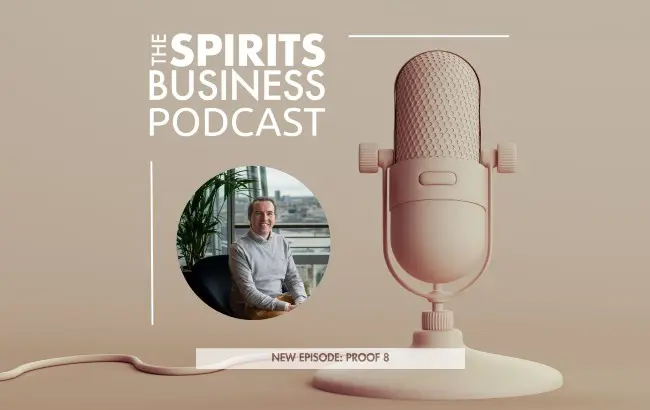
“It’s tough for a lot of people out there just now,” noted Stuart Maxwell, chief operating officer at technology company Proof 8. “We work with quite a wide variety of different spirits businesses and quite a few people are suffering out there just now.
“For us [at Proof 8], it’s been pretty good. We’ve expanded massively, we’ve just moved into the US market quite successfully. We just took on our first distillery customer in South Africa, and we’ve just recruited a couple of distillers in Australia as well.”
Proof 8 is an inventory management platform that works to digitalise “existing legacy systems”, Maxwell explained.
On the latest episode of The Spirits Business Podcast, Maxwell spends time exploring the development of ‘digital deeds’ and where he sees opportunities for digital deeds to improve efficiency, traceability and transparency across the whisky industry.
“Our terminology for the digital deeds is effectively a digital delivery order,” Maxwell explained.
“What we do on the [Proof 8] platform is that any cask that’s brought into the system gets assigned a digital ID. We use blockchain technologies, but that technology is becoming much more mainstream these days.
“Any cask that’s brought into the system would get assigned an NFT. That NFT is a unique digital ID for that asset, and that asset’s logged onto the blockchain, which in itself is an untamperable ledger.”
In June 2025, independent Irish distillery Ahascragh adopted Proof 8’s digital management system, which included issuing digital deeds for every cask from the moment of filling. In April this year, Jackton Distillery in Scotland also implemented Proof 8’s platform to increase cask security.
The biggest benefits for producers and bottlers in adopting Proof 8 technology and digital deeds, Maxwell believes, come with removing “human error that can happen on site”.
In addition to company efficiency, he also noted the commercial benefits of building more transparent and traceable businesses.
“If you have a better system, you get access to better financing for the spirits industry based on the assets you have in stock,” Maxwell said. “If you have solid data and you can definitively say, ‘This is where everything is’, and so on and so forth, then you typically get more confidence [from the financier]. When it comes to audits as well, that is a huge bonus to have all your data in one place.
“We have the ability to create custom reports on the platform, both with the kind of master data, if it were, and also the ability to create custom reports for tasks.
“So those are two major commercial benefits: the better access to finance, and then the audit-ready standard they can have on their site.”
Listeners can access the latest episode with Proof 8 on all major streaming platforms, including Apple Podcasts, Spotify and Amazon Music, or for free via Acast and the link below.
Last month, Matthew J Benny, chief commercial officer for the Americas at Creamy Creation, featured on the podcast to debunk some common misconceptions about cream liqueurs and share insights into what it’s like being a B2B developer and manufacturer.
Alexandre Gabriel, founder and master blender at Maison Ferrand, was also a recent guest, who went into detail about what it was like to rename his global rum brand, now known as Planteray, and the reasons behind that decision.
Related news
The SB Podcast: why distribution needs a shake-up
The SB Podcast: IWD 2026 – the power of mentorships
SB Podcast: Olivier Ward on what the UK Distilling Census reveals