


Family-owned spirits brands on legacy and long-term thinking
With Father’s Day on the horizon, we spoke to producers from family-owned spirits brands about the advantages – and potential pitfalls – of working with your dad.
There’s a reason that the spirits industry is filled with family businesses. Establishing distilleries, laying down casks, and launching brands has always required long-term thinking, as well as a certain optimistic belief in building for the future.
Whether we look to rum in the Caribbean, whisky in Scotland or gin in London, there are countless examples of distillers who set out to make spirits and, in doing so, created lasting family legacies.
The global spirits industry may seem dominated by towering, international companies. But the fact that so many distilleries and brands are still run by the descendants of their founders suggests there are advantages to keeping it in the family.
Curious to understand the benefits and the potential pitfalls of distillers working with their children, we spoke to three producers: one father-and-son duo making their first entrepreneurial steps with a new brand; a leader in the burgeoning English whisky scene making single malt on his family farm; and the scion of a Victorian gin dynasty.
All in the family
“Some of my early memories are of coming to visit Dad at work during the school holidays,” says James Hayman. “And if you’ve ever been to a gin distillery, you know those aromas coming through are quite magnificent. It left a really lasting impression on me; I kept wanting to go back and see it again.”
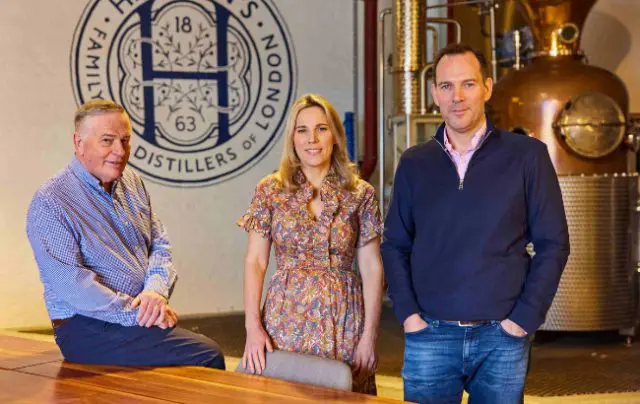
The Hayman family has been in the gin business since 1863. James and his sister Miranda are co-owners of the West London distillery these days, but their father Christopher – who shepherded Hayman’s Gin out of the 20th century – remains involved day-to-day.
“He largely leaves Miranda and myself to run the business, but he still likes to pop in. He’s actually 80 next year, but he’s got boundless energy,” James Hayman tells me. “He’s very good at making a point that makes sense. Sometimes it’s not the point you want to hear, but it’s a point that makes you stop and think.”
Christopher came to Hayman’s Gin in 1969. That generational knowledge his children benefit from today was built up over decades of keeping the family business alive, even when gin as a category was struggling.
“We’re going through some challenging times at the moment,” James adds. “I often talk to him about that, and he’ll go: ‘Yeah, well, you know the 1970s wasn’t a great decade, and the early 1980s had its challenges as well.’ He’s seen it before, and I think it gives you the confidence that most things are cyclical. You just have to ride it out.”
In its recent past, Hayman’s Gin is notable for bringing back Old Tom Gin – a sweeter style that found new favour during the classic cocktail renaissance of the early 2000s. Since then, the brand has continued to diversify, branching out into liqueurs aimed at aperitif drinkers and lower-ABV expressions that tap into the growing trend for moderation.
This family business may be old, but like Christopher himself, it’s far from tired.
When life gives you potatoes…
James Chase’s father William began making potato vodka in Herefordshire in the early 2000s. He subsequently broke into gin, at what would prove to be a particularly opportune moment, and built a successful brand that eventually attracted the attention of spirits giant Diageo. After selling the gin and vodka brand in 2021, the Chase family reacquired their original distillery in 2025, complete with the stocks of whisky they had been quietly ageing since 2012.
The first of those casks recently made it to market in the form of Rosemaund Farm Distillery English single malt. At 10 years old, it’s significantly more mature than most English whisky currently available. Again, long-term thinking at play.
“We’ve been here for about three generations: my grandfather and my father, William,’ says James Chase. “I always joke that my hands are far too moisturised to have seen a hard day’s work on the farm. It’s my brother Harry heading up the farming side of things now. He grows the barley for our whisky.”
James was instrumental in refocusing the family business to whisky. However, when asked about this contribution to the Chase story, he’s modest, characterising it as an extension of the entrepreneurial spirit he’s inherited.
“Whether I can take complete credit, I don’t know. My grandfather was a pick-your-own farmer. He had an incredibly small patch of land, so he had to innovate. Because when your business partner is Mother Nature, you might have to grow cherries or raise some cattle; you have to keep diversifying.
“I think that never-settling sense of ambition has stayed in the culture of everything that we do. My dad’s got that in spades, and I hope I’ve got some of that within me.”
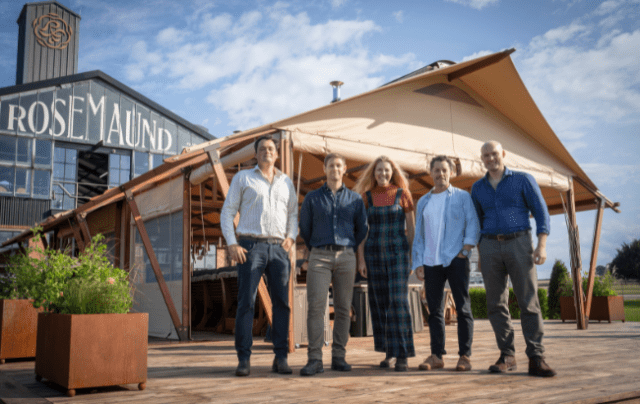
With enviable stocks of mature English single malt at his disposal, James is hard at work on future releases in collaboration with bartender turned master blender Tristan Stephenson. As interest in English whisky grows, Rosemaund is drawing tourism, generating jobs, and making a case for the burgeoning category.
“I’m really thankful that we laid down that whisky, because what seemed like a mad decision then has landed quite well for us in terms of rejuvenating and bringing the distillery back to life.”
Rosemaund Farm Distillery offers a romantic vision of English single malt, distilled and aged among barley fields and orchards in the West Midlands. But James Chase, like his father William, is a serious businessman. It’s clear they’re keeping Rosemaund family-owned not out of idealism, but because it makes for good business and good whisky.
“If you’ve got private equity or other investors, they might want to make great spirits, but ultimately they want to triple their return within three years. We don’t necessarily need to thrash the business or kick out more volume to pay shareholders back.
“Both models have their benefits. Running a distillery is hugely cash intensive but, because we’re family-owned, we have a long-term business plan. We think in decades, not three-year cycles. Ultimately, I’m a cog in a wheel, but I’m very proud to be that cog.”
Does that mean that he anticipates passing Rosemaund on to his own children one day?
“I think I’d like to create that option, but they’re a bit too young for me to wish anything on them just yet.”
First-generation distillers
Suk Dhillon and his son Rian didn’t descend from a long line of distillers. Coming from a background in retail and fast-moving consumer goods, they built Król Vodka from the ground up. Distilled in Poland and aimed squarely at the luxury spirits market, Król has been a labour of love from the start.
“We previously had shops and off-licences, so it was a natural transition into this side of the business,” says Rian. “I was always in the background watching what my dad was doing, so I saw myself naturally getting into this eventually.”
“The name Król came from Rian; it means ‘king’ in Polish,” Suk chimes in proudly. “The name, the branding, that was all Rian.”
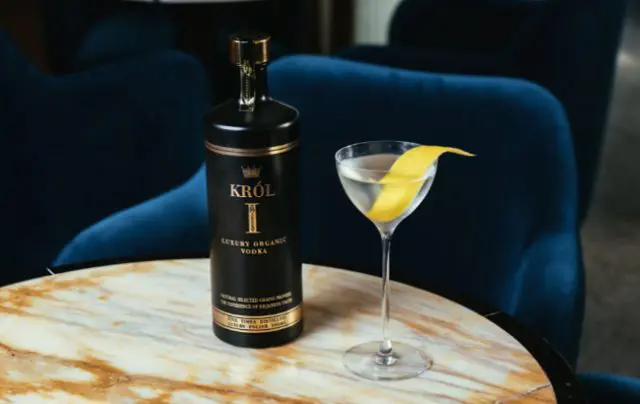
The father and son duo first experimented with CBD vodkas before launching Król IV, a spirit infused with organic hemp. With their new product Król I, they want to enter the world stage.
“It’s hard to try to overtake your father who’s done everything for you in life and showed you the way. The pressure’s on; I’m learning every day as I go,” Rian adds. “We made mistakes when we first launched, but we’ve learned a lot in the past few years. There’s a learning curve, but the more I do it, the more confident I’m getting. As time goes on, I’ll get ready to step into those shoes.”
Even though they’re relatively new as spirits producers, the Dhillon family still exhibits the kind of legacy thinking that we see with the Chases and Haymans.
“This is down to Rian now,” says Suk. “I’ve done my part in developing the brand. Sooner or later, I’ll step back and Rian will have to drive it forward. I’ve created what god wanted me to create; now I’ll pass that on and see where he can take it.”
With the end of his working life in sight, Suk plans to leave the world of business and dedicate more time to his faith and acts of service in the community. Rian became a father himself in January, and the prospect of passing on what he and his father have built is clearly present in his mind.
“This is my first Father’s Day as a father coming up,” he says. “Really this is all for my son, I want to be able to pass something down to him as well.”
From father to son
Returning to James Hayman, we ask about this idea that family business means acknowledging yourself as a link in a chain – or a cog in a wheel. He has three children himself, while his sister Miranda has two.
“We talk to them about the business; they’re aware of everything. Are all five of them going to want to join? Well, I hope not, it could be chaos! But it might be nice if one or two of them want to come aboard as time goes on. We’ll have to see whether that materialises or not.
“There’s something very nice about working with your father and sister. I’ve got friends who don’t see their parents or their siblings that often. And, on the whole, we have the same mindset, the same focus, the same wants for the company.
“We’re all slightly different in our own different ways, which I think is a benefit too. So, if it’s the case that our children join the business, then we’d love that. But that’s got to be their decision.”
While Suk, Rian and his son will toast Father’s Day with Król Vodka, and the Chase family will share a dram of English whisky, the Haymans plan to focus on family rather than business.
“We’ll all be together,” James says, “spending what will hopefully be a nice summer’s day, not talking about gin.”
What could be better than that?
Related news