


Why Armenian Brandy is ready to join the world’s great spirits
With a newly registered geographical indication, strict production standards and a deep connection to place, Armenian Brandy is positioning itself alongside Scotch whisky, Cognac and Tequila.
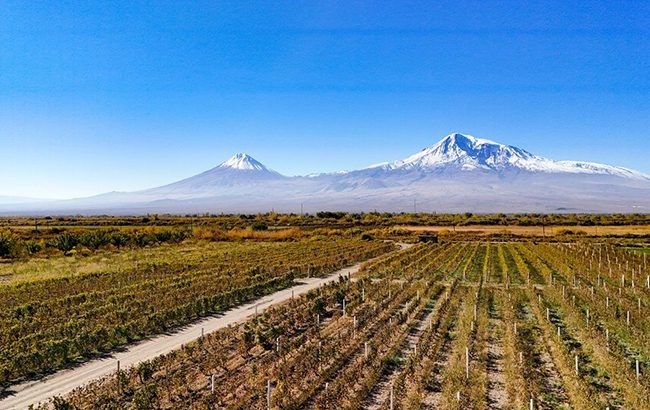
Brandy is one of the most misunderstood categories in spirits, with many confusing it with Cognac or believing it to be the lesser-quality sibling. However, those in the know are aware that the spirit has the potential to command the same reverence as whisky, Tequila or rum when quality, provenance, terroir and tradition align.
Take Armenian Brandy. Produced from the nation’s local grapes and shaped by generations of expertise, the category is quietly building a reputation that stretches far beyond its borders. The country’s brandy is shaped by its home, which offers a landscape of mountain vineyards, volcanic soils and abundant sunshine.
That sense of place is now being formalised through a geographical indication (GI), with producers taking steps to formally protect and define the category’s identity for years to come. The GI was applied in Armenia at the beginning of the year, supported by a €2.8 million (US$3.25m) EU-funded technical assistance project, implemented by Expertise France and DMI. If it is approved, the next step would be to register the GI with the European Union (EU). The move marks the culmination of a years-long process that began following Armenia’s Comprehensive and Enhanced Partnership Agreement (CEPA) with the EU, which was signed in 2017. As part of this, a rebranding process was initiated in 2018 to phase out the use of the term ‘Cognac’ for Armenian Brandy.
The move marks the culmination of a years-long process that began following Armenia’s Comprehensive and Enhanced Partnership Agreement (CEPA) with the EU, which was signed in 2017. As part of this, a rebranding process was initiated in 2018 to phase out the use of the term ‘Cognac’ for Armenian Brandy.
In practical terms, the GI creates a legally recognised framework for production, in line with established spirits like Cognac, Scotch whisky and Tequila. Only producers operating within the defined area and adhering to the approved specifications will be able to describe their products as Armenian Brandy. The protection will include prohibiting the description of products as ‘Armenian Brandy style’ or ‘type’, even where the true origin of the product is stated.
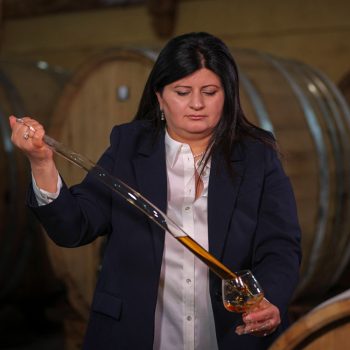
Armenian Brandy production is deeply connected to local viticulture traditions, with autochthonous grapes – such as Voskehat, Mskhali, Garan Dmak, Kangun, Banants, and Sev Areni – grown in the unique terroir and processed within the country before being distilled, aged and blended according to established traditions. Other key specifications include the geographical area covering the entire territory of the Republic of Armenia, with grapes grown in one of four identified grape production zones, mainly including the Ararat, Armavir, Tavush, Vayots Dzor, and Syunik regions.
In terms of production methods, Armenian Brandy must be double distilled. Producers have also agreed on a series of ageing requirements. The stipulated terms are: ordinary/young (a minimum of three years ageing) and mature, with the following ageing classifications: middle-aged (at least six years), old (at least 10 years), very old (21-30 years) and vintage (31 years and more).
Armenian Brandy must be aged in contact with oak, which develops the rich layers of fruit, spice, vanilla and wood notes for which the spirit is known.
Brandy occupies an invaluable place within Armenian culture as a symbol of hospitality, celebration and national pride. This cultural dimension is one reason why GI recognition carries such importance. By linking quality directly to origin, the system helps preserve traditional knowledge while ensuring that the value associated with the category remains connected to the producers who have built its reputation over generations.

Supported by protected origin status, the category is positioned to reach a wider international audience. Five markets have been identified as offering particularly strong potential for Armenian Brandy: the US, Germany, Switzerland, Romania and Ukraine. Each presents different opportunities; for instance, the US is home to a large Armenian diaspora in California, while the market’s appetite for craft, artisanal, and origin-defined premium spirits creates a runway for growth beyond the community.
For Armenians, the GI establishes an identity that belongs entirely to the nation. “Today, we are witnessing the beginning of a meaningful new journey for Armenian Brandy,” says Zaruhi Muradyan, director of the Vine and Wine Foundation of Armenia. “The development of the GI for Armenian Brandy is not only about legal recognition; it is about clearly defining and protecting what makes Armenian Brandy truly distinctive.
“For consumers, it ensures greater confidence in the origin, quality, and authenticity of every bottle. By linking quality to origin, the GI framework protects heritage, strengthens trust, and positions Armenian Brandy as a proud expression of Armenia’s identity on the global stage.”
Related news
How Brandy Noble 1954 is shaking up the category