

New Grove cellar master takes Mauritian rum to next level
François-Xavier Sobczak, the new cellar master at New Grove Distillery in Mauritius, shares updates on his journey so far and highlights what makes the island an interesting origin for rum.

In October last year, Sobczak decided to move from Guadeloupe, where he served as the master blender at Bologne Distillery for three years, to Mauritius to join Grays-owned New Grove Distillery.
According to New Grove, his transition from the Caribbean to an Indian Ocean island represents one of the rum industry’s biggest moves by a cellar master, indicating the category’s future direction.
Sobczak became aware of Mauritian rum through friends several years ago, and in fact, New Grove was his first bottle of aged rum.
“I have a very personal connection to New Grove Distillery. My first bottle of aged rum was a gift from my three best friends; it was a five-year-old New Grove and I jokingly said I would one day work there,” Sobczak says.
Fascinated by the rum, when the past comment became a real opportunity, he couldn’t resist the offer, as he explains: “The diversification and pioneering spirit of this fine distillery perfectly align with the vision of rum I want to express: to innovate and share with passion by exploring new horizons.
“This translates into the use of pure juice and molasses (the non-crystallisable sugar must) on a wide variety of distillation equipment. The latest double-retort still, recently installed, was the final touch that confirmed my decision.”
Exploring new possibilities
With around 13,600 kilometres between Guadeloupe and Mauritius, Sobczak faced working with different terroir, raw materials and production apparel.
“Regarding soils, Guadeloupe has a highly fragmented landscape of micro-terroirs, with volcanic and humid soils on one side and more calcareous and drier areas on the other. Mauritius is a volcanic island, but it is older than Guadeloupe. Its soils are more varied and less publicised than those of the Antilles, but nonetheless distinct by region,” he explains.
“It is primarily in the raw materials that the two origins differ. Although Guadeloupe produces industrial rum, it is known for its agricultural rum made from the fermentation of fresh sugarcane juice. Mauritius specialises in the sugar industry, notably with Terra, a sugar mill that produces speciality sugars of very high aromatic quality.
“Furthermore, the molasses used is among the richest and most interesting in the world for fermentation. Mauritius boasts a more diverse production tradition, with numerous types of distillation equipment within a single distillery, whereas Guadeloupe predominantly favours the Creole column still.”
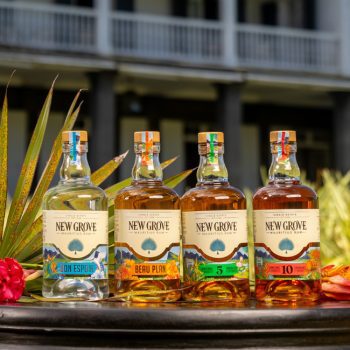
Sobczak also notes that the production of pure cane juice rum is relatively recent in Mauritius, adding complexity and complementing the island’s expertise.
He continues: “Mauritius is an island born from a hybrid of cultures and populations, at the crossroads of several continents in the Indian Ocean. It’s only natural that its rum expresses this same hybridity.
“The Mauritian style is still quite eclectic; you can feel a desire for diversity, a controlled balance between its two identities: molasses rums and pure cane juice rums. I would describe it as a balance between sugar tradition and modernity, with a clear ambition to move upmarket on the international stage. It’s actually a wide-open playground for a dreamer like me.”
Curious mindset
While in Guadeloupe, Sobczak honed his skills in complex fermentation processes through various experiments. Some of his experiments have included incorporating the traditional Chinese brewing method qu, which is used to make baijiu, and utilising acetic acid barrels for ageing rum.
“I like to craft my rums from fermentation to bottling. It is this stage that truly creates the aromas, revealing the potential of the raw material,” he says. “It is an infinite playground where every element of life becomes a new possibility for creating aromas, flavours, and textures, and therefore new sensory stories to tell.
“I’ve gotten into the habit of tasting my fermentation tanks. I see them more like beers or wines than musts to be distilled. They reveal a great deal about the potential they hold within their bubbling. Unconventional, I know. Like a wine whose vinification is complete, I’m now entering the ageing stage. And what better cellar than Mauritius, this dynamic paradise at the crossroads of Africa and Asia, to nurture it?”
Related news
Mount Gay reveals first age-statement rums