


The divine advantage
A 130-year distilling tradition, Europe’s strictest brandy rulebook, and oak reserves other regions can only dream of – Moldova’s protected grape spirit is making its case to the world.
In 1896, a wine distillery opened in the small Moldovan town of Călărași. A year later, another in Tiraspol. By 1898, Chișinău had one too. Backed by entrepreneurs named Reidel, Șustov, and Saradjișvili, these early operations used small pot stills with a capacity of just five to seven decalitres, producing spirits shipped east to fortify wines and supply the Russian market. That was the beginning. One hundred and thirty years later, the tradition they started carries a name that means ‘divine’: Divin.
Protected as a geographical indication (GI) since 2012, Divin is Moldova’s signature aged grape spirit – produced exclusively within the country’s borders and governed by one of the most rigorous specifications in the European brandy world. By the interwar period, 35 distilleries were already operating across the country. In 1929, Bardar was founded by Mulller, joining the established houses in Călărași, Chișinău, and Tiraspol.
In Moldova Divin production later expanded to Bălți in 1944, becoming one of the biggest producers. By 1990, Moldova held approximately three million decalitres of absolute alcohol in ageing stock – including distillates maturing for 30 and 40 years.
“What makes Divin so special is its harmonious blend of tradition, terroir and time‐honoured craftsmanship,” said Vasile Roșca, president of the Divin GI Association. “It’s a soulful expression of a place and its people.”
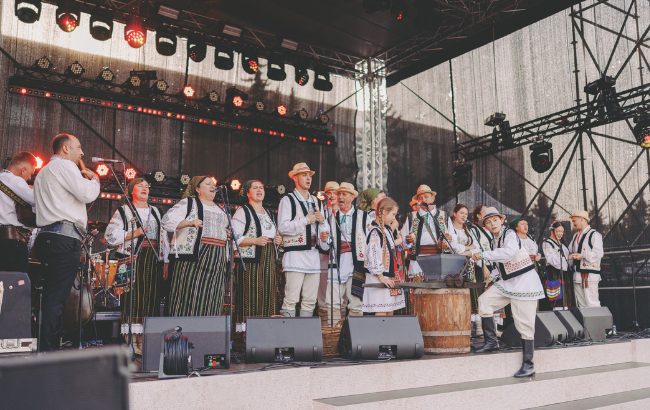
Country shaped by the vine
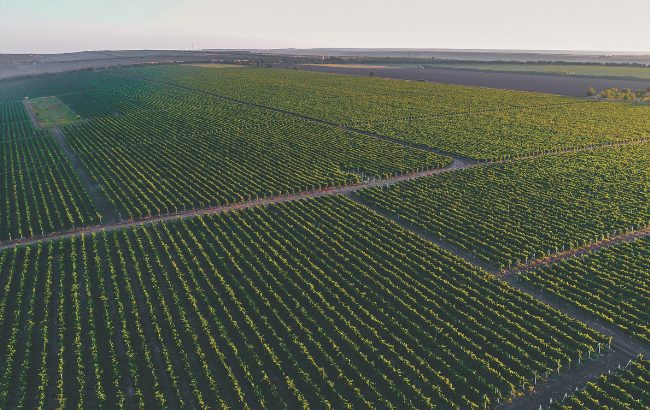
Moldova sits at the latitude of Burgundy, with just 2.6m people and more vineyard hectares per capita than anywhere on Earth. Grapevines have been cultivated here for five millennia.
Three zones shape Divin’s character: the Carpathian foothills in the north, delivering aromatic intensity; the central Codru forest zone, where oak and beech woodlands cover an area equal to the vineyards; and the southern Bugeac steppes, warmed by the Black Sea. Annual sunshine reaches 2,100‐2,200 hours, and the Nistru and Prut rivers buffer temperature extremes across the growing season.
Divin is produced from varieties chosen specifically for distillation, including Aligoté, Rkatsiteli, Feteasca albă, Alb de Suruceni, Bianca, Riton, and Sauvignon.
No room for shortcuts
The official Caiet de Sarcini governs every stage from vineyard to bottle. Yields are capped at 1,600 LPA per hectare. Sulphur dioxide is banned during the entire base‐wine cycle – stricter than most brandy appellations. Chaptalisation, aromatic additives, and rectified alcohol are all explicitly prohibited. Distillation must be completed by 1 May following harvest.
The specification permits continuous, direct, and double distillation – with continuous distillation being the traditional method, as in Armagnac – and requires copper contact surfaces.
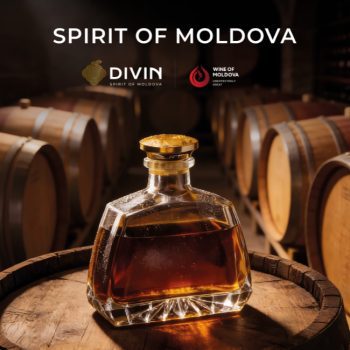
The spirit is collected at 62‐72% ABV before entering oak barrels, primarily Moldovan oak, specially treated, for a minimum of three years.
Four tiers, from three years to half a century
The GI defines four categories: VS (minimum three years), VSOP (five years), XO (seven years), and XXO (20 years). For XO and XXO, gradual dilution during barrel ageing is permitted – reducing strength by no more than 5% per year, to a floor of 55% ABV. After blending, mandatory rest periods apply: three months for VS and VSOP, six months for XO, and 12 months for XXO.
After 2000, producers began releasing expressions aged 50, 60, and 70 years old, placing Divin alongside the most venerable Cognacs and Armagnacs in terms of maturity.
 A spirit that rewards patience
Young Divins offer fine floral and patisserie notes with fresh white fruit. With extended ageing, the bouquet deepens into dried fruits, honey, chocolate, spices, noble oak, and balsamic undertones, supported by a full, harmonious palate. The oak integration is smooth rather than overtly tannic – a hallmark of the Moldovan tradition.
Moldova’s leading Divin houses – Barza Albă, Bardar, Kvint, Călărași Divin, Ungheni, Aroma, and Chateau Cojușna – are now exporting to Germany, Poland, the Czech Republic, Romania, China, and Australia.
The oldest expressions achieve a complexity that stands comparison with decades‐old Cognacs and Armagnacs – a level of quality the market has yet to fully price in. For a spirits world increasingly drawn to provenance and undiscovered value, that is an advantage worth paying attention to.
For full details on production standards and the Divin GI framework, visit https://wineofmoldova.com/en/divin-pgi-region/
Related news
Can global brandy capitalise on Cognac’s challenges?