


Are RTDs a beacon of hope for the spirits industry?
While most drinks categories are suffering from downturns, RTDs are bucking the trend thanks to their convenience and experimentation.
*This feature was originally published in the January 2026 issue of The Spirits Business magazine.
As 2025 came to a close there wasn’t a lot for the drinks trade to cheer about. The global alcohol market was set to decline further than expected in 2025, with volumes down by 0.4% and values down by 0.7%, according to IWSR’s gloomy mid-year forecast. Further still, IWSR analysts expect 0% growth in volume and value for 2026. But among the doom and gloom came a bright spark: ready-to-drink, or RTDs.
As the only major alcohol category expected to grow in 2026, last year IWSR heralded the category as a “beacon of hope”. Growth has slowed, but IWSR expects the category to account for 4% of total beverage alcohol (TBA) volumes in 10 key markets by 2029, up from 2% in 2019, and for 9% of the US TBA market. Meanwhile, global volumes of RTDs are expected to have grown by 1.3% in 2025. This may seem slight, but in comparison, global beer volumes are expected to have declined by 0.2%, spirits by 1.3%, and wine by 2.4%, putting RTDs firmly on the front foot.
“We expect further growth and competition but innovation to continue to slow as brands establish themselves and gain consumer loyalty,” explains Susie Goldspink, IWSR head of RTDs and no/low-alcohol. “Pricing is key, as markets that are too premium are generally slower growing, and risk failing to establish themselves.
“Where the options are more affordable and in line with beer, markets tend to develop faster and be more dynamic.”
Underlining confidence in the category, last month, AB InBev agreed to buy an 85% stake in BeatBox Beverages for around US$490 million, with plans for a full buyout within five years – the largest purchase of an RTD brand to date.
As the RTD category matures, how can brands capitalise on growth and remain relevant as increasing competition crowds the market? For a category as diverse as RTDs, one that comprises spirits and mixers, hard seltzers, hard teas, and pre-mixed cocktails, responding to shifting trends is crucial. Last April, Gallo Wine & Spirits, which owns spirits-based seltzer brand High Noon, launched Lucky One – a vodka-based hard lemonade with four non-carbonated fruit flavours. As of November, it had surpassed one million cases, scaling faster in its first year than High Noon. For Britt West, chief commercial officer of Gallo Wine & Spirits, the biggest challenge for RTDs is increased competition and consumers’ rapidly evolving preferences.
“From flavours, ABV, formats, they’re always looking for ‘what’s next’, and brands need to move quickly to keep up while balancing smart, strategic decision making,” he says. Since its launch in 2019, High Noon has expanded to include a Tequila-based seltzer, and a non-carbonated vodka iced tea.
According to IWSR data, hard tea was the fastest-growing RTD subcategory between 2019 and 2024, growing at a compound annual growth rate (CAGR) of 30% in value and 26% by volume, albeit from a smaller base. Hard seltzers also achieved growth, rising at a CAGR of 21% by value and 16% by volume from 2019-2024, the second-fastest-growing RTD subcategory, despite sales softening from their 2021 peak. West sees an opportunity for Tequila-based High Noon seltzers. “Canned Tequila RTDs are up by 23% year on year [NABCA/IRI total US off-trade data for 52 weeks ending 31 August 2025], and we have a strong offering and position in the category, with 27% share of the Tequila RTD category and nearly 92% of the Tequila seltzer category [NABCA/IRI data for year ending 2 November 2025]”.
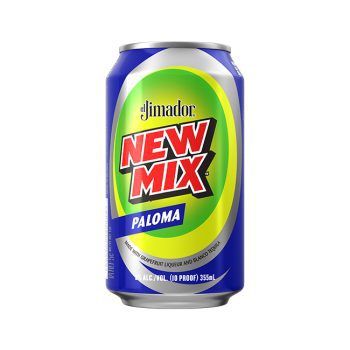
Globally, RTD cocktails and mixers continue to thrive, achieving a CAGR of 15% by value and 10% by volume between 2019 and 2024, according to IWSR. In the UK, this rose to 18% and 11% respectively, while in the US it leapt to 37% and 27%. Late last year, Brown-Forman launched Mexico’s best-selling RTD, El Jimador New Mix, in the US. The Tequila-based RTD range, which includes a Paloma and Cantarito, sold 10.9m cases in 2024, an increase of 8.4% on 2023. “From what we’re seeing, spirit-based RTDs and cocktail-inspired options, especially those with bold, fruity, or tropical flavour profiles, are growing quickly, resonating with consumers looking for variety and novelty,” says Mary Beth O’Mara, US and Canada brand director for Brown-Forman’s RTD portfolio. “We’re also noticing interest in high-quality ingredients and convenient formats, particularly drinks that feel easily enjoyable in casual or social settings.”
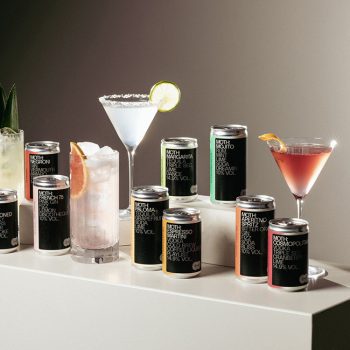
In this segment, Tequila- and vodka-based RTDs are gaining the most traction globally, says Rob Wallis, co-founder of canned cocktail Moth, noting that the brand’s most recent launches – a Passionfruit Martini and Spicy Margarita – were “its most successful to date. We’re seeing more and more shoppers switch from spirits to RTDs due to their convenience, with more shoppers wanting to replicate the out-of-home occasion from the comfort of their home,” says Wallis.
“Premiumisation in the category is also growing fast,” he adds. “Our data shows that ‘quality’ is the number-one priority when shopping for RTDs. The ‘premium’ RTD segment (anything £15/litre-plus) is growing [by] triple digits versus two years ago, and therefore gaining share of the category.”
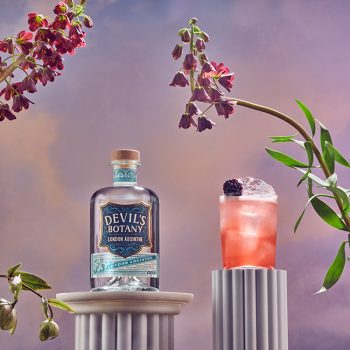
RTDs are important for recruiting consumers in traditional alcohol markets, broadening target groups and occasions, but they’re also useful for introducing diverse spirits options. Last year, Devil’s Botany launched Dark Fairy, the UK’s first absinthe-based RTD canned cocktail. “Drinkers today are far more open to discovering new flavour experiences, and that curiosity gives absinthe the opportunity it never had before,” says co-founder Rhys Everett. “But we also recognise that some consumers still feel unsure about how to approach it. An RTD becomes a powerful tool here. It introduces absinthe in a familiar, easy-drinking format that lets people experience its botanicals without intimidation.”
Everett says 2026 will likely see more growth in the RTD market, but also “sharper consolidation”. “The top-performing brands with clear identities will pull ahead, while weaker or copycat offerings may fall away,” he believes. “We also expect more segmentation: premium craft RTDs, functional or low-ABV formats, darker and more complex flavour profiles, and crossover products from established distilleries. As the category becomes more sophisticated, consumers will reward originality and authenticity – two qualities we believe will define the next phase of RTD innovation.”
Cutty Sark, owned by French spirits firm La Martiniquaise-Bardinet (LMB), last year launched its first RTD – Cutty Sark & Ginger Ale Highball – becoming the first blended Scotch whisky RTD in the US. Further rollouts are planned in Canada, Bulgaria and Portugal this summer. LMB will also launch a Gibson’s London Dry Gin and Tonic this summer in markets including Italy, Mauritius, the Netherlands, Northern Cyprus, and Sweden.
“Convenience and price” continue to shape the market, says Laure Habbouse, LMB’s international marketing manager. “Diversity of flavours is also key for consumers looking for experimentation, and those looking to balance wellbeing with social enjoyment, enjoying lighter and portable drinks. Consumers are seeking flavourful, lower-ABV (5%) drinks. [RTDs’] appeal is particularly strong among those drawn to hybrid beverages, straddling the line between indulgence and moderation.”
Indeed, no-alcohol RTDs grew at a CAGR of 12% by value and 9% by volume from 2019 to 2024, according to IWSR data, making it the fourth-fastest-growing RTD subcategory. The biggest jump was seen in the US, where no-alcohol RTDs rose by triple figures; 126% by value and 117% by volume.
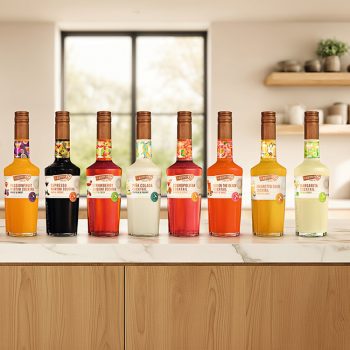
De Kuyper strengthened its presence in the zero-ABV market last year with the launch of its 0.0% Batched range, which includes Pornstar Martini, Mojito, and Strawberry Daiquiri RTDs, adding to a line of alcoholic RTDs launched in 2024. “We see the biggest growth in RTDs in 0.0% and in cocktail offerings as consumers increasingly trade up from beer and wine into flavour-forward, convenient cocktails for at-home and social occasions,” says Godelief van Erve, marketing director at De Kuyper Royal Distillers. “Within this, classic serves like the Pornstar Martini and Espresso Martini, are particularly popular in the off-trade.”
Fever-Tree also launched two alcohol-free canned cocktails in May – a Mediterranean G&T and an Italian Spritz. New Zealand’s Free AF recently launched its zero-ABV Apero Spritz and Spiced Rum & Ginger canned cocktails in the UK, alongside a 0% Margarita. “We expect growth in the areas of pre-mixed cocktails, in no-alcohol offerings but also in the low-alcohol category with more trendy serves like the Spritz,” says Van Erve, “driven by retailers who prioritise credible, premium brands.”
Demand for convenience and a shift towards moderation and premium cocktail options are reshaping a category once thought of as fairly lowbrow. The RTD category is riding high, but there are no guarantees this will last.
“RTDs are attractive rather than ‘risk-free’,” warns Van Erve. Are RTDs a beacon of hope? For a category as versatile as RTDs, one able to pivot between high-strength-ABV cocktails on one hand and zero-alcohol options on the other, the odds for future success are stacked in its favour. It’s uniquely capable of capitalising on shifting trends, be it flavour, convenience, moderation or value. The real battleground for brands will be in differentiating themselves in an ever-crowded market.
“Forecasts can look overly optimistic if producers underestimate how competitive and quality-driven the space has become,” adds Everett. “Success will favour brands that offer something genuinely distinctive and well-made, rather than those jumping in because the charts look promising.”
How are you seeing RTDs perform differently in the on-trade and off-trade, and which will be a bigger focus for you in 2026, and why?
Justine Clavel – head of marketing, Spiribam
“RTDs perform very differently across channels. The off-trade currently drives scale and accessibility, supporting at-home consumption and repeat purchase.
“For Shak.r, however, the on-trade is the key strategic focus. Bars, events and lifestyle venues are where RTDs deliver the most value in terms of visibility, experience and brand building. On-trade allows us to showcase Shak.r as a premium, cocktail-led brand, combining speed of service, consistency and a strong visual identity.
“This year we will prioritise the on-trade to anchor brand desirability, create cultural relevance and generate trial, with off-trade acting as a natural extension once demand and awareness are firmly established.”
Ingrid Smith – founder, Nirvana
“RTDs are showing strong but different momentum across channels. The off-trade remains the primary volume driver, growing 27% in the US in 2024 (IWSR) as consumers seek premium, convenient options for at-home occasions. The on-trade, however, is accelerating faster in value, with operators adopting RTDs to reduce labour strain and increase speed of service – especially in resorts, pool bars, and high-turnover venues.
“In 2026, Nirvana will prioritise the on-trade, where premium RTDs are forecast to outpace traditional cocktails in incremental revenue growth. Our coconut water sparkling cocktail meets operator demand for consistency, margin efficiency, and elevated guest experience.”
Related news
RTDs overtake vodka in global value