


Better together: the power of RTD tie-ups
The spirits world has focused on canned cocktails as an area of opportunity. Now, tonic and mixer brands are recognising the power of RTD tie-ups.

*This feature was first published in the November issue of The Spirits Business magazine.
There’s a valid argument that the launch of the canned, pre‐mixed version of Jack Daniel’s and Coca‐ Coca in 2023 signalled the dawn of the RTD (ready‐to‐drink), with the category now in significant growth as consumers prioritise convenience and easy access to quality.
With that in mind, as the RTD category has evolved, large numbers of brands took inspiration from the JD & Coke format and are now offering drinkers premium cocktails in cans, with quality comparable with what you can get at a bar or make at home. Part of the drink may be a spirit or non‐alcoholic ‘spirit’, but the other half, mixers and tonics, are also capitalising on these partnerships as a segue into more hands.
For Fever‐Tree, the world’s biggest mixer brand, RTD tie‐ups with spirits brands can open doors for its consumers. Rose Cottingham, director of global innovation, explains: “It’s an opportunity to enter a new space, which is growing in relevance, and meet new consumers that we aren’t necessarily already engaging with in simple spirit and mixers, or equally, offer our existing audiences another way to consume our products.” RTDs also come at an accessible price point, and with less commitment as a one‐off purchase. Cottingham says this brings “an element of experimentation”, adding that the low price means there’s “more openness to explore and taste new things”.
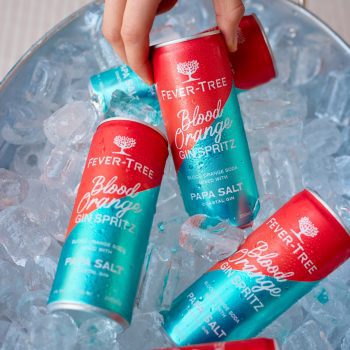
She continues: “There’s an opportunity to get new people to understand more about your brand and taste it in a way that feels more accessible than committing to a full bottle of spirits.” Fever‐Tree’s most recent RTD collaboration was with Papa Salt (above), the Australian gin co‐founded by actor Margot Robbie. Cottingham notes there was a “natural synergy from the beginning” with Papa Salt’s signature serve, a Gin Soda and Orange, made with Fever‐Tree’s Italian Blood Orange Soda. “They had already done a lot of work in building that serve, so it felt like a natural opportunity to take what they had already done and put that into an RTD format,” Cottingham says.
From that alignment, Fever‐Tree has been able to use the partnership to push part of its portfolio that was less well‐known. As Cottingham says: ”We could offer something to the category that wasn’t necessarily being represented at the time.”
She says Fever‐Tree was able to go after the Spritz, a cocktail that has become a central cog of Europe’s summer drinking culture.
“The Spritz really resonates with the consumer in the RTD space,” she says. “It naturally over‐indexes more to a female audience, and its longer, lighter flavour profile really resonates with that audience, so it felt like a great fit, not only for us from a strategic brand perspective, but also for a partner that shared similar philosophies about quality at the heart of their product.”
Charlie Maas, CEO and co‐founder of Papa Salt, adds that from a spirits perspective, partnering with Fever‐Tree, rather than using the “cheapest tonic they could find”, also shows consumers that the Blood Orange Spritz RTD is a premium product, and that the brand has not been cheapened.
“Brands are built on repeat sales, and that comes down to the liquid,” he says. “We were only going to partner with an established mixer brand to do this, so that people know what’s in the can is top notch.”
Complementary product
Double Dutch is another mixer brand that has dipped its toes into RTD partnerships before (with craft apéritif brand Sollasa). It is in talks with Everleaf on non‐alcoholic variants.
“We are such a complementary product to spirits and non‐alcoholic ‘spirits’,” says co‐ founder Joyce de Haas. “We work with other brands all the time, but this year the demand and conversations about it has picked up more than ever, as consumers want premium products, but in a convenient format.”
Along with Everleaf, De Haas mentions she’s also speaking about RTDs with a rosé wine brand, as well as Tequila, gin, and vodka producers. “There’s so much going on in the space that, ideally, it would be amazing if we have five or six partnerships with brands that we align with in terms of sustainability, positioning and premium quality, and that we could offer to our customers and theirs.”
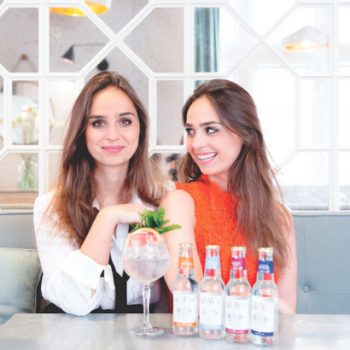
Similar to how the move has helped Fever‐Tree, De Haas notes Double Dutch has been able to get into channels that it hasn’t focused on as much before. “Most of our revenues come from glass bottles, and we do cans, but we don’t sit in the convenience space,” she says. “We sit in adult consumption, and significantly in hospitality, so going into RTD cans gives us new occasions where consumers probably don’t know us yet.” This also means visibility in new locations and at new times. “In supermarkets, or even late daytime/early evening in market halls or in Whole Foods, these occasions rather than pure retail,” de Haas adds.
According to de Haas, the core consumer who drinks Double Dutch does so at around 9pm in premium hospitality bars, and in a “beautifully‐served cocktail”. “With a premium RTD, you can get into travel, and your consumption timing can be a little bit earlier, so lots of other types of people also get to know us.”
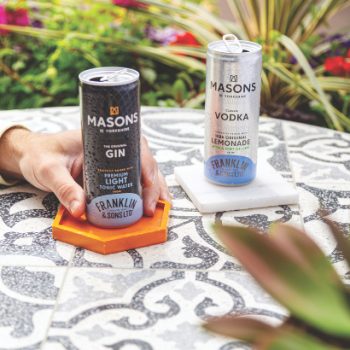
Lauren Edwards, brand manager for Franklin & Sons, says the company refers to its canned drink collaborations as ready‐ to‐serve (RTS) rather than RTD because Franklin & Sons is part of Global Brands, which also houses its own lines of RTD products in Hooch and VK. Franklin & Sons has five canned cocktails in the portfolio, made together with Manchester Gin, Portobello Road Distillery, RedLeg and Masons of Yorkshire. Edwards says the partnerships are about collaboration.
“We want to bring brands on the journey with us, and we want to ensure that they’re getting the same level of engagement that we are from these products going out – it’s strategic for both brands.”
Edwards also believes it extends the brand’s experience into new occasions and in new formats for people who might not have sampled Franklin & Sons’ products before.
“That’s for both sides,” she points out. “When I say our products, I mean the brand partners as well, such as transporting something that you might get behind a bar to a picnic or a festival, or taking it on a train journey; we’re live with Masons at the moment on TransPennine Express trains.”
The Franklin & Sons mixer range – with flavours such as Sicilian Lemon and Rosemary & Black Olive – is primarily developed for the on‐trade. Edwards notes that its tonics, mixers and soft drinks are not available in any off‐trade outlets (except Amazon) currently, with Franklin & Sons being the number‐two mixer brand in the UK on‐trade behind Fever‐ Tree. However, its RTS offering is in the likes of Co‐op and Asda supermarkets, which is “fantastic” for brand recognition, Edwards says, as Franklin & Sons’ name is on the can with its spirits partner. “It’s linking into that experience‐led occasion and bringing those bar‐ready serves to at‐home comfort,” she adds. “They’re not anything that we’d push forward in the on‐trade, but they very much drive off‐trade presence. Strategically, they also strengthen our position as the go‐to premium mixer brand that understands both sides of the bar.”
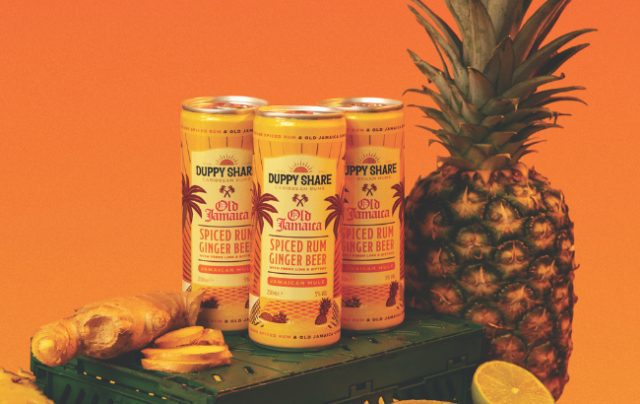
Meanwhile, Gary Keller, senior commercial brand controller for Refresco, which manufactures soft drinks Ting and Old Jamaica Ginger Beer in the UK, also enthuses on the benefits the brands have reaped from their partnerships with Caribbean rum Duppy Share. Both brands are soft drinks before anything else, but are looking to highlight their mixability for most spirits categories too. Old Jamaica is the top ginger beer brand in UK retail, but “vastly underrepresented in an on‐trade environment”, Keller says. In the summer, the brand partnered with Duppy Share at 21 festivals and events in the UK, which underscored Old Jamaica as the choice pairing with Duppy’s rums in cocktails such as the Dark and Stormy. In February 2024, grapefruit soda Ting launched its Pink Ting A Ling RTD with Duppy Share, while Old Jamaica followed suit a month later with a Duppy Share x Old Jamaica Jamaican Mule. Regarding the Pink Ting A Ling, which combines grapefruit soda with Duppy Share’s white rum (which was made in partnership with rapper Kano), Keller says the RTD “means we can have people make purchases on the move, which gives a greater availability to the partnership, to have it [available] in places that are in train stations and airports. We can boost the associations of both an emerging rum brand and an emerging soft drinks brand.”
Keller says the RTDs are seen as a key way to increase knowledge of the brands, in an area where he notes “we are a soft drinks producer, first and foremost”. For example, he highlights an education challenge for Ting and Old Jamaica, both Caribbean brands, that are often found in the world food aisle in supermarkets, which most shoppers don’t automatically visit.
In terms of how the RTDs could affect the rest of the portfolio, Edwards says they complement it. “The RTS’s act as an entry point to the wider range. Someone might discover Franklin & Sons through a G&T can, then explore our full collection of mixers and sodas at home or in the on‐trade when they see us on menu. It’s a way of extending brand awareness across multiple drinking moments.”
Core range
De Haas says Double Dutch has the facilities to can its products regardless, but the challenge for brands is not losing their core range and offering. “It’s such a complementary space within our own space,” she contends. “Whether you drink a delicious G&T at Soho House with Double Dutch, or a lovely gin and Double Dutch on a train, and it’s served cold, as long as the product is high quality and consistent, then it’s the same experience.”
Considering Double Dutch is a B Corp‐ certified company, it also has to assess a spirits brand’s positioning in sustainability. “We wouldn’t be able to partner with every brand because that might hit our B Corp [status] and our credentials” she says. “So we need to find the right sustainable fit from the start.” As the mixer, Double Dutch leaves the ABV side to the spirits partner. “We, in general, don’t really have experience on duties, but it’s definitely something that we need to rely on from the spirits brands.”
Addressing the costs of these partnerships, Cottingham says Fever‐Tree doesn’t see it as an upfront cost. “It’s more about value creation,” she says. “It’s about brand building, bringing something to the consumer that we felt was missing, and bringing an awareness to other parts of our portfolio, to the mixers that potentially people weren’t necessarily aware of before.” She adds that the RTDs are a supporting part of Fever‐ Tree’s portfolio, rather than the driving force. “It naturally lends itself really well as another way to reach our consumers and new ones. The benefits of working with a small brand [like Papa Salt] means they have a similar agile approach when it comes to innovation, so from a cost perspective, it’s seen more as a value creation or brand‐ building exercise, rather than a big outlay from a commercial perspective.”
Beyond the financial investment, Edwards believes work involved for both sides isn’t always considered: “You’ve got Masons spending their time and efforts to work with us on developing a product, but it’s the same on our side. You’ve got two brands aligning, two production processes, two teams of working on separate things because that’s how we tend to work, but if it’s done right, the value far outweighs the cost. It’s just making sure that the partnership has real synergies, and we’re both bringing something unique to the table.”
From concept to delivery
Edwards notes the time from the initial conversations and concept planning to the design and delivery of the product is about nine to 12 months. “You want to make sure it’s absolutely right. There are so many different stakeholders all entwined in that process, from your content, social and PR agencies to your digital, technical, and production teams. It’s a massive process, but it just means everybody in the business is completely invested in it.”
The RTD category is also still undergoing image rehab where consumers might be looking for premium bar‐quality serves, but there are question marks around what’s actually in the can. “Quality is absolutely non‐ negotiable,” Edwards says. “Although a big must‐have for us is shared values around craft and innovation, the RTS market is saturated at the moment, so it’s crucial that any collaboration feels genuinely premium and doesn’t dilute either brand’s reputation.”
The right direction
Looking at where RTDs have come from and where they are now, Cottingham says: “It’s obviously been a huge journey, but there still is that need to build trust in the quality of those products.” She adds that collaborations like its own with Papa Salt are steering quality in the right direction. “It signifies you’ve got two great brands coming together, and provides reassurance around quality because more often than not consumers have had a perception that the mixer part is a bit of an afterthought.” At the heart of the matter, she believes in the power of two strong brands coming together: “That is essentially how we have built Fever‐Tree today.”
Related news
Top marketing moves from June 2026