


Region unlocked: how drinking is evolving in Eastern Europe
Throughout Eastern Europe, markets have been changing with new flavours becoming popular and consumers developing a taste for premium liquid.

*This feature was first published in the April issue of The Spirits Business magazine.
Four years on from the invasion of his country, Yuriy Sorochynskiy, CEO of Nemiroff, has become stoical about the business of producing and selling vodka in what he calls “a permanent situation of war in Ukraine”. Late last year a shipping container full of Nemiroff products was hit by a Russian missile strike in the Ukrainian port of Odesa. “This is now business as usual,” he told The Guardian in January. He says: “We are mostly shipping out by truck. I would say we don’t have any logistical issues. Crossing the borders, there are more formalities. In the past it took three days to deliver to Central Europe, and five to the UK. Now it is 10 days or two weeks, but it is more or less predictable.”
As we speak, he points out that “the turbulence is outside of Ukraine”, referring to the US‐Israeli air strikes on Iran and the consequent shock to global oil and gas prices.
Export success
Exports have been growing, and now account for around 40% of Nemiroff sales, but so too have domestic sales, despite the country’s plummeting population, with 5.3 million Ukrainians now living abroad, and an estimated 3m or more under Russian occupation. “Due to some government regulations in 2023 and 2024, the illicit market has declined,” Sorochynskiy explains. “That’s why we were growing in the home market, by double digits in volume. The government needs taxes to finance the military, and that’s why we got this good, positive trend.”
He adds: “For obvious reasons we don’t have the full, transparent data, but my understanding is that around 20%‐25% of the spirits market is still illegal, but it’s mostly related to domestic products. People are not drinking more because of the war, and they’re not drinking less.”
Nemiroff’s range includes traditional flavoured vodkas like Honey Pepper, whose warming effects make it a popular choice in winter. In March it launched its first ready‐to‐ drink (RTD) product in the country, aimed at the summer months and Gen Z consumers who are embracing the global trends for convenience and lower‐ABV drinks. The company also represents Proximo Spirits in Ukraine, with Bushmills and Jose Cuervo, and Whyte & Mackay, whose Scotch brands include Dalmore, Jura and Tamnavulin. “We were even mentioned by Whyte & Mackay as their fastest‐growing market by volume,” he says proudly. Indeed, Scotch exports to Ukraine rose by 10% to £6.3m (US$8.4m) in 2025, and are now way above the £2.4m shipped in that first year of the war in 2022.

Domestic vodka remains by far the biggest spirit in Ukraine, accounting for 85%‐90% of the total, according to Sorochynskiy. The same is true of Poland, though domestic brands have been losing out to imports in recent years, particularly whisky. Scotch dominates in what is its top market in Eastern Europe, and ninth‐biggest globally.
Measured by value, Polish imports of bottled Scotch blends have been flat, at around £98m for the past three years. Single malts have been growing steadily, according to UK customs figures. In 2025 single malt shipments were worth £29.7m, having more than doubled since 2020 when they stood at £14m. Ballantine’s Finest leads in what is the brand’s biggest market, with Johnnie Walker in hot pursuit. Yet retail volumes of Scotch fell by 7% last year according to NielsenIQ, but thanks to strong growth in US, Japanese and Irish whiskey, total whisky was flat.
The latest data from IWSR, up to 2024, shows the Polish spirits market had plateaued, with zero compound annual growth rate (CAGR) since the Covid‐19 pandemic, and that volumes actually declined by 2% from 2023‐24. Spirits are forecast to settle at a drop of 1% CAGR through to 2029. Within those figures, the only spirits that increased on 2024 were bitters and apéritifs, whose volumes grew by 9%, and brandy by 6%. However, sales of whisky, the biggest imported category, were up by 8% CAGR from 2019 to 2024, and are forecast to grow by 1% through to 2029. Meanwhile, vodka continued to shrink by 3% a year to 2024, a decline that will slow to a dip of 1% in the next three years, predicts IWSR.
Cultural acceptance
Zak Oganian, CEO of the Geneva‐based Origen X Group, whose brands include Mikolasch Ukrainian vodka, believes the Polish market “has changed tremendously and socially in terms of purchasing power and cultural acceptance of premiumisation, but from a very small base”. At the same time, he describes it as “split between two extremes”, and says: “If you look at sheer volumes, about 70% is retail and most of that – 80% – is entry level.” For Mikolasch, he is focusing on the country’s on‐trade, where “there’ve been some very cool restaurants opening”, and where “cocktail culture is really picking up”.
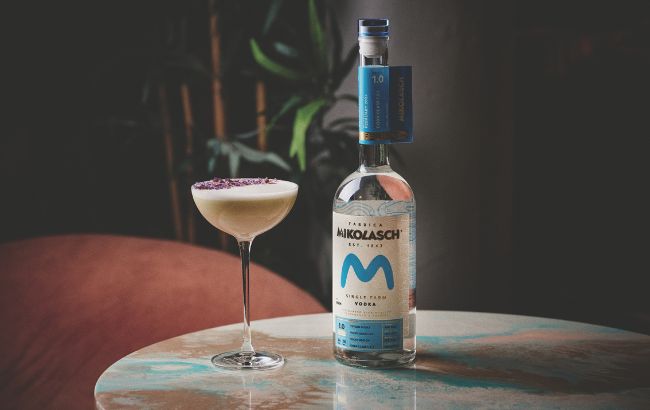
Oganian adds: “As big vodka drinkers, the Poles are extremely welcoming of imported brands, especially of Ukrainian vodka, which they have a lot of respect for.” Mikolasch sells itself as an authentic, terroir‐driven spirit, with full transparency on the label. It is an attempt to focus on the liquid and promote substance over style.
Flavoured vodka
Throughout Eastern Europe, Stock Spirits is one of the biggest players in vodka, with brands like Keglevich and Amundsen. Quoting the latest IWSR figures for the mainstream price band of €9‐€22 (US$10‐US$25) per 700ml bottle, Stock’s chief marketing officer, Anne Martin, says: “We hold around 25% volume share in clear vodka, and more than 36% in flavoured vodka across the region.”
She continues: “Local production also gives us an advantage. For example, Żołądkowa De Luxe and Gorzka are produced at our distillery in Lublin [Poland], which provides end‐to‐end control over production.”
As for trends in the category, she says: “Flavour innovation continues to play a major role in vodka. Fruit and citrus profiles continue to perform strongly, but we are also seeing growing interest in more varied flavour combinations as consumers look for something different.”
This ties with comments by Piotr Poznanski, IWSR research director for Eastern Europe, CIS and Middle East. Talking of Poland, he says: “There is a strong, rapid growth in low‐ proof, flavoured ‘vodkas’ and coloured spirits, which are increasingly consumed in social, ‘apéritif‐style’ settings rather than for traditional heavy drinking.”
Stock Spirits is surfing the trend with its popular range of Lubelska mid‐strength fruit liqueurs (25%‐28% ABV), and come in over a dozen flavours. So too is Campari, with its Aperol Spritz, which has driven the aperitivo moment in the region and inspired the launch of countless, colourful lookalike brands.
“Overall, the trend is less about forsaking alcohol and more about moderation and variety. Consumers are still seeking flavour and quality, but increasingly in formats and occasions that feel lighter and more flexible,” says Stock Spirits’ Martin. Measured in litres of pure alcohol, per capita consumption in Poland, has fallen from 9.62 litres in 2020 to 8.8 litres last year. Despite this, there has been a strong push to ramp up excise duty (see boxout on the next page for more).
The rum belt
To the south, the Czech Republic “is still often referred to as part of the European ‘rum belt’”, says Martin. “Rum, including the traditional non‐cane ‘tuzemák’ segment, has historically been one of the most important spirits categories in the country, with traditional domestic products coexisting alongside a growing presence of both local and international cane rum brands. Stock’s local icon, Božkov, is the leading rum brand in Czechia, with a strong heritage and deep cultural connection with Czech consumers.”
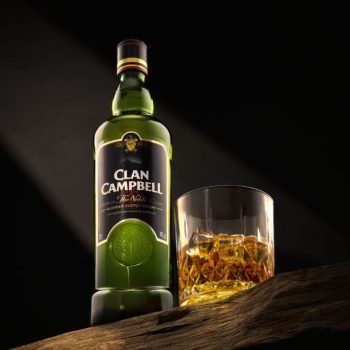
The country is also a growing market for Clan Campbell, which Stock Spirits bought from Pernod Ricard in 2023. Martin says: “It has already established itself as the fifth‐ largest mainstream Scotch whisky brand.”
Across the region it plays on its accessibility of price and taste. Martin describes Poland as a key market for flavoured whisky, which is why it introduced Honey and Lime variants alongside the core Clan Campbell range, including the “popular 9cl format”. Evidently, flavours spanning all spirits styles will play a starring role in keeping the Eastern European market buoyant in the years to come.
Industry insights
How is consumer behaviour in Eastern Europe changing and what challenges/ opportunities does this create?
Dávid Chovanec – export manager, Tatratea:
“Consumer behaviour today is being shaped by a wide range of influences, and their impact is particularly visible in the on‐trade. Two key shifts stand out. First, there is a growing expectation around value for money. While spend per visit can vary depending on the occasion or budget, consumers increasingly expect the overall experience – from product quality to service – to justify that spend. Second, moderation is becoming the norm. Drinkers are making more conscious choices about their consumption, often limiting how much they drink and avoiding switching between different spirits categories over the course of an evening, with a clear focus on feeling well the next day.”
Poland’s tax hike
“In late 2025, the ministry of finance proposed accelerating excise tax increases to 15% in 2026 and 10% in 2027,” says Piotr Poznanski, IWSR research director for Eastern Europe, CIS and Middle East. “However, [Polish] president Karol Nawrocki vetoed the amendment in December, preventing the steeper rise from taking effect.”
Instead, January’s increase was kept to the annual 5% rise that has been in place since 2021. Within a month, Polska 2050, a party in Polish prime minister Donald Tusk’s ruling coalition, was attempting to overturn the veto.
“Something like this will only affect the entry‐level,” says Zak Oganian, CEO of Origen X. Indeed, a 15% hike in duty would only add around 3 zloty (US$27) to the price of a standard 700ml bottle of vodka. In his view, such a move would simply encourage consumers to trade up.
Meanwhile, there have been measures to reduce night‐time drinking in cities like Warsaw, where a 10pm curfew on off‐licence sales will come into effect in June.
Related news
The world’s hottest bar openings from spring 2026