


Is AI reshaping recruitment in the bar world?
In an industry where personality matters more than prose, should there be cause for concern if candidates are using AI to write their applications and cover letters?
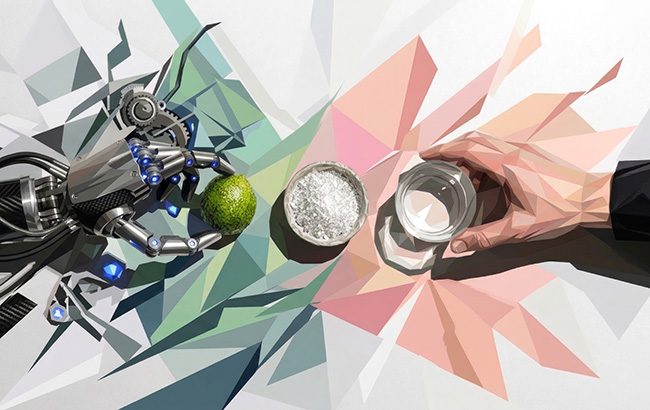
*This feature was originally published in the April 2026 issue of The Spirits Business magazine.
Is AI going to steal our jobs? As a writer, it’s probably something I’d be wise to fear a little bit – but can bartenders rest easy? Humans will probably always be required in hospitality, although more and more bars are seeing how AI can improve operations, whether that’s writing cocktail descriptions or identifying trends for new menus.
The issue with using AI arises when people become entirely reliant on it and stop thinking for themselves. One key area where this seems to be the case is in job applications, with some bartenders getting AI to write their cover letters and CVs for them. But is this really an issue in an industry that requires mixology skills, rather than eloquent writing?
“I’ve seen a few CVs done with AI and, for me, it’s no big deal,” says Thatta Kimura, owner of Dentro bar in São Paulo. “I am a person who is great at working as a bartender, front of house and back of house, but I suck at writing CVs.” As far as Kimura is concerned, as long as the candidate has the relevant experience – which can be checked by calling their references – it doesn’t matter whether their application was badly written or drafted by AI.
Others take a similar view, although they acknowledge that the technology can result in impersonal applications. Paul Aguilar, head of R&D at Oslo’s Himkok bar, says the use of AI results in “overly generic, highly polished” applications that lack “specific details that reflect the candidate’s real experience and personality”. It wouldn’t automatically disqualify someone, he says, but it could indicate other issues.
Greig Howitt, head bartender at Seed Library in London, agrees that it isn’t necessarily a deal breaker. “It’s just part of the landscape now,” he says. “Used well, it can help someone structure their thoughts or communicate more clearly, especially if writing isn’t their strength or English isn’t their first language. It’s a tool, like anything else.”
Someone using AI wouldn’t be immediately disqualified. “What matters more is intent,” he says. “Does the application feel considered? Does it feel like they actually want to work here? Personality and sincerity carry far more weight than perfect wording.”
Both Seed Library and Himkok conduct trial shifts, with the latter also implementing a six-month probation period to ensure candidates’ performance matches what they have written. At Avra, in the Four Seasons Astir Palace Athens, bar manager Nikos Tachmazis uses what many bartenders would recognise as the traditional benchmark for mixology: the Daiquiri test. “The Daiquiri test is a simple exercise where we ask candidates to prepare a classic Daiquiri using rum, fresh lime juice and sugar,” he explains. “What we observe goes beyond the final drink itself.”
Evaluate technique
When a bartender makes a Daiquiri, Tachmazis is evaluating their technique, understanding of balance, the way they measure and handle ingredients, shaking style, dilution, and the overall care and respect they show toward the process. “A drink with only three ingredients leaves very little room for error, so it becomes a very honest way to understand someone’s fundamentals behind the bar.”
At the Seed Library, Howitt has ditched the traditional Daiquiri in favour of asking candidates to make a lemonade. Many bartenders will have a memorised spec for classic cocktails, which makes the Daiquiri test more of a task of “recall rather than understanding. Lemonade strips it back and forces you to think, to taste, to adjust. It’s simple on purpose. Lemon, sugar, soda. Sweet, sour, dilution, texture. There’s nowhere to hide.”

As with Tachmazis and the Daiquiris, Seed Library is evaluating more than just the balancing of the drink. “How do they respond to basic problem-solving?” says Howitt. “Are they asking questions? Do they taste and tweak? Are they calm in the space? How do they engage with the team?”
Howitt has been setting this test for around three years, after realising that technical excellence wasn’t necessarily the most important value for a new recruit.
“We work in a very specific, collaborative way, so even very experienced bartenders will usually need to recalibrate to the way we work when they join,” he explains.
Most candidates will be able to memorise, recite and build classic specs, but Seed Library is specifically looking for bartenders who can approach flavour in a unique way.
Ultimately, many bars say the most important qualities can’t be measured through either a written application or the making of a single cocktail. Howitt says the team has hired people with limited technical experience if they demonstrate the right mindset. “Technical skill can be taught,” he says. “Care and work ethic are much harder to instil.”
Discipline and consistency
Attitude is also a key factor for Himkok. “A common weakness is unrealistic expectations around progression,” says Aguilar. “Some candidates expect rapid advancement without fully understanding the level of discipline, consistency, and teamwork required in professional bartending.”
With the UK hospitality sector facing staff shortages since the Covid-19 pandemic, Howitt says the team have shifted their expectations with recruiting. That is less about lowering standards and more about recognising potential. “We look more holistically at who someone is and how we can grow them, rather than expecting them to arrive fully formed,” he says.
While he believes that is key to getting the right people on board, that’s just the first step. “What hasn’t changed are our standards once someone is part of the team,” he says. “Our expectations around care, detail, and excellence remain high, but there is also a boatload of support, structure, and training to get them there. We’re looking for good people to do good things.”
Related news
Ecuador’s Quito gets its first cocktail week