


Chaos revisited: US tariff refunds get complicated
A US Supreme Court ruling says many of president Donald Trump’s tariffs are illegal, meaning firms are trying to claw back money. But where does this leave consumers?
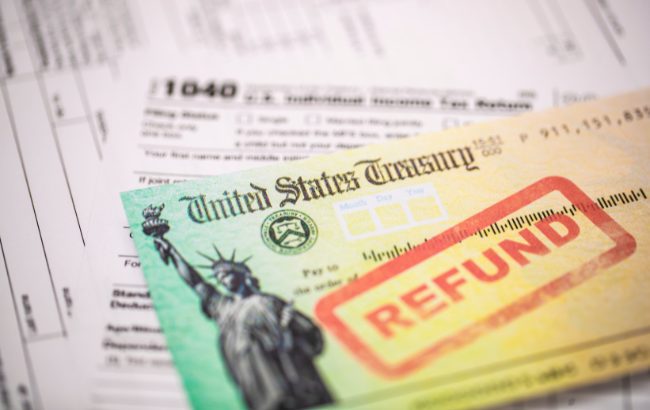
*This feature was first published in the June issue of The Spirits Business magazine.
The spirits industry has entered an unusual period following a US Supreme Court ruling that declared a major tranche of president Donald Trump’s tariffs illegal. Now, as importers begin receiving refunds through a newly created digital claims system, businesses throughout the supply chain are grappling with a difficult question: who actually deserves the money?
The developments mark one of the most significant U‐turns in recent US trade policy, and centre on tariffs imposed under the Emergency Powers Act during the current Trump administration. Introduced in April 2025, the measures applied a 10% tariff to UK imports, and 15% to goods from the EU, including wine and spirits.
However, on 20 February this year, the Supreme Court ruled those tariffs illegal. Four days later, importers were permitted to stop making payments, while the Court of International Trade (CIT) was tasked with overseeing what could become a US$166 billion refund process, just under 10% of which is estimated to involve wine and spirits companies.
US Customs rapidly launched a digital refund platform, known as the Consolidated Administration and Processing of Entries, that allows importers and customs brokers to file claims via a simple CSV upload. Refunds began to be electronically processed on 11 May, with the system’s first phase focusing on more straightforward claims. Naturally, demand surged immediately, and filing volume climbed from roughly 55,000 claims in total in the opening days to around 85,000 by the end of the first week.
Alison Leavitt, managing director of the Wine and Spirits Shippers Association, says for many in the beverage and hospitality sectors, the ruling represented more than just a legal victory. “It’s an incredibly positive sign that the rails of our three‐tier system in the government are not completely destroyed; that the courts are still holding up against an administration that seems to have steamrolled everybody else. That makes most US citizens feel pretty good that our system is still holding on by a thread,” she says.
However, as has often been the case under the Trump administration, nothing is as simple as it seems. What was considered a victory in the fight against unlawful tariffs was soon overshadowed by Trump’s introduction of a new set of tariffs under Section 122 of the Trade Act of 1974. Effective 24 February, the replacement regime established a universal tariff rate of 10%. Those tariffs are also being challenged in court, and, in at least one case, the CIT has already ruled them illegal, raising the possibility that importers could eventually receive another round of refunds, potentially including interest payments. Good news, yes, but for businesses already struggling with trade uncertainty, the situation has created a sense of instability, as companies may receive refunds while simultaneously paying into a new tariff structure that could itself later be overturned.
Complicated question
Leavitt explains that while the mechanics of filing refunds are relatively straightforward, determining who should ultimately benefit from the money is far more complicated, as while the legal ruling may have settled whether the tariffs were lawful, it did little to resolve who ultimately bore the financial pain. Many suppliers and importers negotiated private agreements to soften the financial burden, while some absorbed part of the tariff costs, and others issued credits, discounts, or delayed payment terms to help importers survive. Few of those arrangements included legal language, covering the possibility that the tariffs might later be ruled unlawful.
“It’s a bit of a mad scramble right now for everyone to figure out how to deal with all of these deals that were made to combat the tariffs,” Leavitt says. “As you can imagine, there’s not one single way that people dealt with this, and companies may have dealt with it five different ways with five different suppliers.” She adds: “Who is really allowed the refunds? Who benefitted? Who didn’t benefit? Did prices actually go up?”
As a result, the distribution of refunds has become ethically murky. Importers are the official ‘parties of record’, and therefore receive the refunds directly from Customs. However, in many cases, suppliers have already absorbed the original losses.
Rob Maron, senior vice‐president of international trade policy and market access at the Distilled Spirits Council of the US (Discus), says that how brands and companies deal with these ethical complexities is ultimately down to them individually. There is no guidance offered by the government or any other trade body on how they should best approach it. “Companies made decisions,” he says. “How that was dealt with through the supply chain was not standardised. Some companies just ate it; they had to let people go, they had to close operations.”
The issue is less complicated for spirits giants such as Pernod Ricard and Diageo, whose vertically integrated structures allow many tariff costs to remain internal. Smaller importers and independent distributors, however, face far more difficult negotiations – not only with suppliers, but also hypothetically with consumers, “who are potentially saying ‘OK, Mr Retailer, I paid this extra amount – I’m owed something’”, rationalises Leavitt.
While direct consumer refunds remain unlikely, Leavitt says there has been some speculation about class‐action litigation, although the practical challenges of tracing tariff costs through the supply chain make such cases difficult to pursue. However, she says several US states, including Massachusetts and Illinois, are reportedly exploring mechanisms that could return some funds to taxpayers through rebates or related relief measures. Still, it is expected that most refunds will remain within the complex commercial supply chain.
Yet despite the uncertainty surrounding refunds and ongoing legal challenges, Leavitt says many in the spirits industry still view the current tariff era as temporary rather than transformational.
“We continue to view this situation with the Trump presidency as an anomaly,” she says, arguing that duty‐free trade between the US, UK, and EU has historically worked well for both sides, supporting exports ranging from Kentucky Bourbon and Tennessee whiskey to Scotch and European wine. While new tariff mechanisms may still emerge, much of the industry expects spirits to ultimately return to reciprocal duty‐free treatment. “The feeling in the spirits industry is that, yes, we’ve got to get through this period,” she says, “but that has been trade policy for years. It is a balanced trade.”
In the interim, Maron says there are positives in how the Trump‐era tariffs have served the US, adding the administration has remained open to dialogue with the industry and focused on expanding export opportunities for American producers.
“One important thing to keep in mind with this administration’s policies is what it is trying to accomplish with the tariffs,” he says, noting that its two main aims are to reduce the trade deficit and move markets closer to “fair and reciprocal” trade. “The administration is negotiating trade agreements – they may not be the large, traditional free‐trade agreements we’ve seen in the past, but more bespoke agreements with trading partners,” he says, citing Argentina, Cambodia, Malaysia, Taiwan, Indonesia and Ecuador among the countries that have agreed to reduce or eliminate tariffs on American spirits.
“We’re definitely in a sea of change in terms of international trade policy and global economics,” he says, maintaining there are still opportunities for the US spirits sector under the administration’s policies.
Related news
Ten biggest moments in gin history