


Gin ΠR: redrawing the boundaries of the gin category
A Gold medal-winning gin with a foundation of Othello grapes is pointing to a future where base material, not just botanical garnish, defines the next wave of this category’s evolution.

For much of the modern gin renaissance, innovation has followed a familiar path: new botanicals, new terroirs, new flavour twists layered onto a neutral grain base. But as the category matures and premium drinkers become more discerning, an arguably more radical shift is taking place. Increasingly, producers are not just asking what flavours to add to gin, but what the base spirit itself should be made from.
From grape-based distillates to wine-adjacent fermentations and heritage fruit varieties, a growing wave of liquid-first producers is re-engineering gin at its foundation. The result is a new class of spirits that sit comfortably within gin’s regulatory framework, yet behave very differently in the glass; they offer greater texture, fruit structure and aromatic depth than traditional neutral-base expressions.
It is within this emerging movement that Gin ΠR (Pi and R) finds its place. A small batch, grape-led gin built on the character of the Othello grape, Gin ΠR is already attracting international attention long before any formal commercial launch.
Gin ΠR’s defining decision is deceptively simple; instead of beginning with neutral alcohol and layering botanicals on top, it starts with a fully developed grape distillate as its base spirit. That base is crafted using glacier water rather than filtered water, contributing to an elegantly smooth, silky texture, even at lower alcohol volumes.
The grape in question, Othello, is a North American variety with a long and complicated European history. It was once widely planted before falling out of favour under wine regulations that preferred Vitis Vinifera. Today, Othello survives primarily in small plots, hobby vineyards and heritage cultivation – prized for its intense fruit character and distinctive aromatic profile.
“I’d been experimenting for years to perfect the distillation of Othello grapes,” said Gabor Vincze, founder of Gin ΠR. “When I finally felt satisfied with the base spirit, I realised that what I had wasn’t just a neutral alcohol – it already had personality.”
That realisation shifted the project’s entire direction. Rather than producing fruit brandy or eaux-de-vie, the focus turned to gin. Gin ΠR’s botanical selection is designed to preserve and frame the grape character, allowing the fruit to remain central while building complexity around it.
The result is a gin where sweetness, green freshness, earthy undertones and subtle citrus notes emerge organically from the interaction between base spirit and botanicals, rather than being imposed on top of neutrality.
With the base distillate already expressive, botanical choice becomes about calibrating flavours. “The exciting part is not just distilling the grape,” Vincze explains, “but choosing botanicals that respect what’s already there.”
Botanicals are sourced globally, from Morocco, Crete, Sri Lanka and Madagascar, alongside selected garden-grown ingredients, each chosen for how they interact with the grape.
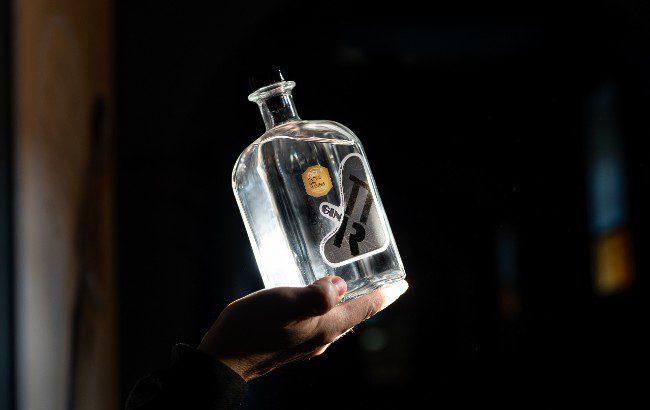
During distillation, aromas emerge in stages, shifting from rich fruit to herbal brightness and resinous depth, creating a sensory progression more often associated with fruit spirits than classic gin.
This layered aromatic behaviour is exactly what caught the attention of judges at The Global Spirits Masters Competitions, where Gin ΠR was awarded Gold during The Gin Masters blind tasting. Tasting notes described the gin as “buttery, with citrus leafiness and resinous notes” and “pushing the boundaries, but in a good way, with a long, lingering finish”.
In a competition dominated by highly polished London Dry profiles and contemporary botanical builds, these comments signal something important: judges are not only accepting base-spirit experimentation in gin but are actively rewarding it when executed with precision.
What makes Gin ΠR’s story particularly compelling for the trade is that its innovation is not brand-led or trend-chasing but liquid-driven, and only later framed commercially. After receiving positive feedback from friends, enthusiasts and professionals, Vincze chose to submit the liquid to The Global Spirits Masters Competitions as a quality test.
“International recognition came first,” he explains. “Only after the Gold medal did I really start thinking about the business story.” This sequence matters, placing the liquid ahead of the label – a reversal of how many new spirits brands enter the market.
The use of Othello grape gives Gin ΠR a natural connection to wine culture. This hybrid identity is increasingly relevant in premium on-trade environments. Grape-based gins offer several advantages: they perform well in lower-ABV serves, integrate naturally into Spritz formats, and bring fruit structure that supports minimal-ingredient cocktails.
For sommeliers and bartenders alike, they create cross-category storytelling opportunities, from vineyard provenance to botanical terroir, without requiring consumer education from scratch. Gin ΠR’s sensory profile, with its raisin, prune and resinous citrus notes, positions it comfortably within this emerging space.
While Gin ΠR has yet to formally enter commercial production, its creators are already thinking carefully about where such a specialist liquid is most likely to resonate. Rather than mass-market rollouts, early discussions have focused on Japan and the UAE as priority markets, both known for strong premium spirits cultures, openness to niche imports, and hospitality sectors that value craftsmanship and originality.
Open to opportunities
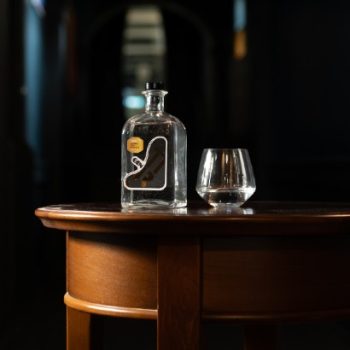
Unusually for an award-winning spirit, Gin ΠR is currently positioned as both a fixed commercial entity, and an open opportunity. The founder is actively exploring partnerships for production, distribution, or potentially even acquisition of the brand and recipe itself.
“We’re open to working with partners who see the potential of this liquid,” Vincze says. “Whether that’s introducing it as a limited specialist gin, or building something new around it entirely.”
At this early stage, serve recommendations remain refreshingly simple: neat, to appreciate the grape character, or with a high-quality tonic that allows the fruit and botanical structure to remain intact.
The brand also reflects a considered approach to sustainability, using a Vinolok glass closure in full black – a design choice that supports recyclability and reduces reliance on traditional materials, helping to be more eco-friendly and, in its own way, contribute to protecting the planet.
Gin ΠR is a shining example of how base materials and production processes play a vital role in creating new and interesting flavours. Grape-based gins, honey-based spirits, rice fermentations and heritage grain distillates are all part of a growing movement to celebrate the agriculture that is so important to flavour development.
As the global gin category continues to evolve, spirits like Gin ΠR point towards a future where base material matters as much as branding.
Related news
Are RTDs a threat or necessity to the gin category?