


Flying Dutchmen Cocktails on becoming fully female-owned
Bartenders Alina Lucia and Rosa Moolenaar have joined founder Tess Posthumus as co-owners of Flying Dutchmen Cocktails (FDC) in Amsterdam – one of very few cocktail bars in the upper echelons globally that is fully female-owned.
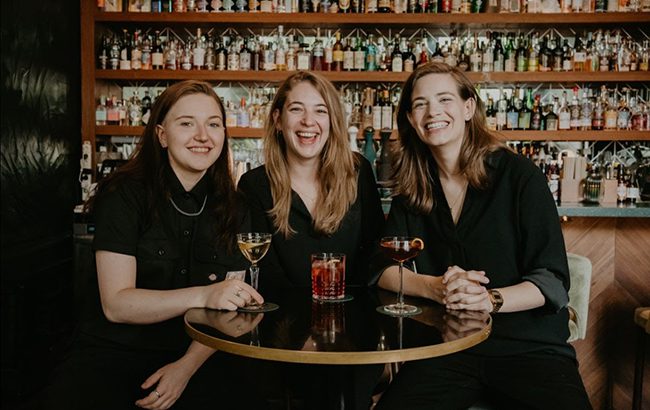
*This feature was first published in the March issue of The Spirits Business magazine.
Tess, was there a particular reason you wanted to take on Alina and Rosa as co-owners?
TP: The short answer is because they are very good at what they do. They are very talented and perfectly complement my shortcomings. Alina and Rosa earned this. At the same time, our industry hasn’t always made it easy for women to move into ownership. If I have the opportunity to help create more seats at the table, that matters to me.
Rosa and Alina, did you ever envision becoming co-owners of the bar?
RM: Not in the beginning. When I joined FDC, my focus was just to become better at the craft. When Tess and I reconnected in 2025, I’d grown through leadership roles, and had a better understanding of what it takes to run a bar.
AL: It was a career goal for me to own a bar, but I didn’t expect it so quickly and for it to be this one. I’ve loved FDC since I stepped foot in it. It really feels like a full-circle moment.
How have things changed since deciding on the co-ownership system?
TP: I’ve felt my energy return, both creatively and strategically. After a couple of difficult post-Covid years, I now realise I’d become somewhat numb. Working with Alina and Rosa at an ownership level has completely shifted that. I’m excited to mentor them in what it means to be a strong, thoughtful bar owner. I want to demonstrate, both internally and externally, that this new structure makes us stronger.
RM: Becoming a co-owner changes your perspective. You stop thinking in terms of shifts or seasons and start thinking about the long term: team development, operational consistency, leadership culture, and how we create an environment where people can grow.
How do you divide responsibilities?
RM: We have clear but complementary roles. Tess focuses on strategy, creative direction, and education. Alina and I oversee operations, which include daily management, team leadership, service standards, financial oversight, and maintaining consistency.
AL: We play to each other’s strengths. I’m terrible with numbers, but I’m great at organising and managing the day-to-day operations. Rosa is the numbers whizz and zen master, while Tess is the mastermind who brings all of our visions to life.
Why is it so rare for a bar to be fully female-owned?
TP: The problem has its roots in the early years of a hospitality career. Generally, girls begin as waitresses and guys as barbacks or runners. This selection procedure has a long-term impact on the roles men and women perform in the industry, and how we see the genders for these roles.
RM: High-end bartending has always been male-dominated, especially in competitions, leadership, and ownership. If you don’t see women in those roles, it’s harder to envision yourself there. People assume a male colleague is the one in charge, even when I am leading. Ownership requires capital, networks and mentorship. Those haven’t always been equally accessible. That’s why I’m grateful Tess created space for us to step into ownership.
AL: I can’t think of many industries in which female-owned businesses are common. There are some fantastic bars with female co-owners, but even those are far less common than a fully male-owned bar. Having more women as leaders is key to expanding the horizons of bartending.
Related news
RTD sales near £200m in Britain's on-trade