


Rum swaps premiumisation for affordability
While rum producers have been flagging up their luxury offerings in recent years, they are now focusing on more affordable liquid.
*This feature was first published in the March issue of The Spirits Business magazine.
In the wider spirits world, rum is arguably one of the most versatile categories, spanning various styles, production methods, and regions. As a category, rum has long held a reputation as being both a highly mixable product, ideal for cocktails, from the Daiquiri to the Piña Colada, and as a sipping spirit, led by revered brands such as Appleton Estate, Foursquare, and El Dorado. With so much variety on the market, the category appears to be in a favourable position where it can often be seen as more affordable than the likes of single malt Scotch or Cognac, particularly at a time when consumers are seeking value for money. The question now is whether rum will be defined by continued premiumisation or by democratisation.
“Rum has spent the last decade confidently stepping into premium-and-above territory,” says Nathalie Parte, global marketing director at Havana Club. “Greater appreciation for provenance, ageing and craftsmanship has elevated the category to sit alongside the world’s most respected dark spirits. At the same time, the current cost-of-living climate is reshaping how consumers engage with alcohol more broadly.
“In mature markets like Western Europe, volumes have softened under inflationary pressure – and a clear transition from volume to value is under way.”
Better quality
Parte believes this isn’t a move away from quality, however, stating that it’s a shift towards better-quality drinks. “Super-premium-and-above rum keeps growing. Consumers are seeking brands that justify their spend with authenticity, heritage, and tangible value. In this context, rum’s inherent versatility gives it a distinctive edge over dark spirits that operate predominantly at higher price tiers.” She highlights the Havana Club range as an example, noting its “natural breadth of styles and price points”, which are made with quality and craftsmanship.
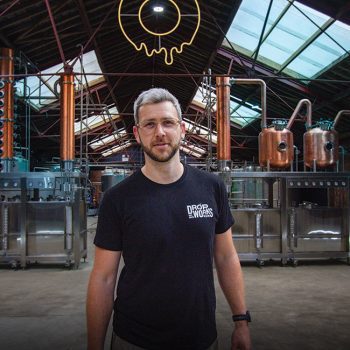
English producer DropWorks in Nottinghamshire has sought to produce rum that is both accessible and high quality. Its founder and master distiller, Lewis Hayes, says the category has long been marketed using imagery such as pirates, sea monsters, and palm trees to evoke a sense of escapism. “[Some brands are] selling this idea of fun and escapism and cocktails, and that leads you down the ‘lack of premium’ path, because you’re suddenly, just [using rum for] mixing, you’re an ingredient, whereas actually, if you say ‘all of our flavour is unique, it’s rich, it’s full flavoured, it’s delicious’, then you’re invited into that world where a Scotch drinker, or somebody that’s used to drinking neat, dark spirits will go, I will try this [rum] neat.”
But, he says, most of the public are not aware of the high-quality rums being made around the world. Compared with Scotch whisky, a category with strict regulations, rum isn’t bound by a global standard, and there are different rules everywhere. Hayes is positive that change is happening in the industry. “There is a movement starting here, and there are wonderful small batch producers that are starting to come together, starting to get the word out, and as consumers learn more about it, we’re not talking about pirates and sea monsters. We’re talking about production,” he says. “Ask me about my water, my yeast strain, the raw material. But if you go to some of those bigger companies, they don’t want to talk about that.”
DropWorks produces a core range of British rums that includes Clear Drop, Spice Drop (thought to be the first spiced rum made without any added spices), Dark Drop, Funk Drop, and Barrel Drop. The brand also produces limited edition single cask expressions. Its latest bottling – a rum matured for 17 months in English sweet chestnut wood – sold out all 450 bottles online in 48 hours. The brand is one example of a producer that doesn’t just focus on one or two SKUs (like spiced or white rum), but instead is able to provide unusual offerings too for the more experimental drinkers.
Fellow UK producer The Duppy Share Rum Company was launched as a “gateway rum”, as the next level up from established brands like Captain Morgan, says CEO Jack Orr-Ewing. “When we launched, we were seen as quite a premium product,” at around £28 (US$38), but he adds that this is likely more “mid-market now”. He says the £20-£30 price bracket is “where challenger brands have been playing” but that the market has now “hollowed out” between the value brands that are affordable and the super-premium ones. But he notes there is still growth in the super-premium segment.
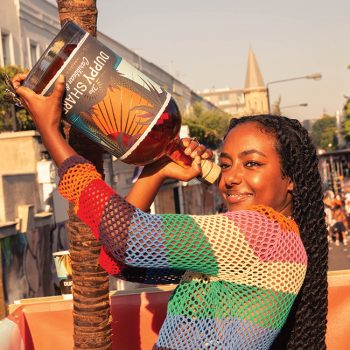
He adds that the £20-30 price bracket has been “struggling” but to address this Duppy Share has launched several premium products including a 10-year-old bottling – which now makes up 70% of the brand’s online sales.
Last year saw the brand launch Duppy House, a line of rums that are “designed to take on the £1 billion-plus house-pour rum category”. The range includes three speed-rail rums – Gold, Silver and Spiced – which are only available in the on-trade. These rums sit alongside Duppy’s existing core premium range, which includes Duppy White and Duppy Share Aged, as well as ready-to-drink collaborations with Ting, Old Jamaica, and Moth.
The idea behind the House range, Orr-Ewing says, is to take on brands like Captain Morgan and Bacardí. “That’s where we see all of the exciting stuff happening over the next five years, not just for young people, but that’s kind of where the market is going in terms of drinkers looking for relevant, value-driven brands.”
He believes that many of the major brands have “kind of forgotten how to market in a culturally relevant, and exciting and engaging way to young people”. He explains that Duppy Share aims to provide an accessible product “that is much more kind of relevant and active”, supported by events, experiential activities, and social media. Notting Hill Carnival is a major event for the brand, where it has a bar that sells 450 cases of rum over the two days.
He notes a major opportunity to take share from big players in the UK rum market. “About four million cases of rum are sold in the UK and 2.2m of that is two brands. So it is really stacked up towards the bottom end of the market, and that is where we think there’s really exciting opportunity for little brands like us to go and play.”
Ian Burrell, global rum ambassador and founder of the UK’s RumFest, notes that the rum category has always been popular but he sees growth in flavoured and spiced styles. He attributes this growth to their affordability and that they are easier to make because “you don’t have to worry about ageing”. He also highlights how some producers are making these products while they wait for their aged liquid to be ready. In regard to the super-premium-and-above portion of the category, Burrell says: “It’s for a niche audience, and that niche audience can afford to pay a little bit more for their favourite type of tipple, and they may not be ordering as much, but they get more bang for their buck, especially when it comes to rum from the Caribbean.” As an example, he notes that the price difference between certain 21-year-old single malt Scotch whiskies and a 21-year-old Jamaican rum from a single distillery is vast.
Accessible brand
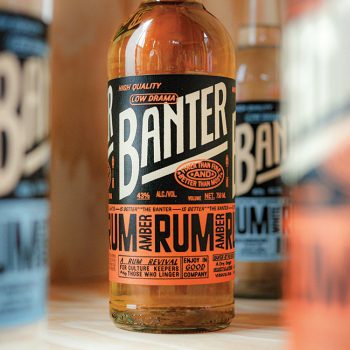
In the US, the American Cane Company is hoping to revive the category’s forgotten history in the US. Led by CEO Maggie Campbell (former head distiller at Privateer Rum), American Cane has launched what it describes as an accessible brand, called Banter. The eventual plan is to open a distillery in Louisiana where it will make its own liquid, but for now, the rum is sourced via a third party. “The vast majority of rum sales are still happening at this more accessible price point,” Campbell says, but she notes that the trends point to consumers wanting to drink better. “A lot of the legacy brands are losing market share,” she says, noting that some products are not necessarily the “right fit for drinkers today”.
With Banter, the American Cane Company focused on a “premium style of dry and flavourful” rum at an affordable price. Campbell is quick to note that the company is not trying to replicate specific styles from rum-making islands. “The way the American rum industry got its start was by sourcing rums and blending them on US soil,” she explains. The company is aiming to honour the traditions and the contributions of the people who created rum in the US, which is a “really diverse group of people”, she adds. Like The Duppy Share, Banter has been created to be “affordable, accessible, fun” and as a way for consumers to “trade up in quality”.
Parte at Havana Club believes that the brand’s range focuses on “quality, consistence and value for money”. In addition to its core Havana Club Original – Añejo 3 Años, and Havana Club – Añejo 7 Años, the brand also produces prestige rums such as the Icónica Collection.
“What defines the next phase of rum is not a choice between accessibility and luxury, but the ability to deliver both – with authenticity and consistency,” Parte says. “In a market where consumers are drinking more intentionally – seeking authenticity and artistry – the brands that will lead are those that combine credibility, versatility, and cultural relevance.”
Industry insights
In the current economic climate, is it realistic to keep making premium rum, or does the future of the category lie in affordability?
Helena Zakmane – international commercial and marketing director, Island Rum Brands
“My strong belief is that the future of rum lies with quality and traceability of the origin. At the same time, a qualitative rum can also be affordable, especially in the overarching consumer trend of drinking less but better. The consumer knowledge about the rum category has grown tremendously over the past five to six years. This includes the ability to distinguish quality, and the realisation that rum is not just for mixing. The authentic and transparent rum origin is part of this shift and is becoming increasingly more important.”
Filippo Maria Olivi – CEO, El Supremo
“Premiumisation is not a fad; it is the only segment of rum demonstrating structural resilience. IWSR data show that in the US, rum’s ‘value’ tier declined from 52% to 42% in volume between 2019–2024, while ‘standard’ rose from 42% to 51%. Premium-and-above rum remains a niche overall, but in dark rum its share increased from 11% in 2019 to 17% in 2024. Meanwhile, aged rums priced above US$40 per 750ml now account for approximately 18% of premium liquor-store facings. We distil from pure sugarcane juice reduced for nine hours into miel de caña and aged in Incienso Marrón and French oak. That cost structure inherently defines us as premium. Our future remains in that segment.
Nick Gillett – managing director, Mangrove Global
“Premium rum absolutely remains realistic, but it has to earn its place. Consumers aren’t walking away from premium; they’re becoming more selective. When they spend £40 or £50, they expect the provenance, authenticity, and flavour that justifies it. Rum is well positioned here because it offers regional diversity. We’re also now seeing growing curiosity around styles like rhum agricole – cane-juice based, terroir-driven and distinctly different in profile. Affordability will always play a role, particularly in spiced and mixing styles. But the real pressure is in the undifferentiated middle. Well-made, properly positioned premium rum, with a clear story and quality remains a very credible proposition.”
From a production standpoint, how difficult is it to deliver a quality product at a lower price?
Alexander Kong – commercial manager, spirits, Worthy Park Estate
“The pressure is real. Over the past few years, costs have risen across freight, energy, glass, labour, and tax. Delivering quality at a lower price point is increasingly complex, especially for producers committed to traditional methods and meaningful ageing. Quality in rum is time- and resource-intensive. There are no shortcuts to fermentation, distillation, or maturation without compromising character. The only way to protect both quality and affordability is through efficiency and control. As a vertically integrated, single-estate producer, we manage everything, from cane growing to bottling. That oversight allows us to optimise production while maintaining the consistency and character associated with Worthy Park. Lowering price by lowering standards is short-term thinking. The real challenge is finding efficiencies.”
Alexandre Gabriel – owner and master blender, Planteray Rum
“It’s very difficult. And anyone who tells you otherwise is probably cutting something. You can reduce costs easily – shorten ageing, simplify blending, replace infusion with flavouring, speed things up. But every shortcut leaves a mark. Rum is time. It’s real ingredients, people, their know-how, their culture. Its heritage passed down. It’s patience. Our focus is to maintain the integrity of our rums while keeping them fairly positioned. That means working intelligently, building long-term partnerships, controlling our production and ageing, producing some of our own ingredients, investing in inventory years ahead, and continuing to innovate. It requires conviction. It requires independence – the kind we have as a family business – and a bit of stubbornness. For me, it’s simple: if I wouldn’t pour it for myself, then we shouldn’t bottle it.”
Ryan McFarland – chief commercial and strategy officer, Drinksology Kirker Greer
“Delivering quality rum at an accessible price point is challenging because raw materials, energy, cask supply and logistics all affect the final bottle. Proper fermentation, careful distillation and meaningful maturation require time and investment, so shortcuts risk undermining consumer trust. The focus must be on efficiency rather than compromise. Smart sourcing, strong distillery partnerships and clarity of style allow producers to create characterful rum without unnecessary cost. Flavoured or spiced expressions, such as those in the Kadoo Rum range, can also help, offering distinctive, mixable profiles that work in simple serves without extra ingredients behind the bar. It is about delivering value while protecting the integrity of the rum itself, ensuring consumers enjoy an authentic and consistent experience even at an accessible price.”
Daniel Picciotto – president and co-owner, Picciotto Distilling Company
“Balancing cost and quality is one of our greatest and most constant challenges. Cost and quality naturally pull in opposite directions, and variables like exchange rates, inflation and rising raw material costs only make it more difficult. Ageing alone requires working capital locked in barrels, warehouse costs and time. For us, quality is non-negotiable at any price point. Our rum is 100% distilled and produced in Colombia. Operating within the country’s regulated spirits market adds complexity, but it also guarantees integrity and traceability from field to bottle. Efficiencies must never come at the expense of our campesinos, the rural farming communities who grow our sugarcane. We work directly with them, protecting fair conditions while maintaining our standards.”
Related news
Mount Gay reveals first age-statement rums