

Wage increases cost Wetherspoon £28m
Despite a sales growth of 5.7%, UK pub chain Wetherspoon saw its profits sink due to rising wage costs and increased business rates.
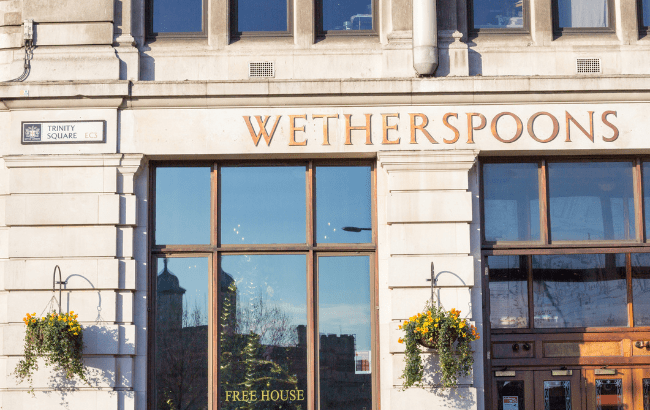
Wetherspoon’s sales for the first half of its fiscal year (H1 2026), which ended 25 January 2026, totalled £1.088 billion (US$1.459bn).
Like-for-like sales increased by 4.8%, with bar sales up by 7%. Food sales were up by 1.3%, and slot and fruit machine sales rose by 8.9%.
Room sales for its hotels declined by 0.6%.
Despite this growth, operating profit totalled £52.9 million (US$80.2m), a decline of 18.4% on 2025. The firm said this reduction was due to higher costs, including wages, which increased by £28m, repairs by £10m, and business rates by £9m.
The UK government reformed the business rates system in the autumn Budget, with many on-trade businesses likely to pay more. The government has since announced a 15% discount for pubs from April.
The rise in wage costs stems from the government’s decision to raise the minimum wage and employers’ National Insurance contributions in the autumn Budget of 2024.
Wetherspoon in numbers
Wetherspoon’s operating margin fell from 6.3% in H1 2025 to 4.86% in H1 2026. Profit before tax and separately disclosed items was £22.4m, a 31.9% decrease on 2025.
The firm opened six managed pubs in the year and sold or closed a further six. The disposals created a cash inflow of £3.3m.
At the end of H1 2026, the business had 794 managed pubs. It intends to open 15 pubs in the current financial year.
It also opened eight franchised pubs in the period, bringing its total to 16. It intends to open 15-20 franchised pubs this financial year.
Earnings per share fell from 21.5p in H1 2025 to 15.5p in 2026.
Wetherspoon invested £45.3m in the period. Of this, £12.3m was invested in new pubs and pub extensions; £18.3m in existing pubs; £2.7m in business and IT projects; and £12m in freehold reversions of properties where Wetherspoon was the tenant.
The financial results also included details of Wetherspoon’s tax contributions, stating “Wetherspoon and other pub and restaurant companies have always generated far more in taxes than is earned in profit”.
In the past decade, Wetherspoon has generated £6.8 billion of tax revenue.
Meanwhile, in H1 2026, the company, its staff, and customers generated tax income of £438.4m.
Of that, £210.3m was paid in VAT and a further £86.9m through alcohol duty.
PAYE (pay as you earn) and National Insurance contributions raised £84.1m, while business rates totalled £22.5m.
Commenting on the results, Tim Martin, chairman of J D Wetherspoon, said: “In the past seven weeks to 15 March 2026, like-for-like sales increased by 2.6%.
“The latest CGA RSM Hospitality Business Tracker for February 2026 said industry like-for-like sales were -0.2%. During this period, Wetherspoon’s like-for-like sales were +3.2%. This was the 42nd month in a row that Wetherspoon has outperformed the tracker.
“As previously indicated, increases in National Insurance and labour rates will result in cost increases of approximately £60m per annum, and non-commodity energy costs will add £7m.
“The Extended Producer Responsibility tax, a levy on packaging, will cost £2.4m in the current year, an increase of £1.6m. These cost increases will undoubtedly add to underlying inflation in the UK economy, although Wetherspoon, as always, will endeavour to keep price increases to a minimum.
“There is clearly considerable pressure on consumer finances, combined with higher taxes, wages and energy costs for the hospitality industry. This may result in profits that are slightly below current market expectations. The forecast for year-end net debt remains unchanged.”
Related news
UK hospitality seeks support from new PM