


Uncle Nearest allegedly hid $20m loan provided by Jay-Z
Kentucky lender Farm Credit Mid-America (FCMA) has accused Uncle Nearest of fraud, alleging that the Tennessee whiskey maker hid a US$20 million loan given to the brand by media mogul Jay-Z.

The accusation is included in the latest filings of a legal battle between the lender and the whiskey brand. The lawsuit began in July 2025 when FCMA claimed Uncle Nearest owed more than US$108m across several loans and accrued interest.
In the suit, the lender claimed the whiskey producer provided “apparently inaccurate” barrel inventory reports that overstated values by US$21m, sold whiskey barrels to pay other obligations, and discounted future revenue streams to at least four parties.
Since then, the court has appointed a receiver for Uncle Nearest, who is now attempting to stabilise the company.
According to the receiver and FCMA, Uncle Nearest is insolvent and owes nearly US$200m; the founders, Fawn and Keith Weaver, dispute this and want to end the receivership.
However, in February, the receiver listed the business’ property on the Massachusetts island of Martha’s Vineyard for sale.

The property was mentioned in the original lawsuit by FCMA. The lender claimed Uncle Nearest borrowed US$2.3m for the property, which was allegedly purchased through a separate LLC and later mortgaged to another lender, in violation of the loan agreements.
In October, it was reported that the receiver was also investigating the possibility of selling other non-income-producing assets owned by Uncle Nearest, including its vineyard in Cognac.
US District Judge Charles E Atchley Jr is expected to rule soon on the state of the receivership as well as on an emergency motion to sell the home on Martha’s Vineyard.
The bank said it supports not only continuing the receivership but expanding it to include seven Weaver-owned companies that commingled assets with Uncle Nearest, including the disputed $20m transaction said to have come from rapper Jay-Z.
FCMA’s new filings claim the Weavers have “egregiously mischaracterised” the disputed US$20m transaction and how much the bank knew about the details.
According to FCMA, Fawn Weaver told the lender the US$20m was a loan from Grant Sidney, one of the Weavers’ companies. In fact, it came from an outside source, MP-Tenn LLC – sometimes referred to as MarcyPen – a venture capital firm formed in late 2024 and owned by Jay-Z, Jay Brown, Larry Marcus, Robbie Robinson, and D’Rita Robinson.
“The Weaver parties attempt to imply (incorrectly) that FCMA was in no way misled at the time. FCMA was considerably misled,” the bank said.
According to the court filings, the accounts used to move the investment were not known to the bank or the receiver until recently.
“Whatever protestations Ms Weaver makes now to the contrary do not change the fact that MarcyPen loaned money to Uncle Nearest Inc, not Grant Sidney. Ms Weaver, who exercises complete control over Uncle Nearest and Grant Sidney, moved the proceeds from Uncle Nearest to Grant Sidney to make sure that US$20m coming in could not be snatched by [FCMA],” the bank said.
“Ms Weaver’s own testimony shows that Grant Sidney – the largest shareholder of Uncle Nearest – whose sole stockholder is also the CEO of Uncle Nearest (Ms Weaver) and exercises complete control of both entities, orchestrated and executed a scheme to perpetuate the violation of Uncle Nearest’s legal duty, or to commit a dishonest and unjust act in contravention of FCMA’s rights,” the bank continued.
MarcyPen has since said Uncle Nearest is in default on the loan, according to the bank’s filing.
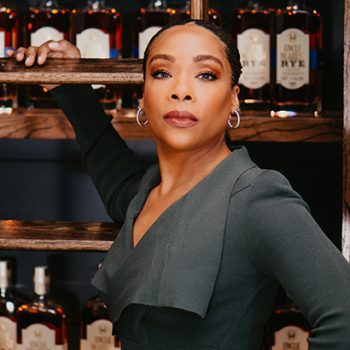
Uncle Nearest has denied fraudulent conduct regarding the MarcyPen US$20m loan and asked for FCMA’s allegations to be “ignored, struck and dismissed.”
The loan money, the Weavers say, all went to Uncle Nearest or related entities or vendors, and that it came from an outside source is irrelevant.
“No fraud by Grant Sidney has been alleged with the particularity required for a federal pleading. The assertion that Uncle Nearest engaged in fraudulent conduct relating to the MP-Tenn transaction is not correct,” the Weavers’ filings claim.
The bank has also pointed to a payment of US$130,000 made by another contested Weaver company, Shelbyville Grand, as another example of commingling, in this case, a transfer of funds disguised as storage payments due.
‘Victims of greed’
In a separate filing, the bank argued that the Weavers have not presented sufficient evidence to warrant handing the company back to them.
In January, the Weavers filed a civil lawsuit against the company’s former chief financial officer Michael Senzaki, alleging that the former employee abused his position by altering invoices to make vendor payments look settled while redirecting money to entities he controlled. They also allege he forged stock transfer documents using Fawn Weaver’s equity without her knowledge or consent, resulting in severe personal and financial harm.
Furthermore, the complaint asserts Senzaki abused his financial authority to divert funds, hide liabilities, and manipulate financial systems while portraying the company as financially healthy during a key growth period.
The Weavers claim this information remained hidden for years and only came to light after Senzaki’s departure in late 2024.
In addition, in their own filings in the lawsuit with FCMA, the Weavers have accused the bank of fraud in its characterisations of the circumstances leading up to the receivership, alleging that Farm Credit misled the court about Uncle Nearest’s financial circumstances.
The Weavers accuse Farm Credit of “fraud on the court” for a pattern of making serious financial allegations that are rebutted and then dropped, only to be followed by new allegations.
The bank added: “They paint themselves as victims of greed and portray FCMA as a villain bent on their personal destruction. The true story is simpler, though perhaps far less interesting to the Weaver parties. Uncle Nearest owed the debt to FCMA and other creditors, Uncle Nearest defaulted on that debt, Uncle Nearest was (and is) insolvent, and this receivership is necessary.”
According to the filing, the Weavers defaulted on the loans 20 times before the bank sued and asked for receivership.
Related news
Bardstown Bourbon faces gender discrimination lawsuit