


SMWS owner bets on ultra-premium whisky in US
The CEO of Artisanal Spirits Company (ASC), Andrew Dane, has noted “significant opportunities” for growth in the ultra-premium whisky market in the US.
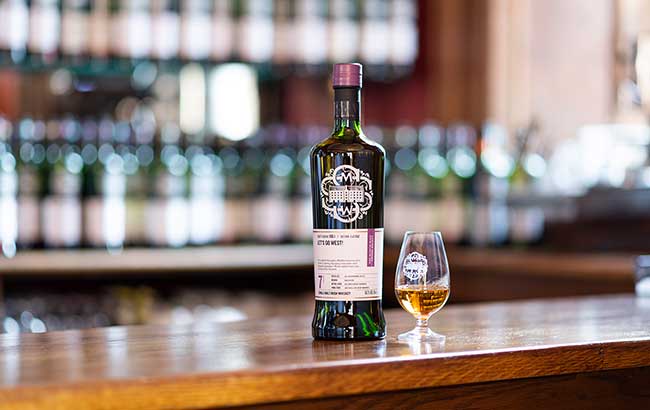
Speaking to The Spirits Business yesterday (30 March) following the publication of ASC’s 2025 full-year results, Dane says he remains positive about the potential for Scotch in the US.
“If you look at the US ultra-premium whisky space, we represent 0.4% market share. So the opportunity to grow in the whisky space over the next three to five years is substantial,” he explains.
ASC’s portfolio includes global membership club the Scotch Malt Whisky Society (SMWS), US bottler Single Cask Nation, Scotch whisky brand JG Thomson, and private cask programme Artisan Casks.
On ASC’s full-year results, Dane described it as “mixed but overall a resilient performance against a backdrop of what has been subdued demand reflecting the political and economic uncertainty”.
The business saw its revenue fall by 15.7% to £19.9 million (US$26.3m) last year (2024: £23.6m). The decrease was due to disruption in the US from the 43-day-long government shutdown and a route-to-market change in the fourth quarter (Q4), which led to the cancellation of £2.4m (US$3.2m) worth of shipments before Christmas.
Excluding the US, ASC’s total 2025 revenue was down by 2%.
Dane explains: “We took the opportunity presented to us by the government shutdown to actually accelerate the final change of our US route to market earlier than anticipated, which should actually pivot the short-term negative into more of a long-term positive, delivering an extra million dollars of savings over the next three years.”
The US is the business’ second-largest market after the UK, with the States “already now in the position that we wanted it to be in”.
Dane adds that the SMWS and Single Cask Nation represent about two-thirds of US revenue.
‘Undersized’ US opportunity
“It also represents a big opportunity for us still,” Dane says of the US, “because proportionately relative to the size of the ultra-premium market, we are undersized, so I think there is an opportunity for us to grow in that market, even without the market itself growing.”
Regarding the US tariff situation, Dane said there is no impact on consumer demand because tariff costs weren’t passed on. “It was sort of shared between us and the US importer,” he says, underlining that the main challenge is the uncertain economic and political environment and how that impacts consumer confidence.
“What we can see is, at the start of the year, when there was a lot of uncertainty around tariffs, sales were down something like 30% in Q1. What we have seen is that has stabilised, with a return to growth in Q4 and continued growth in Q1.”
There were some bright spots for the business in 2025: cask sales were up by 13% to £4.7m (US$6.2m), venue revenue rose by 8%, and Single Cask Nation sales grew by 10%.
The CEO enthused that SMWS venues are “having a good year” with 100,000 visits in 2025. The SMWS has three members-only venues in Scotland and one in London, alongside partner bars across the world.
Despite reporting flat global membership figures for 2025, Dane points out that member retention remains above 70%.
Only the Europe region grew, rising by 1% to 24,700 members last year, with growth in the UK. The Americas were stagnant at 5,500 subscribers while Asia dipped by 1% to 1,800. Within Asia, ASC reported membership growth in China (up 2%) and Japan (up 5%).
ASC’s strategy for SMWS focuses on “driving awareness” of the membership club, including through partnerships. The company partnered with American Express in the UK, which led to the recruitment of more than 1,000 members.
In addition, it worked with Amazon, offering new members the chance to buy a bottle and membership together, leading to 100 purchases.
Dane also weighed in on the cyclical versus structural debate, believing that the industry’s challenges are cyclical. He explains that consumers are buying less alcohol because they currently have less money.
‘Positive signs’ in China
In China, which Dane says has experienced the “single biggest decline over recent years”, the SMWS had a “record year” when it came to member recruitment in 2025, hitting just over 2,000 subscribers.
He adds: “I think it’s too soon to say that the market has returned to growth, but there does seem to be positive signs that the decline seen in recent years seems to be bottoming.”
When discussing the Indian market, which has agreed a trade deal with the UK to slash whisky tariffs, Dane says: “I don’t see a huge opportunity for us in the short term.”
The company has signed a franchise agreement in India, where it will launch a new subsidiary this year.
But he expects the Indian business to deliver “tens of thousands of pounds, rather than hundreds of thousands or millions”.
The focus is on establishing ASC in India by working with its import partner and “identifying which provinces and states, which hotel chains, etc, are worth working with and then growing that footprint over time”.
Regarding the tariff cut, he adds: “The direct benefit to the industry is significant. The volume of Scotch which Indian consumers can and want to consume has a really positive impact on absorbing some of the inventory of Scotch that exists with the majors [big whisky players].”
Among his priorities for the year ahead are a return to growth for the SMWS business and engaging with existing members to build personalisation.
There is “lots of product development” happening at ASC, Dane highlights, including festival releases and World Cup products.
Dane also did not rule out moving into other spirits categories in the future, as the global whisky industry faces a downturn.
He adds that “diversification into other spirits is absolutely a possibility”, however he notes that the medium-term opportunity will focus on where the business has the “biggest strengths and experiences”.
Related news
UK spirits exports to US sink 60% in Q1