


From the Andes to the world: Ron Viejo de Caldas
For decades, the country’s rum has felt overlooked beyond its home market. But that is changing, with Industria Licorera de Caldas aiming for global expansion.
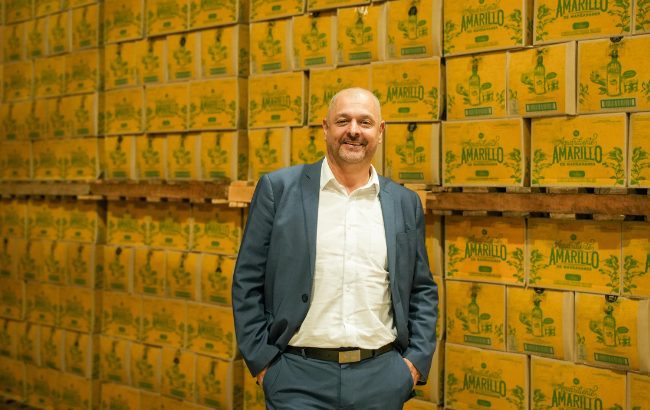
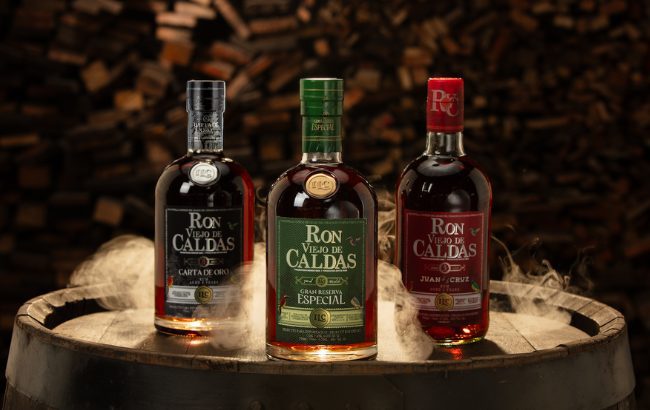
At the centre of Colombia’s renewed presence in rum is Ron Viejo de Caldas, produced by Industria Licorera de Caldas (ILC). Distilled and aged in the Andean city of Manizales, this rum offers a markedly different interpretation: shaped by altitude, water from natural mountain springs, and native Colombian oak, rather than tropical coastline and sea‐level maturation.
As ILC accelerates its international expansion, Ron Viejo de Caldas is no longer considered as solely a dominant domestic brand.
Instead, it is emerging as a serious premium contender – one that challenges assumptions about where rum can come from, and how provenance, governance, and sustainability can be meaningfully integrated into production. ILC occupies a rare position in the global industry. Founded more than 120 years ago, the company is 100% publicly owned by the government of Caldas, and operates under a dual mandate: commercial performance and social return. Revenue generated by its spirits portfolio is channelled directly into public health, education and sports programmes across the region. That structure has shaped how the business thinks about growth.
“Being a public company clearly defines our purpose,” says Diego Angelillis Quiceno, general manager of ILC (pictured above). “Profitability is not the ultimate goal – it exists to enable the creation of lasting social value.”
Rather than limiting ambition, public ownership has enforced discipline. Transparency, traceability, and governance are non‐negotiable, aligning ILC closely with the expectations increasingly placed on international premium spirits producers. The company does not frame sustainability as philanthropy, but as a foundation for long‐ term competitiveness and credibility.
Over the past decade, and particularly under Quiceno’s leadership, ILC has undergone a substantial internal shift. The objective was not simply to export more liquid, but to transform from a regional state enterprise into a producer capable of operating to global standards.
The company’s Strategic Plan 2024–2027 marked a change in tone and direction, placing experience, quality and international relevance at the centre of its mission. Internally, this translated into a stronger focus on agility, accountability and market‐ led decision‐making. Operationally, the emphasis moved towards standardisation, efficiency and quality control; areas critical to building consistency at scale.
Digital transformation has supported that shift. Through the adoption of data analytics and AI‐driven productivity tools, ILC reports that it has freed more than 1,000 working hours annually, redirecting that time towards innovation, process control, and quality assurance. “These changes allowed us to stop thinking like a local producer,” says Quiceno, “and start acting like a global one.” Yet governance and process only tell part of the story. What ultimately defines Ron Viejo de Caldas is place.
Ageing with a difference
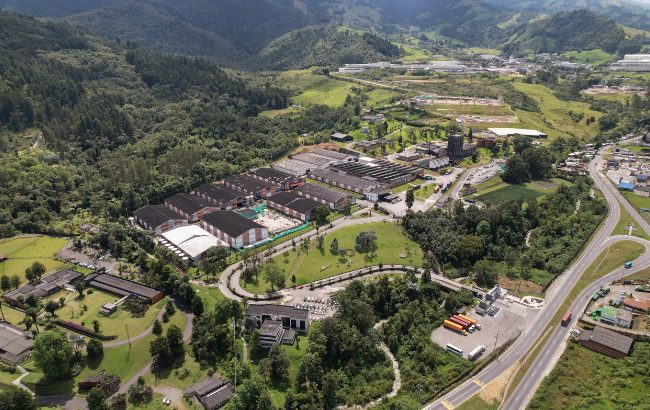
ILC is based in Manizales, in Colombia’s Andean coffee region, at more than 2,200 metres above sea level. Unlike the vast majority of rum producers, the company ages its spirits in a cool, stable mountain climate far from the coast. Average temperatures hover around 16°C, with lower oxygen pressure and minimal seasonal fluctuation.
At altitude, ageing behaves differently. Oxidation and extraction occur more slowly, allowing spirit and wood to integrate gradually rather than aggressively. The result is a style of rum that tends towards balance and restraint, with less overt oak dominance, and with greater aromatic cohesion.
Water plays an equally defining role. ILC is the only spirits producer in Colombia to own and protect its own natural reserve: 260 hectares of lower montane rainforest, home to 68 natural springs. These springs feed the streams that supply all production water at the distillery. The ecosystem is bioindicated by species such as the white‐capped dipper, a bird that only inhabits exceptionally clean waterways.
Protecting these sources is not symbolic; it directly affects the consistency, texture and aromatic profile of Ron Viejo de Caldas.
Perhaps the most distinctive element of the brand, however, is its use of native Colombian white‐oak barrels. In a category dominated almost entirely by American oak, this choice offers both a technical and philosophical point of difference. Colombian white oak has a different grain structure and porosity, resulting in slower, more controlled micro‐oxygenation. Rather than imparting heavy tannins, the wood tends to round alcohol and build complexity incrementally. The sensory profile is subtle but recognisable: noble wood aromas layered with ripe banana and dried fruit, followed by caramel, vanilla, red fruits and light herbal notes. A naturally integrated sweetness, often compared to panela, carries through the finish.
ILC protects 24ha of Colombian white oak in its reserve, ensuring ethical sourcing and long‐term stewardship of a material central to Ron Viejo de Caldas’ identity. As sustainability pressures increase throughout the industry, the use of native woods is attracting growing interest, though few producers can match ILC’s level of control and traceability.
For years, Colombian rum was seen as an extension of Caribbean styles. That is no longer the case. “We are not trying to look like the Caribbean,” Quiceno explains. “Colombian rum is expressing its own identity.”
For Ron Viejo de Caldas, that identity is built on balance and consistency. Medium‐profile distillates, patient ageing and disciplined blending create a house style where no single element dominates. Batch‐to‐batch coherence is treated as essential, particularly as the brand builds recognition beyond its home market. International validation has followed. Ron Viejo de Caldas has received multiple Superior Taste Awards from the International Taste Institute in Brussels, alongside medals from the Global Spirits Masters, IWSC, and other leading competitions.
Sustainability and quality
At home, the brand’s scale is formidable. Ron Viejo de Caldas sells approximately 1.7 million nine‐litre cases annually, and commands an estimated 82% share of the Colombian rum market – a level of dominance rarely seen in modern spirits categories.
International expansion is more deliberate. Europe and North America are the primary focus, with Spain, France, Germany, Italy and the UK identified as priority markets. Several territories have already delivered double‐digit growth, though ILC is clear that long‐term positioning matters more than rapid volume gains.
Support for children
Sustainability underpins that strategy. ILC is the first spirits company in Colombia and one of only 10 globally to achieve verified water footprint certification (ISO 14046). This also sits alongside ISO 14001 environmental management, ISO 50001 energy efficiency and ISO 26000 social responsibility standards.
Beyond metrics, ILC operates circular‐ economy programmes that transform post‐consumer packaging into school furniture, construction materials, and coral‐reef regeneration tools. Between 2021 and 2025, these initiatives supported more than 3,300 children and thousands of recycling workers nationwide.
“For us, sustainability starts at the source,” Quiceno says, “from where our water springs from, through production, and into the communities that live alongside us.”
Looking ahead, ILC’s priorities are clear: deepen international penetration, continue premiumisation and scale without losing the character that defines Ron Viejo de Caldas. The company’s current infrastructure supports up to 110 million bottles per year, with logistics capacity set to expand by 40%. “What motivates us,” Quiceno reflects, “is showing that from Colombia, we can compete at the highest level in the world’s most universal spirits category.”
As global consumers increasingly seek authenticity, origin and accountability, Ron Viejo de Caldas appears well placed to carry Colombian rum from the Andes onto the world stage.
Related news
Is rum’s premium moment finally here?