


Campari bets on core brands after turbulent 2025
After weathering a challenging 2025, Campari Group’s CEO believes a focus on its big brands and geographic expansion can deliver another year of growth.
In a conference call for the group’s full-year results, Campari CEO Simon Hunt called 2025 “one of the most complex operating environments our industry has faced in decades”.
The company posted modest organic growth of 2.4% in 2025, with sales totalling €3.051 billion (US$3.54bn).
The group then closed out 2025 strongly with a 4.7% increase in the fourth quarter (Q4).
Excluding the impact of the hurricane in Jamaica in October, the company’s organic growth for the year would have risen by 3%.
“Achieving this result, despite a significant volatility in the operating environment, shows the strength of our brands and the great work by our team of Camparistas around the world,” Hunt told investors during the call.
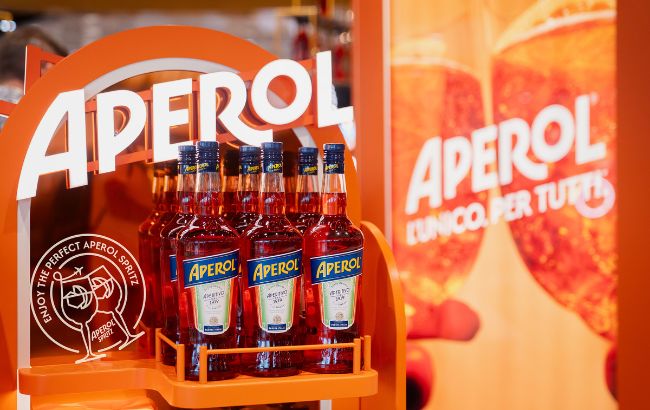
Of the group’s core brands, its flagship Tequila, Espolòn, was up by 3% in 2025. Over in the apéritif division, Aperol showed ‘resilience’ and grew by 1% with a particularly bright showing in the UK, while ‘other apéritifs’ increased by 12% with Sarti Rosa standing out with triple-digit growth.
The company’s new portfolio strategy in the past year has been focused on “fewer, bigger bets” and a push for Aperol in the US, where the brand grew by 15% in the on-trade last year.
“For Aperol in the US, we have already hired and put into the market 21 brand activators across 11 states and cities to drive the acceleration in growth,” Hunt said. “We are also further stepping up our advertising and promoting (A&P) spend on key brands.”
In the US, he highlighted outperformance for the group in the on-premise channel with 8% growth – six percentage points higher than the total sector. Hunt said the company become the number one supplier in value growth in 2025, led by its Tequila portfolio and Aperol, which both increased by 15%.
Touching on the new portfolio strategy, he explained that the business has shifted its focus to the”most important brands”.
“As a result, that has improved our planning through Q4, it’s improved our execution in Q4. It’s a combination of the focus of the team, the fit with the portfolio strategy and we are more aggressive in terms of displays than we’ve been before. I think this performance in the US on Aperol and Espolòn stands up to it.”
Campari’s Jamaican rum portfolio, meanwhile, including Appleton Estate and Wray & Nephew, posted an uptick of 9%. Wray & Nephew’s overproof expression was highlighted as a driver, while the hurricane affected Q4 sales in hurting local consumption and tourist traffic. The hurricane impact is estimated to have cost the company about US$21 million.
Hunt also highlighted the group’s support of the local community with its donation of JMD$250m (US$1.596m).
He emphasised to investors and analysts that the business is on the rise: “We are growing top line, we are growing margin, and we are growing profits.”
Tariffs cost Campari €11m
Of the impact of US tariffs, Campari Group felt them in Canada where sales were down by 5%, however Francesco Mele, the group’s chief financial officer (CFO), told listeners on the call that the impact on sales was lower than originally expected due to the company’s stockpiling of products before the tariffs took effect.
“In terms of gross margin, we recorded 100 basis point organic accretion in 2025, supported primarily by input cost benefit, especially driven by agave. Within this number, the impact of tariff was €11 million (US$12.7m),” he said.
After the first half of 2025, the group feared its earnings for the year could be hit by €45m (US$51m) because of the tariff situation.
When asked about the lower than expected impact from tariffs in 2025, Mele noted that the company was able “to compensate with some strategic management” of its inventory.
“All in all, we expect to have a positive impact in terms of cost of goods sold (COGS). Clearly very different from what we have seen in 2025, but still we see a positive aside,” he added.
Emerging markets: ‘Significant opportunities’
Campari Group saw growth in 24 countries with share gained in nearly every market globally, which Hunt attributed to a “focus on fewer bigger bets and our geographic expansion”.
He said that geographic expansion will continue to be a focus going forward, driven by Aperol.
Outside of the flat performance in the US, the group posted 2% growth for the full year in Europe, Middle East and Africa (EMEA), and 4% in Asia Pacific.
In Europe, while full-year growth was down in Italy by 1%, the market rebounded with a 5% rise in Q4. Sales in Italy were boosted by the “excellent execution” of Aperol winter campaigns during Q4.
In Germany, there was a 3% drop for the full year and a 6% fall in Q4, which the group blamed on delisting and a ‘challenging market backdrop’.

Full-year sales in the UK grew by 7%, while other EMEA markets – including global travel retail, Greece and Belgium – saw 8% growth in 2025, capped off by a 12% rise in Q4. The bulk of the growth was said to have come from Aperol, Sarti Rosa and Courvoisier Cognac.
“We recorded 2% growth [in EMEA] with resilient trends and market share gains across our main countries despite the challenging backdrop,” said Hunt.
Looking at Asia Pacific, Australia’s 7% growth was helped by double-digit rises for Aperol products and Espolòn, which Hunt called the group’s “focus brand in the country”.
The rest of the region saw 1% growth, but new management appointments in Asian markets will look to improve on that. “We believe we can consistently enlarge our presence in the region, leveraging the route-to-market investments that we have already made,” Hunt said.
In Jamaica, full-year sales were up by 1%, impacted by the hurricane in Q4. Regarding Jamaica, Hunt said as the company’s production sites were only temporarily impacted, it expects consumption of its brands to start to “return to normal”.
The rest of Americas (12% of group sales) recorded a 8% with broad-based growth across most of the region apart from Canada.
Regarding the current conflict in the Middle East, Hunt said the firm did not “see any material impact at this stage” but would “monitor it pretty closely”.
The situation could impact domestic business in the Gulf States duty-free, given the number of travellers who pass through the region.
Hunt said that “from an input cost point of view” the business has a “fair degree of protection” through long-term contracts this year.
“The key thing is that the business has been around since 1860. We’ve been through disasters and wars and various other things, and I’m very lucky to have an extremely experienced team. So I think we’ll navigate that as we come through.”
Hunt showed confidence in emerging markets in 2026: “We have double-digit growth in a number of these [smaller markets], and that absolutely continues”.
He added: “We have a significant geographic expansion opportunity for the portfolio. Aperol is leading the way on that, but we continue to see significant opportunities. The new structure we’ve put in place of a dedicated team in APAC and also the team in the developing markets means that we can really now go after that with the right resources and the right team.”
‘No rush’ to sell brands
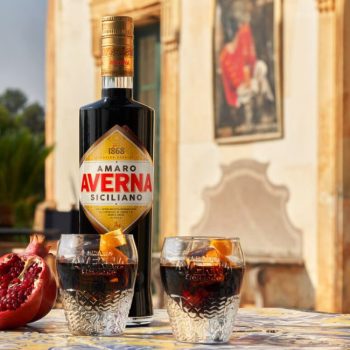
As part of a streamlining strategy, the company has looked to offload some of its ‘non-core brands’, which saw Cinzano vermouth and Italian liqueurs Amaro Averna and Zedda Piras sold in 2025.
The deal for Averna and Zeedsa Piras is expected to be completed in the second quarter of 2026. The CEO said these divested brands accounted for approximately 3% of its total revenue.
On the possibility of more brand sales, Hunt said the company still has “discussions ongoing” and timing for future disposal will be “based on the optimisation of proceeds with no rush, given the robustness of our business”.
“I want to be very clear on this. We don’t have to sell anything. We are choosing to see if we can see a sensible value, and balance that value with the benefits of the focus it can bring to executing our new strategy,” Hunt continued.
When asked about Courvoisier’s performance, the Cognac house Campari acquired in September 2024, Hunt said it was “encouraging” to see a “positive uptick” for the brand in a number of markets.
He continued: “In the UK, it hasn’t really had much going on for quite a while. The fact that we’re now starting to get listings into the UK on-premise, we’re starting to have activations around the key holiday periods, and also the interim campaign that we’ve used is bringing some new consumers into the category.”
The group integrated Courvoisier into its financial results from May 2025 and alongside Aperol, the Cognac was said to boost growth in the UK. The brand also helped drive growth in EMEA and APAC. Overall, it managed €157m (US$182.2m) net sales for the year.
Hunt noted that there hasn’t previously “been much on the brand” and the group will begin to “build a more geographic footprint” for Courvoisier going forward.
“That’s the second drive of it,” he added. “We’re not rushing. It’s [Cognac] a tough category. We want to make sure we get it right. I’m very encouraged by what I’ve seen so far.”
Campari resists short-term price battle
Commenting on pricing uncertainty and equity, and how Campari might respond, Hunt said he has “never seen price readjustment build long-term equity”.
“From a short-term basis there may be some headwinds, but our focus is getting our team to execute in the strategic on-premise is investing in establishing equity and making sure that our brands’ equity in the consumer’s eyes match our pricing,” he said.
“We’ll continue to see it, but we take a longer term view of building the equity that we think takes a long time to get these prices up. At which point I’d rather invest behind the equity, make sure the consumer sees the value versus getting in a short-term price fight.
Another key focus for 2026 will be innovation, which Hunt said means “new formats for new occasions”, seen in the launch of new ready-to-drink Aperol and ready-to-serve Campari Spritz products.
“It also means expansion of Aperol on tap that we piloted for the first time in select markets in 2025,” he added.
For the year ahead, the group believes it is on track to reach mid to high single-digit top-line growth in the medium term.
“Assuming a challenging but stable operating environment, our industry outperformance with the pace of underlying growth is expected to continue in 2026,” Hunt said.
When pressed whether the company can repeat its Q4 showing, Hunt identified areas that are out of the company’s control.
“In the last six days, we’ve seen the world change again very, very quickly. On top of that, the geopolitical challenges we saw last year. We had natural disasters of hurricanes and various other things coming through.
“I think when I talk about a stable environment, it’s actually having confidence in what the tariff situation may be, having confidence in the geopolitical situation. Clearly we can’t do much about the weather other than respond the way we do, which is bounce back and get our numbers back to where they need to be.
“I think at the moment it’s more caveating our ambition a little bit on what we can’t control. Based on what we can control, we’re confident of getting to our mid-term guidance. I think you see the progression that we’re making of 2.4% last year, underlying of 3% this year.”
He concluded: “We’re heading in the right direction. We’re very clear that we’ve got the plans, the geographic expansion, the opportunities and the team to be able to actually deliver against that.
“It’s still a pretty bumpy market out there. I think we’re cautiously optimistic, but we’ve got to see how the year plays out.”
Related news
Campari Group appoints new HR chief