


Brown-Forman CEO wagers on Woodford
The CEO and president of Brown-Forman, Lawson Whiting, reveals which brand could drive the group’s value growth over the next decade and why it has avoided moving into celebrity-backed Tequilas.
Whiting took part in a ‘fireside chat’ during the UBS Global Consumer and Retail Conference in New York yesterday (11 March).
When asked about the growth of the US whiskey category over the next five years, Whiting highlighted how the sector had previously been in decline for four decades from 1970 until around 2010.
He added that Jack Daniel’s was one of a handful brands to buck the decline. “It was by far the most successful over that 40-year period, both in the US and internationally. Then everything started to get really hot in 2010.”
Whiting also noted Brown-Forman was the “big player at that point” with the craft boom following and peaking “three or four years ago”.
He explains that there were 4,000 distilleries across the US back then but since the start of 2025, there were only 3,000. “A third of those went bankrupt last year,” he cautioned. “Now we’re down to 2,000. So half of them have gone away already and it is a real struggle.”
He warns that whiskey brands are “going out of business faster than anything right now”.
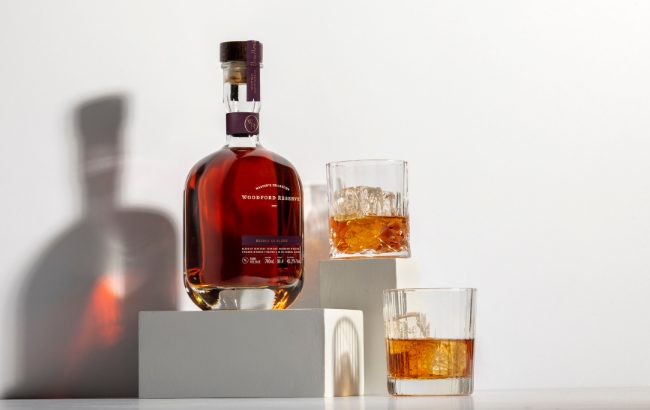
Whiting described Brown-Forman’s premium Bourbon, Woodford Reserve, as “one of the largest brands in the US system with a lot of international potential for us”.
He adds that the brand is “growing very slowly right now” after previously rising by double digit rates. In the nine months to 31 January 2025, Woodford Reserve’s organic sales were up by 2%.
He points out that none of the top 20 largest brands in the US are growing currently. “So it’s a challenge across the whole sector.”
Within the whiskey category, he acknowledged that Brown-Forman, like many other firms have “too much inventory”, adding that “everybody has slowed down”.
He also pointed to the many production pauses happening across the industry among big and small players. Among them are Diageo’s Balcones and George Dickel sites and Suntory’s Jim Beam distillery.
“I do think the inventories are going to balance out a lot faster than some others think,” he noted. “And it’s very sensitive to whatever the demand forecast is. But inventories are coming down.”
He adds that while Brown-Forman has not shut down its facilities, it has “slowed down a bit”.
“Slowing volumes is going to spit out higher costs for you almost no matter what you do,” he added. But despite the slowdown, Whiting says American whiskey is “still one of the better categories to be in from a demand perspective”.
Woodford Reserve could be the next Jack Daniel’s
Speaking about Woodford Reserve’s potential, Whiting said: “[If] I had to make a single bet on where the value growth is going to come out of Brown-Forman over the next decade, it’s going to be Woodford’s global expansion. I want to see what we did to Jack Daniel’s 25 years ago, we can do with Woodford now.”
He also noted that Brown-Forman has spent “hundreds of millions of dollars” expanding its whiskey and Tequila facilities and inventory due to high demand.
“The demand has slowed enough that we essentially have [too much] both in finished goods and in bulk inventory,” he said.
“We’re not going to have to expand our facilities for a number of years and so we expect that free cash flow will be growing faster even than operating income for the foreseeable future.”
In terms of pricing strategy, Whiting said the business takes a rational approach: “We use the term low and slow.”
“We’re going to deliver that [low and slow goal] this year. And I expect we will in the following year, too.”
He adds that six to 12 months ago, pricing was flat. “Now it’s down 1%,” he points out, stating that Tequila was a major factor behind it.

The Tequila category had “explosive growth” for six or seven years before slowing in recent years.
“The multi-million-case Tequila brands are struggling right now,” he emphasised. “And so there is a little bit of pricing pressure in that category itself.”
However, he notes that costs within the industry have gone, with agave prices peaking at MXN30 pesos (US$1.70) a year ago. Now, Whiting says, Tequila can be purchased for MXN2-4 pesos (US$0.10-0.20p) on the open market.
“I think some of the big players are looking at that saying, ‘we can afford to be a little more aggressive on price because our costs have come down so much’.”
On the future of the Tequila category, Whiting said: “It is similar to American whiskey in a lot of ways in that, the category got hot, a whole lot of new brands came in. Now the market slows down, new brands are starting to really fall off and some of the big ones are starting to fall off.”
The other trend happening in Tequila was the boom in celebrity-backed brands. “That is getting tired. I really do believe that,” said Whiting.
“We have talked and thought and analysed this to death over the last 10 years as to should we go there,” he said of considering celebrity investment in Brown-Forman’s Herradura and El Jimador Tequilas. But it “never felt right for our brands” Whiting said.
He recalled the days of these brands growing at rates of 100%, but he expressed relief at not jumping on the bandwagon.
“It was a challenging thing to watch. But I think at the end of the day, we made the right call. There is a big shake-out happening in the Tequila category in general right now. And we’re just going to have to see how this thing plays out.”
He says this is following a similar trend in American whiskey where there has been a “shake-out” already.
Tequila: ‘Attractive category’
“I think it’s about keeping your head down. [Tequila is] still a really attractive category. It’s still the demographic growth that goes with it, the appeal to sort of the younger generation as opposed to some other categories like a Scotch or something like that.
“There’s a lot of things about Tequila that I think will stay positive and continue to make it one of the better categories to be in for the next foreseeable future.”
But in terms of signs of improvement over the next six to eight months and whether the industry can get back to its historic growth levels, Whiting said: “I don’t see any reason why [not].”
He continued: “Health is trendy but American consumers are famous for sort of going after health trends and then they kind of give up on it pretty relatively fast. And so we’ll have to see how that plays out a little bit. I do think it’s a headwind now, but we’ll see how long that lasts.”
Whiting said he would not give any predictions regarding GLP-1s. “I’m not an expert in that space. I have no idea. But it feels like consumers are going to tire of some of these things and they don’t like the side effects or whatever it is and then sort of things return to normal.
“So I do think the cyclical side of things, that almost certainly will return to normal, and we just need to get a little bit of a stronger consumer and some consumer confidence back and get back to the days of kind of low- to mid-single-digit growth.”
Outside of the US, Whiting has noticed some growth in international markets, which represent 55% of Brown-Forman’s sales.
Total distilled spirits trends in Europe are similar to the US, he points out. But back in the 2010s, the States was “growing much faster than Europe”.
“Europe hasn’t fallen as far, but it likely is probably not going to come back as high for reasons I’ve never fully understood.” He noted that in Europe, beer is a “healthier category” than spirits, which is the opposite of the US.
In the UK, the biggest challenge is taxes, he says. “They continue to drive up taxes on alcohol, and that is not helping things a little bit.”
He added: “Markets like France have been really good for us over the years, Southern Europe in general.”
In a recent earnings call, Whiting said the launch of Jack Daniel’s Blackberry helped Brown‑Forman offset headwinds in the US, Europe and Canada.
Global growth potential beyond Jack Daniel’s
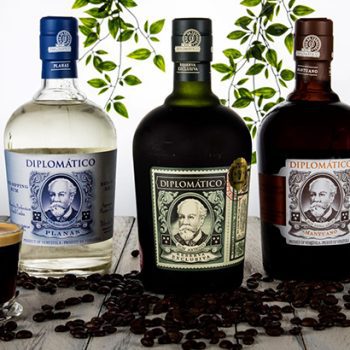
He notes that Brown-Forman’s purchases of Diplomático rum in 2023 and Gin Mare in 2022 – two brands that are small in the US but “really big in Southern Europe” – provide a “huge opportunity”.
The two brands recorded double-digit growth in Brown-Forman’s year-to-date results, outperforming its whiskey and Tequila.
Outside of the US, Brown-Forman’s portfolio is dominated by Jack Daniel’s, Whiting points out.
“If there’s an untold story or where do I see the real growth over the next decade or two, it’s going to be the ability to develop the rest of the portfolio in places like Europe where we might be 80% or 90% Jack Daniel’s in some countries.
“We now have enough scale with Diplomático and Gin Mare to create a separate sales team in a lot of these countries.”
He noted that it is “very hard to develop a brand from almost scratch or from very small” when using the same sales people for brands like Jack Daniel’s and Gin Mare. “So we think we’ve made some good strategic moves there, and we’ll see some better growth there.”
On an end note, Whiting was optimistic about the future of the company and its portfolio.
“If you just compare our brands to anybody else in the industry, I feel pretty good. In fact, I feel really good. I mean, we have some of the best, most vibrant spirits brands in the world. And so I feel confident that we can figure that piece out and we can continue to grow.”
Related news
Brown-Forman CEO: Canada ban 'most significant impact'