


Brown-Forman CEO: Canada ban ‘most significant impact’
Strong growth in emerging markets and the launch of Jack Daniel’s Blackberry helped Brown‑Forman offset headwinds in the US, Europe and Canada.
Earlier this week, Jack Daniel’s owner Brown-Forman reported flat sales for the nine months to 31 January 2026, with third-quarter (Q3) revenue up by 1%.
In a conference call for its Q3 results on 4 March, Brown-Forman CEO Lawson Whiting pointed out that market conditions have largely stayed the same as previous quarters.
“In the current operating environment, which has been challenging and uncertain for some time now, I consider this to be positive,” he said.
“Our global footprint shows a clear divergence in consumer behaviour. While macro uncertainty continues to pressure discretionary spending in the US and many developed markets, we see significantly stronger, more resilient consumer trends in key emerging international markets and the travel retail channel.”
He also warned that the dispute between the US and Canada and used barrel sales remain “persistent headwinds” for Brown-Forman’s revenue.
“While we expect the cyclical headwinds to eventually subside, we recognise the highly dynamic nature of our industry and acknowledge that some of the current pressures could persist. Therefore, our primary focus remains squarely on actively managing the factors within our control.”
Whiting highlighted that the company’s nine-month sales were led by its emerging markets and travel retail, which were up by 15% and 7% respectively.
Sales in Mexico rose by 15%, driven by New Mix, which drove the “accelerating RTD category” and was boosted by “flavour, convenience and value, particularly as the economic environment remains under pressure”.
In Brazil, sales were increased by 22%, led by double-digit gains for Jack Daniel’s Tennessee Whiskey, and its Apple and Fire variants.
“We also believe that premiumisation is an opportunity in Brazil and are focused on increasing distribution for our super-premium whiskey portfolio,” he said, noting double-digit growth for Woodford Reserve and Gentleman Jack.
Travel retail sales grew by 7%, which was boosted by a workforce restructuring from a year ago.
“The decision to restructure our travel retail team ensured that they are now more closely aligned to our global airport operators and growing transportation channels such as cruise and airlines,” Whiting said. “The efficiency of our new structure also allows us to allocate additional resources to fast-growing regions in the Middle East and India.”
Whiting noted that Canada, which plunged by 59% due to the ban of American alcohol across the market, continued to have the “most significant impact” on organic sales.
Chief financial officer (CFO) Leanne Cunningham told investors on the earnings call that the firm would “continue to assume American spirits products will remain off the shelf across most of Canada for our full fiscal year and that expectation is reflected in our fiscal 2026 guidance”.
The group restated its previous forecast for fiscal 2026 of an organic sales and operating income decline in the low single-digit range.
Europe: ‘Weak’ spirits market

Whiting called the environment in Europe “challenging due to sustained pressure on consumer sentiment and confidence across most European economies”.
However, Whiting added: “Despite the environment, we are maintaining or gaining share of the whiskey category in six of our eight top European markets.”
Within Germany, where Brown-Forman’s sales fell by 7%, he noted that total spirits trends declined by mid-single digits, led by “heightened competitive promotional activity” as consumers tightened their budgets.
Regarding Brown-Forman’s UK performance, which recorded an organic sales drop of 10%, Whiting said: “Challenging category dynamics remain the most significant headwind as economic conditions, including increasing excise taxes are negatively impacting consumer spending and TDS [total distilled spirits] trends.”
He added that spirits sales in the UK off-trade and the whiskey category “remain in low single-digit decline, although trends continue to improve and Jack Daniel’s Tennessee Whiskey continued to outperform the category and gain market share”.
The UK and Germany are major markets for Brown-Forman but they remain “tough”, Whiting told analysts on the call.
He cited “general spirits market weakness” across Europe, which is seeing a decline of low single digits, but noted the region was performing “better than the US.”
Whiting also said the company had benefitted from recently taking over its route to market in Italy and Japan.
Within Italy, Brown-Forman grew by double digits in the year to date. Its performance there was led by Gin Mare, the nation’s leading super-premium gin brand, and Diplomático (third-biggest super-premium rum by value).
The Jack Daniel’s family was also up by double digits in Italy.
In Brown-Forman’s biggest market, the US, sales were down by 1%. However, Whiting highlighted that the business was ahead of its “depletion-based results and takeaway trend”, led by a major shift in its US distribution network and innovation efforts.
Jack Daniel’s Blackberry hailed a success
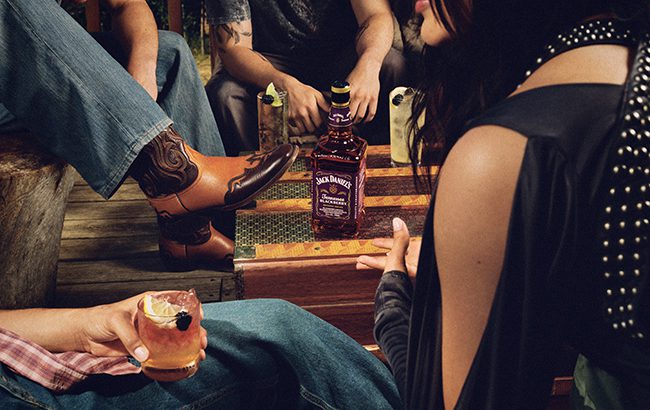
The launch of Jack Daniel’s Blackberry in the US last summer has “continued to exceed expectations and is the second-largest new product by value within total distilled spirits in Nielsen”, Whiting added.
There are also plans for additional sizes in the US for Jack Daniel’s Blackberry, Cunningham said. The product made its debut in four European markets last autumn, including the UK and Germany.
“We have largely all of our emerging markets that we have not yet launched in,” she noted of the product’s potential. “And we know from history, Brazil is a very strong flavours market. So I think we would have really great expectations for that as well as flavours outside of the US. We have a pretty proven track record that we can grow those to become very sizeable brands.”
Whiting also pointed out that the Blackberry product has a “big benefit” from its mixability with lemonade, adding “that’s where a lot of consumption if happening”.
When asked about the current pricing environment, Whiting noted in the US that the last figure he saw showed total distilled spirits was “down about one point from a pricing perspective”, led by Tequila.
“It’s a little bit worse than it was six months ago or so,” he says of the pricing, but noted that Brown-Forman is “less than 0.5 point down”.
The ready-to-drink (RTD) category was a bright spot for Brown-Forman, with sales up by 6%. Whiting noted that the business had expanded distribution for its RTDs “within the discounter channel”.
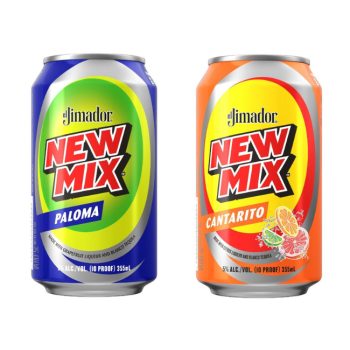
RTDs were boosted by Tequila-based New Mix, which soared by 34% due to Mexico. The company recently launched New Mix in the US, which Whiting described as a way of connecting with Mexican-American consumers.
The business has test-launched two flavours in a limited number of states for New Mix with the aim of “growing distribution and awareness before expanding more broadly”.
Going forward, Whiting said the business would focus on its premium-plus brands and RTD portfolio, and “streamline” the company’s workforce.
Demand plunges for used barrels
Cunningham also noted the impact of sales of used barrels. Organic revenue of the company’s non-branded and bulk arm plunged by 64% over the nine months due to lower used barrel sales.
“The challenging and uncertain operating environment faced by the entire spirits industry has reduced the demand for used barrels and consequently also put downward pressure on the pricing,” she said.
“Therefore, we continue to expect used barrel sales to be lower by more than half of the fiscal 2025 level.”
Last June, Brown-Forman sold its Louisville cooperage to Independent Stave Company for US$13.66 million.
Wood costs have significantly impacted the company’s profit margins and the closure of the Louisville cooperage represented the final step in Brown-Forman’s wood supply chain strategy, which, Whiting said last year would “create efficiencies and allow us to further optimise our capital allocation”.
Cunningham, who will retire in May this year, also warned that costs pressures facing American whiskey would continue.
“Our portfolio is heavily weighted to American whiskey,” Cunningham added. “We plan to liquidate ageing barrels in the coming years that were produced during the hyperinflationary years of the early 2020s where we faced significant cost increases for barrels, grain, energy as well as general inflation.
“While we have taken strategic steps to optimise our wood supply chain in response to these rising costs, due to the ageing of most of our products, the impact of these recent actions will take time to come through our results. Therefore, we expect the cost pressures associated with our barrelled whiskey to persist.”
Cunningham clarified to investors that the term ‘liquidate’ signifies “dumping the contents out of the barrel so that we can process them and bottle them”.
Middle East impact ‘too early’ to tell
Regarding the conflict in the Middle East, Whiting said the priority is the safety and security of its staff, adding that “everyone is safe”.
He noted that UAE is a strong market for Brown-Forman, with double-digit growth.
“In the UAE, we do think that we do have the appropriate level of supply as we think about our year to go, March and April, to meet consumer demand. And then Israel is a much, much smaller business for us. Again, we think that we’ve got the resilience in the supply there.”
He noted that global travel retail “could be somewhat impacted, though it’s way too early” but the business has enough inventory to supply the market for a year.
“We’re watching and assessing. If the transportation and airports normalise quickly, then we wouldn’t expect to see much of an impact. We’re doing all the work to understand the logistics of where our goods are in transport, and we’re rerouting them where prudent.”
Related news
Brown-Forman YTD sales plunge 59% in Canada