


Are Dirty Martinis becoming too dirty?
In an era where ‘more’ is often mistaken for ‘better’, the Dirty Martini has become a case study in taking things too far. Extra dirty, filthy, and sometimes downright swampy – today’s orders show signs of a cocktail pushed well past its original intent. And consumers are into it.
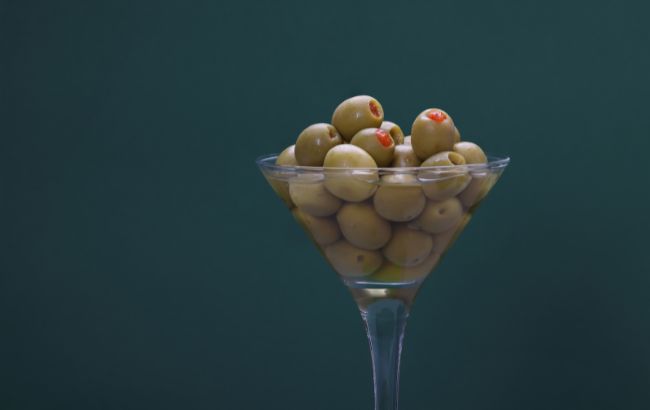
There was a time when a Dirty Martini was more of a nod than a statement. But somewhere along the way, a gentle drop of olive brine has turned into a flood, and the serves being passed across the bar now resemble a glass of murky bath water more than an elegant cocktail.
But bartenders haven’t become carelessly heavy-handed with the olive brine. They haven’t lost a fight with the art of subtlety. Nor have they set out to spike their customers’ blood sodium levels with overzealous splashes of pickle juice. Dirty Martinis are getting dirtier because people are asking for it.
The ultra-savoury era
We are now in the era of ultra-savoury cocktails. It’s a trend that has been gaining momentum for a few years, with many bars offering vegetable-, spice- or brine-forward Martinis. Some are taking things a step further and exploring fat, smoke, and deeper forms of salinity in their offerings.
And why? Because consumers are suddenly craving deep umami profiles in their glassware. While there is no way of knowing for sure why drinkers have started to develop cravings for saltier, savoury-forward flavour profiles, there is data to suggest that a rise in stress levels has sparked an increase in the hormone cortisol. This can affect electrolyte balance and trigger a strong desire for salty, savoury foods to replenish these stores.
In addition, savoury and fatty foods activate the release of dopamine, the neurotransmitter associated with pleasure. Twinned with the notion that savoury items are more frequently considered to be ‘comfort foods’, this creates a ‘reward’ feeling in the brain, causing people to crave more.
Now, I’m not saying that the cost-of-living crisis, geopolitical conflict, and growing social unrest are driving us into the arms of Dirty Martinis, but it is one explanation as to why the cocktail is becoming part of the cultural zeitgeist.
Luckily for drinkers, bars have become more than willing to accommodate these salty cravings. But, of course, some are doing more than simply adding a bit of brine to the shaker and being done with it. They’re taking it a step further, playing fast and loose with the term ‘dirty’ and often crossing the borders into pure filth.
At Nightcap, the hidden speakeasy connected to Chicago’s newest tasting menu concept, Class Act, the team is leaning into deeply savoury flavours to meet this growing consumer demand by translating culinary mainstays into high-end cocktails.
The bar’s beverage director, Jonas Bittencourt, explains his theory behind this growing taste for savoury flavours: “I’ve been doing this for 15 years now, and in the past eight or nine, the number of people who walk into a bar and ask for a Dirty Martini with zero inclination to have something other than just vodka and olive brine [has grown],” he says. “For me, a Dirty Martini is maybe a half ounce (15ml) of some olive juice – maybe three-quarters (20ml), if somebody says they want it really dirty. But nowadays, people are like: ‘Toss a full ounce or two ounces in there. I want it so dirty I want it to be cloudy and thick.’ And I’m like: that’s a little weird, but to each their own.”
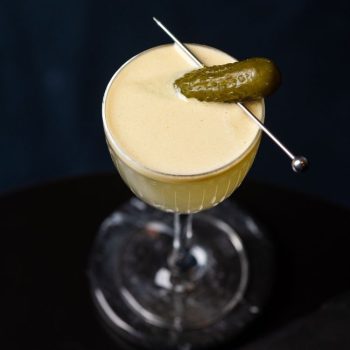
This behaviour change has led the bar to create the Dill & Dijon Martini, for which the team crafts a white wine sauce and uses a specific type of gherkin brine to create a spin that Bittencourt says is extremely well-balanced. “I think my quip with the Dirty Martini is that it loses its balance if somebody just straight up wants vodka and brine,” he says. “To each their own, I judge not, however I do like balance. That particular cocktail for us is extremely balanced.”
Mixology meets gastronomy
Gastronomy is ultimately the main driver of Dirty Martini innovation. At New York West Village hot spot Sip & Guzzle, the bar’s head of R&D Sam Morris has translated the flavours of Japanese yakitori, the traditional chicken dish cooked over binchotan charcoal, into a cocktail. The Yakitini features Japanese vodka and mugi shochu fat-washed with binchotan-smoked chicken fat before being smoked twice. Added to that are Castelvetrano olives and a spring onion infusion, which add savoury depth, and tamari, yuzu kosho, and olive fruit, which provide layered salinity beyond a traditional brine.
The result is a serve that lands somewhere between yakitori and a Dirty Martini: smoky, savoury, and deeply umami.
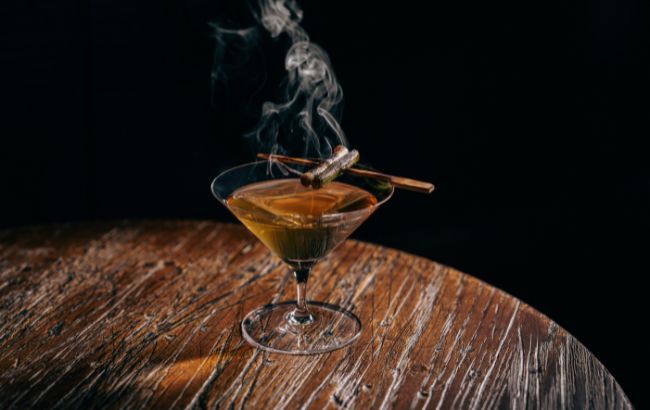
In Japan, the quintessential game-day hot dog inspired the creation of the Glizztini at Tokyo Confidential back in 2024. This savoury ‘Tini brought together gin, mugi shochu, tomato, mezcal, onion brine and MSG to replicate the much-loved fast food, and was topped with a garnish of red and yellow cacao butter that had been formulated and presented to replicate the tomato ketchup and mustard relishes often used on hot dogs.
Meanwhile, back at Nightcap, Bittencourt shares the story of the bar’s French Onion, a cocktail inspired by the usually cheese-laden comfort soup from France. Considered the ‘ultimate evolution’ of the savoury Martini, this cocktail features a rich, house-made French onion broth paired with Citadelle Vive Le Cornichon Gin, adding a bright, briny dill finish to cut through the umami. Served hot, the cocktail is intended to emulate the cuisine as much as possible, even though crafting the serve is “a painstaking process” consisting of chopping and cooking down “bucket loads of onions”.
Garnishes have also started infiltrating the Dirty Martini trend, going from a classic trio of skewered olives resting on the rim of the glass to the likes of crispy chicken-skin shards, as seen on the Moana-inspired Boat Snack Martini served at New York’s Bar Snack, and the jalapeño popper gilda presented atop the Mini Martini at London restaurant Rita’s.

I ask Bittencourt if the Dirty Martini is in danger of going the same way as the Bloody Mary with its garnish game, and if we may soon find our serves presented with even more outrageous accompaniments to match the outrageous levels of salinity. He assures me that “the Martini will always be more refined, that’s undoubtedly so. No matter how dirty you make it, it’s still in a fancy glass, it’s still a nice presentation – it looks elegant. I know someday somebody will do something crazy, and that’s totally fine, but the Martini is definitely a classic for a reason, and I hope that doesn’t change.”
The Martini gateway and social status
You could argue that, aside from a change in consumer taste preferences, Dirty Martinis are also being used as a gateway for consumers to ‘get into’ the more classic styles of Martini.
Adam Montgomerie, general manager at London bar Equal Parts, notes that the venue sells almost twice as many Dirty Martinis as it does dry versions. “I think it’s an easier way for people to get into drinking Martinis as the more brine you add, the less alcoholic the drink feels.”
Michael Sager, owner of London’s Sager + Wilde, believes that “the dirty surge is partly driven by people who find a straight Martini too austere,” confirming that “people who really drink Martinis – the ones who order them regularly – are still skewing drier.”
The Dirty Martini has got a reputation for being an ‘It Girl’ drink, with an air of ‘quiet luxury’ that has been spurred on by the cocktail’s popularity on social media. Vogue UK has referred to it as “the faux-fur coat of cocktails” and “the epitome of going out with nothing but a tiny handbag and the urge to gossip”. In short, they’re small, salty, sexy, and the ultimate accessory for the grid.
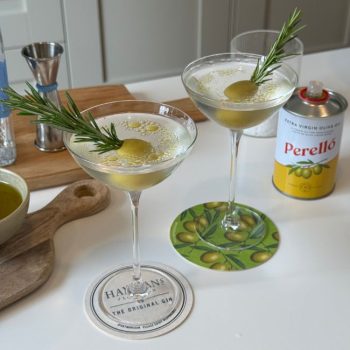
Monika Linton, founder of Brindisa Spanish Foods and the woman who brought Perelló olives to the UK, says she has definitely noticed Dirty Martinis having “a bit of a moment” on social media. “We see it all the time, with customers tagging us in their Martini pictures using our olives and brine.
“Our audience loves hosting, and the Martini brings that glamorous, cool, cocktail-bar vibe at home. There’s also a very aesthetic side to it – a chilled glass, a big juicy olive, and the iconic Perelló tin on the counter.”
But as we know, what really thrives on social media is exaggeration. The most extreme, most photogenic versions of a drink are specifically designed to provoke reactions and rack up views, rather than reflect how most people are actually drinking. There is an argument that the levelling up of the Dirty Martini isn’t actually as universal as we might have first thought.
To put it another way, what we’re seeing isn’t necessarily a change in the Martini itself, but how it’s played out online. Of course, everyone might be talking about this viral Chicken Soup Martini, but is anyone actually drinking it?
The bartender’s approach
While some bars have taken the extra-dirty brief and run with it, many are sticking to their guns and only making minor tweaks to how they craft and serve their Dirty Martinis.
So if you go out to a cocktail bar today and order a Dirty Martini, what can you really expect to receive?
Robyn Evans, global brand ambassador for Gin Mare, has noted that many bars with their own variations are “aiming to create a more elevated and personalised version of the Dirty Martini to allow more creativity” while staying true to their menu style.
This is certainly the case for Pietro Collina, group beverage director at Thesleff Group, owner of the recently opened Sale e Pepe Mare in London, who opts for shaking his Dirty Martinis to allow ice crystals to float to the top, in a way that is “reminiscent of that classic steakhouse pour and New York Martini culture.”
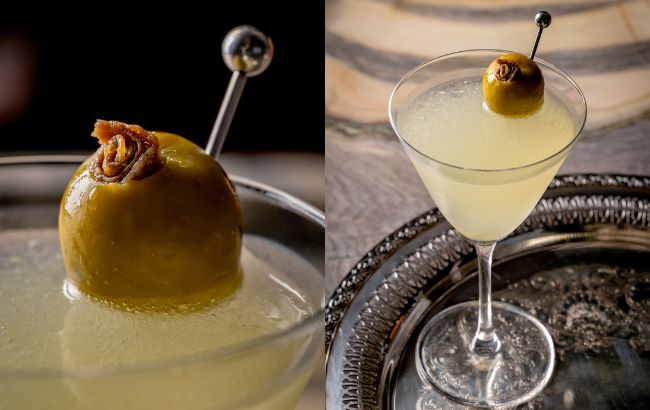
He also stresses the importance of the quality of the brine. “I know some people just use the brine straight from the jar of whatever olives they’re using, but you can also make your own brine to tailor to your preference.”
He also casts aside vermouth entirely and is adamant that a Dirty Martini should never include acid or an acid substitute.
Meanwhile, Øyvind Lindgjerdet, executive bar manager at Britannia Bar in Trondheim, Norway, believes that the subtle sweetness and citrus aromatics of the Cucielo Bianco vermouth in his Dirty Martini “add a little more body and depth, helping the Martini feel rounder and more structured rather than aggressively salty.”
And at Sager + Wilde, the team uses a fino Sherry in place of vermouth to bring that same drying, saline quality, but with more texture and depth. “A whisper of oxidation makes the whole thing feel alive,” Sager shares, adding that “in place of an olive, we serve it with a pickled grape in sansho and Sherry vinegar: bright, faintly floral, with a tongue-tingling heat that cuts clean through the spirit.
“It’s still a Martini in spirit and structure, just one that reflects what we care about at Sager + Wilde,” he adds, noting that ultimately, “the Martini’s power is its restraint – the moment you abandon that, you’re borrowing the name while ditching everything that made it worth borrowing.”
Related news
How the Martini glass became more than the Martini