

Sober shift: the bartenders choosing sobriety
With Dry January now firmly in the rear-view mirror, one cohort of drinks industry professionals shares why they’ve chosen to abstain from alcohol for good – and how they navigate sobriety in a world filled with booze.
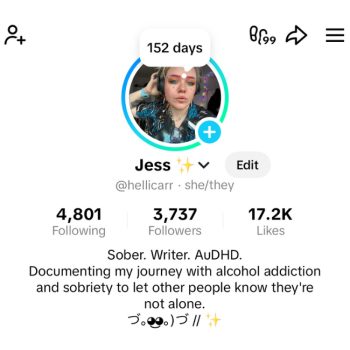
London bartender Jess Hellicar has just passed the five-month mark in her sobriety journey. She can currently be found shaking drinks behind the bar of east London venue Leyton Calling, but her decade-long tenure working in the drinks industry has also seen her swinging the lights and serving up flaming cocktails at famous party chain London Cocktail Club (LCC), where alcohol has been known to flow on both sides of the bar.
She explains she had always considered drinking alcohol to be a good way to “quiet the noise” in her brain, and make her the more “confident, outgoing, fun LCC party girl that everybody knew and expected”. However, an autism diagnosis triggered a huge turning point for her. “Understanding that I already struggle with emotional regulation, then adding alcohol into the mix was incredibly damaging for my mental health over time,” she says. “It created a really toxic self-deprecating inner dialogue. I became extremely anxious about making mistakes or upsetting people, and that made it very difficult to function in daily life.”
But Hellicar had fears of what going sober would mean for her, both socially and professionally. “I worried people would think I was being performative or following a trend.” But, she explains: “I quickly realised it’s not about the optics – it’s about my mental health and that I had to do something about it.”
Similarly for Davide Segat, director of bars at NoMad London, he says it took him ages to realise alcohol had become a medicine for him, which he used to cover or adjust feelings or moods. “Under pressure? Booze. Stressed? Booze. Tired? Booze. Sad? Booze. Happy? Booze – and slowly it took over everything and affected every part of my life. It wasn’t fun at all.”

For James Malone, a 30-year wine industry veteran, the concern was his life was non-negotiable around alcohol. “It was my career. It was intertwined with every sort of aspect of socialising and my relationships. So how could I possibly ever give it up?”
However, the gradual realisation that drinking was hindering his professional and personal life eventually led him to turn his back on alcohol consumption. He shares: “I didn’t drink for breakfast and I didn’t drink to black out; there were occasions where I would drink one or two drinks and be able to call it a day. But there were too many occasions as I got further and further into my career where drinking became an obstruction.”
In the case of Nick Hurd, a bartender from Toronto, Canada, who has now abstained from alcohol for more than half of his six years in the industry, the decision came when his friendship group started to push him away based on decisions he had made while drinking, which, he says, came as the “wake up call I needed in my personal life”.
However, he explains it was about more than that: “I felt like it was eating away at the passion I felt towards my industry, using my job to feed my addiction via drinking when I was at work. I wanted to focus more on what the job could be; to be in the service of people instead of serving myself.”
How do you maintain sobriety?
The question many have asked is how these bar industry professionals have maintained their sobriety while continuing to work in an industry where they interact with alcohol daily.
Hellicar shares: “I thought it would be really hard not to have a drink but actually, it’s not like I’m in a bar and I’m looking at a bottle of whisky and I’m like, ‘Oh my god, I need to drink that bottle of whisky because I’m in a bar’ – it was always about the idea of coping with a noisy brain, or anxiety, past trauma, stress, neurodivergence. If anything, it’s quite a safe environment for me because I’m around a lot of people that I know, and I’m in an environment that I trust.”
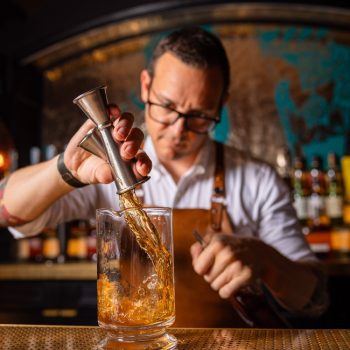
Meanwhile Segat recognises one obvious issue with combining sobriety with his profession. “Bartending requires tasting what you make. No two ways about it – you have to taste everything,” he says. While this may seem counterintuitive for someone with alcohol-related issues, he explains this allows him to be involved in every process, “from selecting the spirit lists or creating the whole cocktail menu. The only problem is during lengthy R&D sessions, I have to be a little careful as this could still give me a buzz, which is something I do not want.”
Similarly, Malone also continues to partake in tastings, but spits, “which is what you’re supposed to do when it comes to wine tasting”, he says, noting this aspect of his job hasn’t led to temptation. “I still get very passionate about the winemakers and their ethos and what it is they’re trying to create. But overall, I try not to [do tastings], but it hasn’t affected my [ability to] taste.”
Segat explains that the idea that someone can’t work behind a bar if they don’t drink alcohol remains one of the biggest misconceptions in the industry. “As if all of a sudden all my 23 years of experience in this industry would disappear once I stopped drinking,” he says. However, he admits he did worry that not drinking would impact his credibility in the industry. “This was a massive thought and paranoia of mine before I became sober, as well as during my first year and possibly even into the second year of sobriety. I had convinced myself I would lose [credibility with guests, peers or employers]. How wrong I was.”
Change in perspective
Hurd says sobriety has changed his day-to-day experience working behind the bar in a handful of ways, “but less than I expected. I still engage in rituals during service. I take shots of pineapple juice or ginger beer with guests; I taste my cocktails before serving them, which enables me to ensure quality. And this has also helped reframe my relationship with cocktails, wine and spirits.”
For Hellicar, sobriety has boosted her creativity behind the bar: “From menu creation, drinks creation, ideas for special moments and interactions with guests – my memory is insane compared to how it used to be. Honestly, anything you could think of that could improve has improved.”
She adds: “My palate is definitely sharper. I’ve got mental bandwidth to focus on flavour, technique, hospitality, and guest experience. I especially love making non-alcoholic cocktails now, not just because I don’t drink, but I find them more challenging as I’ve not got that alcohol base to rely on. So then, when I actually can really get that drink nailed, it’s super rewarding.”
Shifting attitudes
Of course, cases of alcoholism within the drinks industry are nothing new, but it is only in recent years that sobriety has been considered a legitimate option for anyone working within the industry.
Emma Wykes, who is credited as one of the founders of the non-alcoholic drinks category, having led Seedlip through its first five years of growth, development and subsequent acquisition by Diageo, puts this down to several key shifts in both the drinks industry and society as a whole.
“If you take it back to the much bigger picture, there are two things at play,” she tells me, explaining the first is the future of socialising and human connection. For this, working out how we, as human beings, want to socialise and connect – and what we will use to socialise and connect with in terms of venues, drinks, or even other substances that help with social anxiety – is important.
Secondly, as research into the effects alcohol has on health deepens, and the idea that ‘a little bit of alcohol is good for you’ has been challenged by newer science, Wykes believes we are going to see greater shifts in behaviour around drinking on both sides of the bar. “The health narrative has changed so dramatically in two years – it really has. When will it get to the point where you have the warnings – as we do on cigarettes – on alcohol brands?”
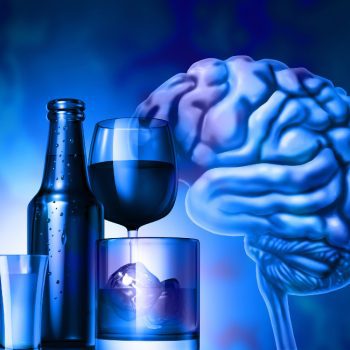
To this end, Wykes suggests this is another reason that we are seeing more bartenders cut back on their own alcohol consumption, as they take note of how it affects their lives – and the lives of those they serve – beyond the bar. Put simply, now that it is more widely accepted that alcohol is a neurotoxin rather than a wellness tool, it becomes easier to prioritise brain, body and mental health over taking that unnecessary shot with a punter.
Segat concurs: “A cultural shift is happening, slowly, but it is happening. The new generations are more health-conscious and aware of the dark side [of drinking].
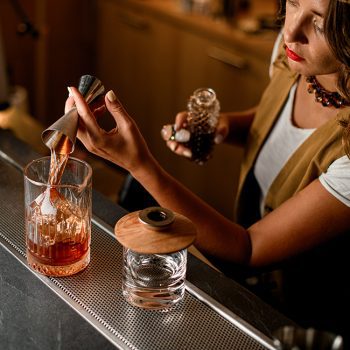
“It has become more acceptable to look after yourself, [and] there is less pressure to ‘belong’ by drinking. The macho culture that was present in pretty much every bar before is finally no longer acceptable. This includes working long hours, partying hard, and a culture of competition over who could take more.”
Normalising sobriety behind the bar
However, more than anything, Wykes points to the increase in options for socialising without alcohol as a catalyst for bartenders realising that not drinking is an option – even when working in the industry – and as a result, this is becoming a more accepted norm. Hurd believes the industry is the closest it has ever been to normalising sobriety behind the bar.
“Fourteen years ago, if you said ‘I’m not drinking’, you were either pregnant, an alcoholic, or you were on antibiotics,” Wykes says. “Whereas now, if someone orders a non-alcoholic drink or says they’re not drinking, no one asks. And that’s sort of as it should be. No one should really care what you drink or if you’re drinking alcohol, or if you’re not, and your choice and options should be the same.”
Meanwhile, Hellicar sees the movement as an opportunity for hospitality professionals to expand their offerings. “Sobriety has made me think really deeply about the difference between intoxication and hospitality. I love curating experiences now that aren’t based on people being drunk, and I think that there is a real craft to that. It’s quite easy to make someone enjoy themselves if they’re intoxicated, whereas it’s much more nuanced to get people to enjoy an experience based on the experience alone.”
While sobriety in bartending is becoming more widely accepted, Malone is concerned that the lack of support available to those dealing with alcohol addiction in the trade demonstrates the industry still isn’t ready to normalise it completely.
“As an industry, we really are very poor at supporting people who get caught up with alcohol, and the negative effects and consequences of that when we’re expecting people to work in that environment. You wouldn’t take away safety equipment from people who work with hazardous chemicals,” he says.
The unifying message from all I spoke to for this feature is choosing to go sober has been one of the best decisions they have made – and this isn’t about being anti-alcohol. It’s about choosing to drink responsibly, and for some, sobriety is the sensible choice.
But Hellicar points out that sobriety doesn’t look the same for everyone; each person’s journey with alcohol comes down to their own personal decisions and what they feel is right for them – whether that’s to abstain, moderate, or simply prioritise drinking better or more mindfully.
She notes: “At the end of the day, you deserve rest, you deserve joy, you have worth, and if [not drinking] is what you need, it’s just as worthy as anyone else’s journey.”
Related news
Alcohol-free RTD Naked Life hits Target