


Dick Bradsell: lessons learned from an industry icon
Friday 27 February will mark 10 years since Dick Bradsell (full name Richard Arthur Bradsell), creator of the Espresso Martini and Bramble cocktails, died. As his anniversary approaches, Mark Jennings reflects on his storied career and important lessons he imprinted on the world of hospitality.
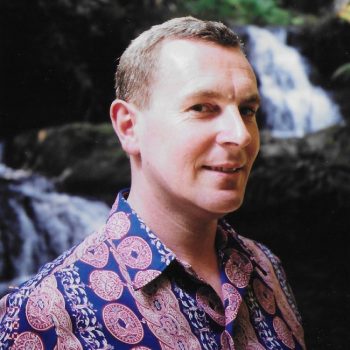
Ten years is a strange amount of time. Long enough for habits to calcify, short enough for voices to linger. I realised this earlier this year, approaching the 10th anniversary of Dick Bradsell’s death, when I found myself scrolling back through old messages and feeling not grief so much as instruction. Dick, even now, was still teaching.
The messages weren’t dramatic. They never were. They were practical, warm, occasionally profane, and quietly philosophical. Ratios, encouragement, gentle warnings about drinking too much, about forgetting the customer, about mistaking visibility for progress. He had a way of making you feel steadied just by reading him.
Dick Bradsell is remembered, when he’s remembered at all, as the inventor of the Espresso Martini. Sometimes the Bramble gets a mention too. These are not small achievements. The Espresso Martini is arguably the most influential cocktail of the modern era – not just popular, but infrastructural. It changed how people moved through a night.
But if you stop there, you miss the point entirely.
His daughter, Bea Bradsell, has spent years correcting the record. “I spend a lot of my time correcting mistruths about him,” she once told me. “Most of them have come from him in interviews.” It’s a very Dick thing to say, and a very Bea thing to clarify, because the truth is Dick was never chasing drinks – he was building rooms.
Before any of that, London was not a cocktail city. In the early 1980s, cocktails existed largely behind hotel doors – The Savoy, The Ritz – or in people’s homes. You drank beer in pubs, wine in members’ clubs, spirits with mixers if you were feeling adventurous. Ingredients were limited to what came in bottles. Freshness was an idea, not an expectation.
“Pretty much non-existent,” Bea says of the scene then. And yet Dick was already restless. He grew up on the Isle of Wight, in a respectable family, but island life didn’t suit him. He escaped to London as soon as he could. An uncle – “Evil Uncle Oscar”, in family lore – got him a job at the Naval and Military Club in Piccadilly, the In & Out. It was old-school service: starched rules, cucumber sandwiches cut just so, hierarchy everywhere.
“His stories of it are like Down and Out in Paris and London,” Bea recalls. “A young boy living in an attic room, spying through floorboards, learning the wicked ways of his uncle.” It was there Dick first encountered David Embury’s The Fine Art of Mixing Drinks. But books were never enough for him. He learned by watching people. By noticing what made a room work, and what made it fail.
When he moved to places like the Zanzibar Club and Soho Brasserie, something began to shift. These weren’t members’ clubs. They were for young people. They were social spaces. Dick understood instinctively that cocktails weren’t about impressing other bartenders. They were about giving people a reason to stay.
Bea describes him as “an anarchist with a heart of gold”. It’s the cleanest summary I know. He distrusted authority, loathed pretension, and had very little time for ego. But he was ferociously generous. He helped people constantly and quietly. If he disliked someone on staff, he didn’t fire them – he got them another job. If a guest needed something small and obvious – food, a charger, attention – he made sure they had it. Service, to him, was not a performance. It was an ethic.
‘Why wouldn’t you want to be helpful?’

One of the things that irritated him most in later years, Bea says, was bars that wouldn’t charge people’s phones. “You have a plug,” he’d say. “Charge their phone. Why wouldn’t you want to be helpful?” That question sits at the heart of everything he did.
Dick kept his life and work deliberately separate. Bartending wasn’t his identity. It was his job. He loved it, took it seriously, but he didn’t live inside it. He had friends who were artists. He played Dungeons & Dragons. He read constantly. He loved films. He drank beer and Armagnac, not cocktails. He didn’t hang out in bars to be seen.
That distance mattered. It kept him clear-eyed. When he created drinks, he did so with the people in front of him in mind. The Espresso Martini began as a vodka espresso – coffee, liqueur, sugar – made at Soho Brasserie in the mid-1980s after a model asked for something that would “wake me up and fuck me up”. The version we know today came later, at Match EC1. Bea is amused by the mythology that followed. “I get told about Kate Moss and Naomi Campbell every five seconds,” she says. “Neither of them were the model. He took that name to the grave.”
The Bramble came from a moment of memory – crème de mûre arriving behind the bar, and blackberry picking on the Isle of Wight. The Pink Chihuahua was named after a drink, not the other way around. None of these were created to be clever. They were created to work.
And then there was the Pink Chihuahua itself, Dick’s last bar, an agave-focussed basement space where, in the years before his death, a certain scene began to coalesce. This is where the harder truth reveals itself.
I used to sit at the bar there and watch young bartenders come in. They’d finally made it, or so they thought. They were in the room with Dick. They’d flounce. They’d throw drinks with theatrical flourishes. Sometimes they’d do flair. You could feel the energy of arrival – the sense that being seen in the right place was the same thing as having earned it.
Dick would watch quietly. He never humiliated anyone. He never snapped. He would step back, allow the moment to play out, and then, gently, he would correct them. Sometimes it was technical, a ratio or a method. More often, it wasn’t. It was about eye contact. About noticing the room. About remembering why you were there.
What troubled him wasn’t skill. Many of these bartenders were hugely talented. What troubled him was disconnection. They connected to the drinks, not to the people. They made things they liked, not things the guest needed. It could be a snobby, exclusionary world, and customers simply accepted it.
Dick never felt like a dinosaur. He didn’t rage against change. His skill was always current. But he understood something that is easily lost: you are not the main show. You are the facilitator of someone else’s night out. Your job is to make the evening better than it would have been without you.
This is why he never wrote a cocktail book, why he didn’t sell merch, why he didn’t brand himself. He cared about the work, not the monument. His texts, when he wrote, were about doing really good drinks, not just ‘drinks’; about excellence because excellence works; and about ratios – 8-2-1, 6-2-1, 4-2-1 – not as dogma, but as a way of removing friction so the guest could relax.
Guests first and foremost
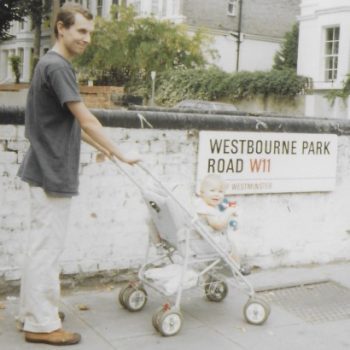
“There was never this single-mindedness for the drinks,” Bea says. “He was about creating amazing venues. He wanted his guests to enjoy things as much as possible, to get the most out of a night, the best it could possibly be.” She calls him an old Jewish matchmaker. He introduced people over bars. He believed bars were places for connection.
This is where his absence is most keenly felt. The places with the best cocktails used to be the places with the best music, the most fun, the loosest joy. “Amazing cocktails and amazing fun nights seem to be getting separated,” Bea observes. In an Instagram world, it’s how a drink looks, not how it’s served.
Dick’s drinks are everywhere now. The Espresso Martini is one of the most ordered cocktails in Britain. The Bramble is canonical. In that sense, his legacy is secure. But the harder inheritance – humble service, careful techniques – is more fragile.
He trained bartenders not just to make drinks, but to engage people. To look up. To read a room. To disappear when necessary. That kind of training is rare now, not because it’s impossible, but because it doesn’t photograph well.
Ten years on, I don’t think about Dick as someone we lost. I think about him as someone still speaking, if we’re willing to listen, asking the simple question: “Why wouldn’t you want to be helpful?”
That, more than any serve, is the work.
Related news
Inside this year’s Tony Award cocktails