

What does sustainability in spirits mean today?
Despite ‘sustainability’ being a nebulous phrase, many spirits brands are determined to demonstrate their commitment to doing better by the environment.

*This feature was originally published in the December 2025 issue of The Spirits Business magazine.
“What kind of footprint will you leave on this planet? Whether it is positive, and not a carbon one, depends on you.” So begins the short film to promote Torres Brandy Zero Challenge, a global competition for bartenders, now in its fourth year.
“The Zero Challenge is related to our brand purpose,” explains Christian Visalli, spirits managing director at Familia Torres. “Sustainability is something the family is very committed to, and we wanted to develop a competition for the on-trade that was not just another cocktail competition.”
He continues: “We wanted to give people in the hospitality industry the opportunity to stop and think of ways in which they can turn their business into a more sustainable one. We’re aware there’s often a will but a lack of resources, so it’s about offering some support to bar owners to get there. For the one who can present the right project, there’s a €30,000 [US$34,555] cash prize to turn it into a reality.”
Local communities
Tequila brand Altos, through its Tahona Society, runs a similar, biennial contest for bartenders to pitch ideas that support their local communities and make the industry more sustainable. Twelve regional finalists are invited to Mexico for the chance to win US$50,000. This year’s winner was American bartender Christina Mercado, whose C-Sweet syrup dramatically cuts the calories and sugar content of a typical Margarita.
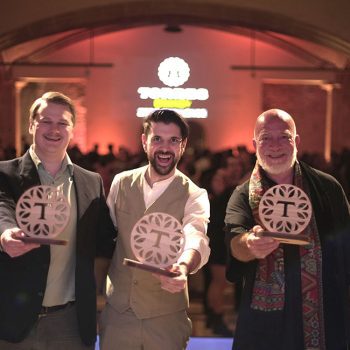
Meanwhile, Daniel Pappa of Oslo’s Svanen bar won the 2025 Torres Zero Challenge for his project to turn damaged farm produce into syrups, liqueurs, soft drinks, and cocktail ingredients, thereby cutting plastic and food miles, and supporting local farmers.
In the UK, one in five raspberries is rejected by supermarkets, according to Harriet Evans, marketing director and co-founder at Penrhos Spirits in Herefordshire. Her family’s fruit farm moved into gin in 2018, partly to give a home to those rejects in a range that includes gins made with ‘wonky’ strawberries.
In 2023, Penrhos switched from glass bottles to recycled aluminium, in the process reducing the carbon footprint of its packaging by more than 90%.
“Our aluminium bottles when full are lighter than the glass bottles when empty,” says Evans. “It has made us go from being just another gin brand to one that is unique and looks so different on the shelf.”
Saving fruit from going to waste and cutting carbon clearly tick the ‘sustainability’ box, but it’s not a word she likes using. “What does it even mean anymore?” she says. “It is confusing for people. You’ve got carbon positive, negative, neutral. I try to stay away from all that. Our thing is we’re just trying to be a bit better.”
Drinks giant Diageo is also aware of the issue. “In the past, brands have over-claimed on sustainability, and that’s why it’s been so important that legislation was brought in,” says Diageo’s marketing sustainability leader, Bianca Woolley, referring to the Green Claims code introduced in 2021. “We hope that will build consumer belief back into sustainability over time, because there shouldn’t be greenwashing anymore. We want to be bringing consumers with us on this journey of sustainability, so we need our brands to be telling relevant stories in an engaging way.”
She gives the example of Don Julio Tequila. “We made the decision to communicate with consumers about water rather than carbon because it’s so important in Tequila-making.”
The brand partnered with an artist whose installation for Mexico Art Week featured a water sculpture, visuals, music, and agave plants. “It created an immersive water experience in that cultural moment that could then open up the conversation,” says Woolley.
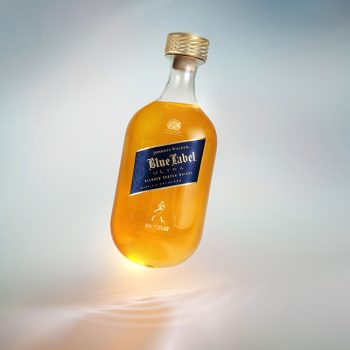
Her colleague, Miranda Essex, head of breakthrough innovation (sustainability), mentions Johnnie Walker Blue Label Ultra as “a way for us to engage consumers about the weight of glass in whisky”. Unveiled in 2024, the 180g bottle took five years to develop. “Historically, the more expensive the product, the heavier the glass,” she says. “By launching Johnnie Walker Ultra, which was so light, so aspirational, and so expensive, it turns the conversation on its head, and means we can talk about lightweight luxury.”
At £1,000, Ultra is certainly not cheap, but neither is it going to save the planet with just 888 bottles released. Essex insists the knowledge gained from the process “is already being applied to lightweighting projects across the Diageo portfolio”, and that the chunky glass bottle used for the standard expression of Blue Label has been slimmed down, somewhat.
Valuable insights
Diageo deserves credit for making the patent for its Ultra bottle royalty-free for others to use. Its launch coincided with the first trial of the Black Label paper bottle in the bar of Johnnie Walker Princes Street in Edinburgh, which provided “valuable insights from bartenders”, she says. Among them was how the paper bottle’s wider neck affected the pour.
The savings in carbon of almost 50% would be significant if ever Johnnie Walker Black Label abandoned glass altogether, but she admits that is some way off, and says: “It is quite nascent technology, and we haven’t yet got to a shelf life that would allow it to live permanently in the wild.” The paper bottles have also been trialled by Bailey’s miniatures in Ireland.
Meanwhile, Diageo has been developing a circular keg system for spirits in the on-trade called Everpour, that has just had its second trial in Ireland using Smirnoff. It aims to make life easier for bar staff, and potentially reduce carbon emissions by more than 50%. The bottle is displayed in a special backlit optic on the bar that is attached to a 17.5kg keg that keeps it topped up. Once empty, the keg is refilled by Diageo, and hopefully no one else.
Arguably, more innovative than all the above is what a small, independent farm distillery run by the Stirling family in Angus, Scotland, has done with the source of its spirit. By making alcohol from peas, which get all the nitrogen they need from the air, Arbikie created what “is still the only certified carbon-negative climate-positive gin in the world”, says co-founder John Stirling. Nàdar gin was launched in 2020, but telling its story has proved to be a challenge.
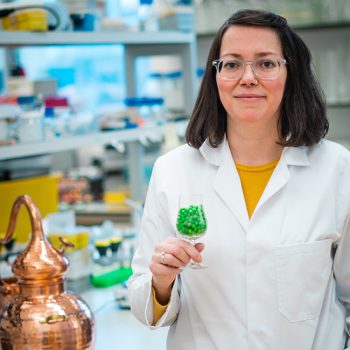
Whether you love peas or have hated them since school, “they are not exactly sexy”, he admits. “And you’ve got to be a bit science-based because if you are not, people will say ‘Oh, that’s just another story’. But too much science and people will doze off.” The added cost involved of “maybe £1 a bottle, or 15p a drink”, is clearly a barrier to some in the trade. “It’s not that people don’t care, it is just that other elements, especially price, override any sustainable notions they may have,” he says. “But the problem with the bartending community is that they tend not to be the ones making decisions about buying. They may be into Nàdar gin, but the buyer has done a deal with a big supplier in return for a substantial listing fee.
“But you do get some who say ‘this is more important, and we don’t mind about the small amount in price’, and that’s where we make progress,” he says. “A prime example is Paradiso in Barcelona, who have taken us on in quite a big way. We are also working quite closely with the Hilton group.”
Distilleries love trumpeting the fact they’ve installed solar panels or a new biomass boiler, but like peas “it’s just not that sexy, or that interesting to consumers”, says Iain Weir, marketing director at Ian Macleod Distillers. In his view, the trick is to “keep the communication focused, direct, and simple, so people really get the concept”.
As owners of Tamdhu distillery beside the River Spey in Moray, Scotland, it felt natural to partner with the Atlantic Salmon Trust and create an exclusive bottling for Waitrose, with a contribution to the Trust from every bottle sold.
“People understand the plight of the salmon and the fact our rivers are not in the state they should be in,” he says.
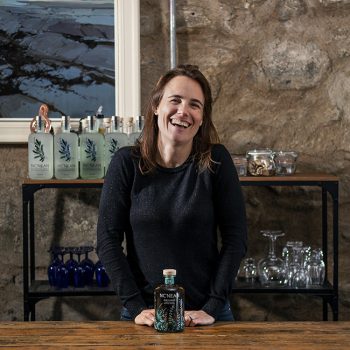
On Scotland’s West Coast, Annabel Thomas, founder and CEO of Nc’nean distillery, accepts there’s an issue about language. “Words like ‘carbon capture’ are boring, and sound like government or accountancy speak,” she says. “However, I think all of us have a duty to try and get creative and educate consumers about what they mean. Brands have a responsibility to communicate in a way consumers understand.”
She adds: “At Nc’nean we try not to use the word ‘sustainable’ because it is way too vague. We try to be more specific, and explain that we’re 100% organic, use renewable energy, and our bottles are made of recycled glass.” Thomas feels “there is a constant tug of war between being commercially successful and being as sustainable as possible, and most of
the time those things are pointing in opposite directions.
She adds: “Being organic probably adds about £3 to our bottle. Some consumers are prepared to pay that, and some are not.”
From botany to bottles: Everleaf’s green approach
Everleaf founder Paul Mathew, a former conservation biologist, built his three-strong alcohol-free ‘spirit’ brand on a simple principle: the plants they use should be protected for the future. The brand now holds B Corp, carbon-neutral, and 1% for the Planet certifications, a trio Mathew says required “really hard work” but has made the business stronger.
Everleaf’s packaging has shifted to 100% recycled glass, with a lighter-weight bottle launching soon, and every component – from labels to inks – is scrutinised for their environmental impact. The team also commits time to conservation, from volunteering with plant charities to encouraging bartenders and consumers outdoors.
For Mathew, sustainability is never finished: “There’s no end point… we can always improve.”
Industry insights
Which sustainability issue is most important to your brand, and why?
Mauricio Solórzano – global ambassador, Flor de Caña
“At Flor de Caña, one of the key components of our sustainability strategy is protecting the planet and reducing our environmental footprint across the entire value chain, from field to bottle. Pioneering initiatives such as planting trees, capturing CO2 emissions during fermentation, and using 100% renewable energy have allowed us to become carbon neutral-certified and contribute to building a greener and more sustainable future for generations to come.”
Radek Lewandowski – sustainability director, Stock Spirits Group
“For Stock Spirits, the most important sustainability priority is making balanced progress across People, Planet, and Processes. Under People, that means building employee engagement at the level of top employers, maintaining strong health and safety standards, and promoting responsible drinking and clear consumer information through our ‘Taste It Smart’ platform. For Planet, our focus is reducing carbon emissions across Scopes 1, 2, and 3, with science-based targets planned for submission to the Science Based Targets initiative in 2026, alongside sustainable packaging improvements, water and energy savings, and collaboration with suppliers who share our sustainability values. In Processes, we prioritise ethical, transparent governance and are working towards ISO 27001 certification by 2027.”
Sherwin Acebuche – co-founder, Tarsier Spirit
“As a conservation brand, protecting tarsiers [jungle primates] is most important to us, which is why we donate 10% of our profits to conservation charities. As part of that we have a moral duty to reduce our impact on the environment to ensure all animals have the best chance of survival. The key focus is to reduce carbon footprint, especially in areas that have most impact; transport and energy usage. We recently switched bottle supplier from Spain to Leeds; reducing CO2 transport emissions by 99.82%. They are made from 58% post-consumer recycled glass, which also leads to further reductions. We use a modern iStill for distilling and multi-shot methods, which means that we save on electricity and water usage.”
Steven Pattison – CEO and co-founder, Drinksology Kirker Greer
“For us, the priority is circularity and how we create value across the entire chain, not just at the point of sale. That means scrutinising sourcing, materials, packaging, and logistics with the same rigour as flavour or design. Embedding this mindset has reshaped our definition of premium. It is now about treating every stakeholder well, from suppliers to consumers. This approach strengthens resilience, improves quality, and helps us build brands that can withstand future scrutiny while remaining commercially competitive.”
Lucy Smith – founder and managing director, Neurita Tequila
“Neurita’s top sustainability priority is reducing the environmental impact of agave production, especially water use. We’re moving to a distillery that uses efficient irrigation, water-recycling systems, and regenerative farming to grow agave with significantly less water. We’re also focused on cutting glass waste by expanding bulk and refill packaging for bars and retailers. These steps directly protect the land and resources that make Tequila possible.”
Related news
Paradiso Sustainability Summit rebrands