


Telangana’s ‘staggering’ alcohol debt at tipping point
The Telangana government in India has been strongly advised to settle its overdue payment of more than ₹3,900 crore (US$466 million) to the state’s alcohol suppliers.
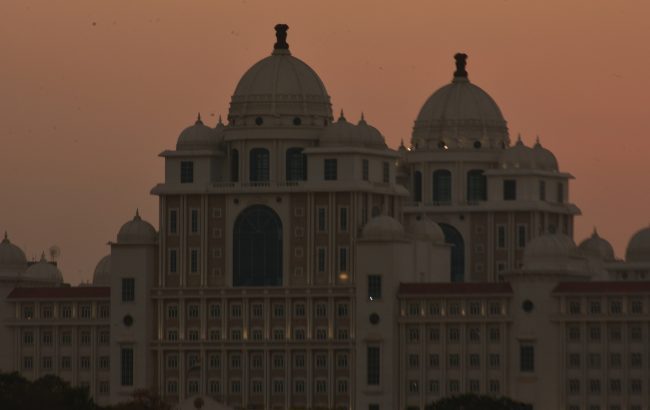
Indian states all have their own routes to market and varying laws in terms of how alcohol is distributed, but Telangana in the south operates a monopoly through Telangana State Beverages Corporation Limited (TGBCL).
TGBCL has built up more than ₹3,900 crore (US$466m) in overdue payments to the alcobev (alcohol beverages) sector, with ₹900 crore (US$108m) pending for more than a year, a statement jointly released by three industry associations on 16 January revealed.
The three associations were the International Spirits and Wines Association of India (ISWAI), Brewers Association of India (BAI), the International Spirits and Wines Association of India (ISWAI) and the Confederation of Indian Alcoholic Beverage Companies (CIABC), whose members comprise 80% of spirits, beer and wine sales in India, and 90% of alcohol sold in Telangana.
The TGBCL is contractually obligated to pay liquor suppliers in 45-day windows.
The ISWAI represents international spirits companies in India such as Pernod Ricard, Diageo, Bacardi, Brown-Forman, Moët Hennessy and more. The BAI represents beer makers including Carlsberg, AB InBev and Heineken in India, while the CIABC serves as the voice for Indian alcohol companies.
As the World Economic Forum’s 56th annual meeting takes place in Davos this week – from 19-23 January and where the Telangana government will be promoting itself as an attractive destination for global investment – the organisations have urged the state to clear its long-pending payment.
They said paying the outstanding debt would give confidence and reassure global investors that Telangana is a credible place to do business, ahead of its representation at Davos this week.
“Payment delays at this scale dilute the credibility of the state to attract investment,” the statement said.
Alcohol excise is the third-biggest contributor to Telangana’s revenue stream, which is said to generate up to ₹2,600 crore (US$288m) a month. This is highest among Indian states, while the alcohol industry also provides approximately 70,000 direct and indirect jobs across Telangana.
Over the past decade, the state’s excise revenue from alcohol has jumped up from around ₹9,000 crore (US$1.08bn) in 2014 to nearly ₹38,000 crore (around US$4.6bn) in full-year 2023-24.
In October, the state is said to have collected over ₹3,000 crore alone through liquor retail licence application fees, while revenue from December was reported to be an ‘all-time high’.
A joint communique from the associations read: “The alcobev sector delivers predictable, recurrent, and large scale revenues to the State exchequer. Clearing dues and restoring the 45-day contractual payment cycle is fiscally prudent and essential to protect revenues, jobs and supply continuity.”
‘No resources left to do business in other states’
Speaking to The Spirits Business, Sanjit Padhi, CEO of the ISWAI, said the situation was not only putting a major strain on the association’s business in Telangana, one of the largest markets for alcohol in India, but also its ability to conduct business elsewhere in the region.
“If all the resources are stuck in one state in terms of working capital, we have no resources left to do business in other states,” he said.
Padhi explained alcohol was supplied in the state through a tendering system. He said after the contracts are accepted and signed, punitive measures are put in place by the government for not supplying liquor.
“We are now in a situation where our debtors have gone up and we have to supply as per the tender contract,” he said.
“Telangana has parastatal cooperations where the government buys from us and the retailer then comes and picks it up from the government’s depot. So for us, there’s a single customer: the government.
“We sell to the state of Telangana after repaying the excise duty, and they then sell on cash to the retailer [Telangana State Beverages Corporation], who are supposed to pay us in 45 days – as per the contract. They have unlimited power in acting as a monopoly distributor in the state. We have one customer; we have no choice.”
Alcohol companies cannot stop supplying, while at the same time, the industry has invested a significant amount in the state.
Padhi said he’s found arranging meetings with government executives to press the issue difficult and when meetings have taken place it “feels like lip service more than anything else”.
“We have been trying for the last year to meet a chief minister who is the administrative head of the state,” he continued. “We’ve done rounds in the media, talking about how it’s putting undue pressure on the industry because no business can survive on a working cycle of 180 days.
“Our message to the government and the chief minister was that the state [Telangana] goes to various economic forums, creates investor needs and asks for investment in the state, whereas it is not in a position to honour fiscal commitments to people who are already invested in the state.
“We are the second-largest tax contributor to the state in terms of revenue, but at the same time, the state seems to be ignorant, or is ignoring this because they know that being a monopoly buyer with stringent conditions means alcohol companies have no choice but to supply – even if they don’t pay.”
Calls for government to ‘stand up and give a plan of action’
Padhi said the issue goes beyond Telangana and there’s a bigger picture that all alcohol companies are now dealing with: “That this state is actually not paying you, and at the same time pulling you down by taking very precious resources. So we have a double-edged sword.”
He said somewhere along the line, a tipping point will come when the situation is simply no longer sustainable. “It’s just not spirits, it’s beer and wine too; the whole industry. There doesn’t seem to be any recognition of the pain that we are going through,” he stressed.
In terms of movement, Padhi is calling for the government to stand up, provide a plan of action and some clear visibility.
A satisfactory start, he noted, would see the government say something along the lines of: “‘OK, we owe you ₹3,900 crore’, and then they should technically owe us ₹1,000 crore for 45 days plus duty. If the government stands up and says, ‘in the next three months, we will bring the dues down to ₹1,000 crore’, that’s fine.”
“We need an understanding and a line of sight,” he added, also referring back to Telangana’s investment push in Davos this week. “I think it’s important that when one goes outside and asks for investment, it needs to make sure that what it has got already is taken care of.
“In this case, if you are not in the position to take care of people who have invested so much in your state and are continuing to support you in terms of supplying and generating revenue, how can you go out and ask for more money?”
Last November, suppliers threatened to halt alcohol shipments to Telangana as the state’s payment delays worsened.
Related news
Pernod stays silent on Indian IPO rumour
Are Indian investors waking up to the power of the on-trade?